Last updated 2026-07-25
TL;DR
Florida condos in buildings 3 stories or higher must fund reserves for items covered by a Structural Integrity Reserve Study (SIRS), with no more waiving or underfunding those specific line items starting with the fiscal year beginning January 1, 2025 or after. A reserve study itself typically costs $3,000 to $20,000+ depending on building size, per state licensing guidance and industry pricing.
what is a reserve study?
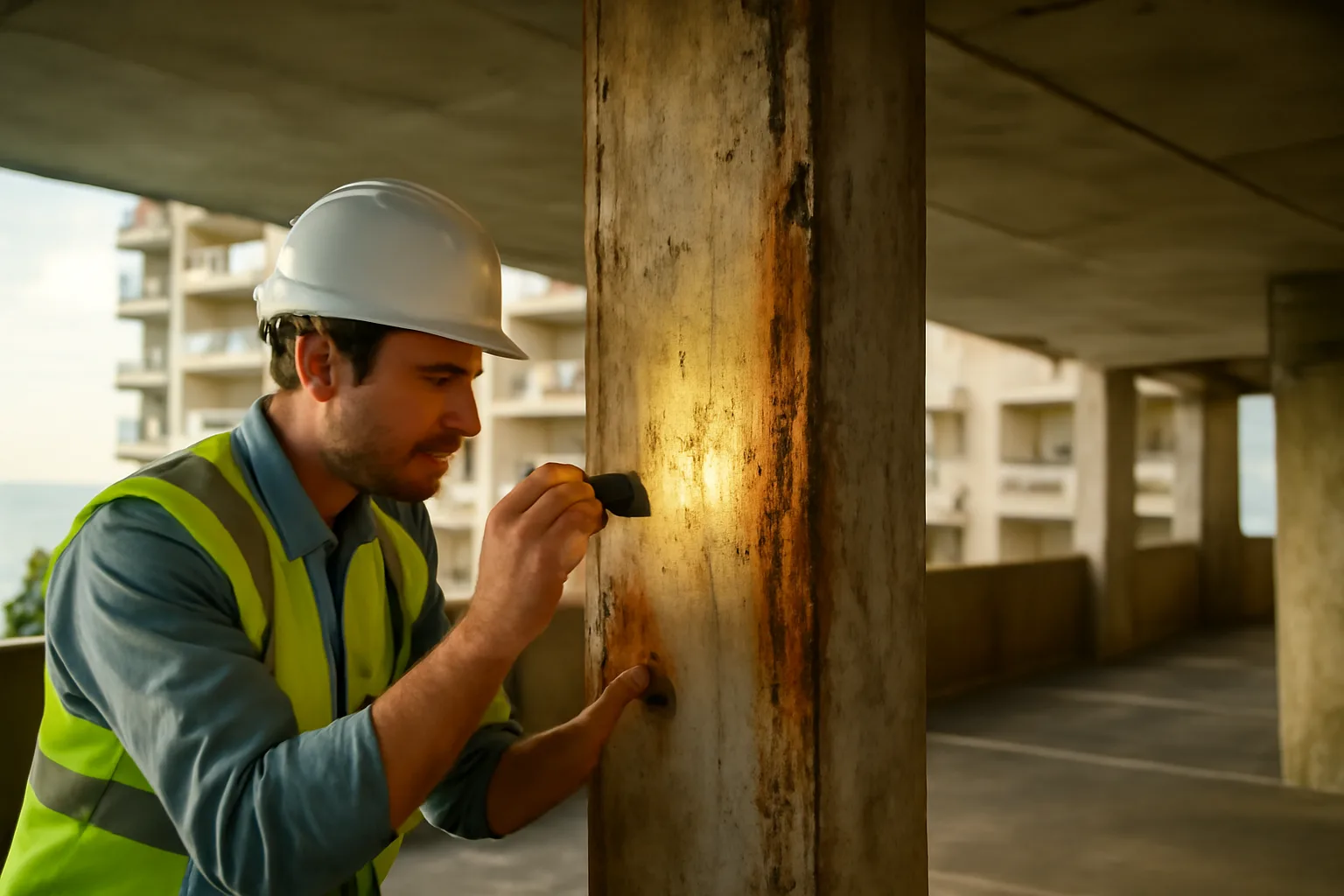
A reserve study is a physical inspection and financial analysis of a property's shared components, done to figure out how much money an association needs to save now so it can pay for future repairs and replacements without a surprise bill. A qualified reserve preparer walks the property, estimates the remaining useful life of things like roofs, pavement, pool decks, and building systems, then calculates a funding schedule. For Florida condos, the more specific version is the Structural Integrity Reserve Study, or SIRS, required under Florida Statutes section 718.112(2)(g) [1]. A SIRS covers a fixed list of structural and life-safety components: roof, load-bearing walls, primary structural members, floor, foundation, fireproofing and fire protection systems, plumbing, electrical, waterproofing and exterior painting, and windows and exterior doors [1]. It is narrower than a full 'everything the association owns' reserve study, but it carries legal weight the general version doesn't. A SIRS has to be performed by a licensed engineer or architect, and it has to be done at least every 10 years for each building on the condo property that is three stories or more in height [1]. That's a different professional requirement than a routine reserve study, which many associations have historically done with a reserve specialist who isn't necessarily an engineer. If you're trying to sort out which document your building actually needs and when, our reserve study guide walks through the difference between a SIRS and a standard reserve study line by line.
what is a reserve study for an HOA?
For a homeowners association (as opposed to a condominium), a reserve study serves the same basic purpose, planning ahead for big-ticket common-area repairs, but the legal requirements are different and generally lighter than what condos face. Florida HOAs are governed by Chapter 720, not Chapter 718, and the SIRS mandate that applies to condo buildings three stories and up does not apply to HOAs. That said, plenty of HOAs voluntarily commission reserve studies anyway, especially communities with shared amenities like pools, clubhouses, gated entries, or private roads. A reserve study for an HOA typically looks at every major common element, more than structural components, and produces a 20 to 30 year funding plan showing when each item will need replacement and what that will cost in future dollars. If your community is an HOA rather than a condo association, don't assume the condo SIRS rules apply to you. Confirm with your association's counsel which statute governs your community and what your specific governing documents require, since some HOA declarations impose their own reserve mandates that go beyond what state law requires. Our HOA reserve study explainer breaks down what a typical HOA study covers and how it differs from a condo SIRS.
how much should an HOA (or condo) have in reserves?
There's no single dollar figure that's 'right' for every community, because it depends on the size, age, and component mix of the property. The honest answer is that reserves should be funded at whatever level a current reserve study says is needed to cover 100% of projected future replacement costs for each component, spread out proportionally over each item's remaining useful life. For Florida condos specifically, the law is no longer vague on this point for SIRS-covered components. Starting with the fiscal year beginning January 1, 2025 (with a limited exception described below), associations must fund reserves for SIRS components at a level with 'no reduction and no waiver' allowed by member vote, per section 718.112(2)(f)4 [1]. In practice, this means the days of a board voting each year to fund reserves at 50%, or skip roof reserves entirely to keep monthly fees low, are over for anything on the SIRS list. For non-SIRS reserve items (say, a clubhouse interior, or pool furniture) associations still generally retain more flexibility to fund partially or waive reserves by member vote, depending on the specifics of section 718.112(2)(f). A good rule of thumb many reserve professionals use, though it's an industry guideline rather than a legal requirement, is targeting a 'percent funded' ratio of 70% or higher of what a full reserve study says you should have on hand at any given time. Below 30% funded is generally considered a red flag by lenders and by Fannie Mae's condo project review guidelines [1]. See our piece on Florida's 2024-2025 reserve fund relief measures for the details on which associations qualify for a delay and how that interacts with SIRS deadlines.
what is an HOA assessment (and what is a condo assessment)?
An assessment is simply the fee an association charges its members to fund shared expenses, whether that's routine operating costs (landscaping, insurance, management fees) or capital costs (roof replacement, reserve contributions). Every owner in a condo or HOA pays assessments; they're not optional the way an amenity fee might be, and unpaid assessments can lead to a lien on the unit or, eventually, foreclosure. There are two basic types. A regular assessment is the recurring monthly or quarterly fee set out in the annual budget. A special assessment is a one-time (or limited-duration) charge levied outside the normal budget cycle, usually because reserves came up short for an unexpected or underfunded repair, like storm damage, a failed elevator, or a SIRS-driven concrete restoration project the association didn't save enough for. Florida law requires condo boards to hold a proper board meeting with notice to unit owners before levying most special assessments, and the notice has to state the purpose and the estimated amount, per section 718.112(2)(c) [2]. Boards can't just decide over email that everyone owes another $4,000 next month, there's a process, and skipping it can expose the association to a legal challenge. If your board is staring down a special assessment right now, our special assessment guide covers the notice requirements, payment plan options, and what happens if owners can't pay.
how much does a reserve study cost?
| General reserve study | $3,000 to $10,000 | Reserve specialist, engineer, or CPA | No fixed statutory interval for most HOAs | |
|---|---|---|---|---|
| Structural Integrity Reserve Study (SIRS) | $6,000 to $20,000+ | Licensed engineer or architect | At least every 10 years, per building [1] | |
| Milestone structural inspection | $8,000 to $30,000+ depending on building size | Licensed engineer or architect | At 30 years (25 years within 3 miles of coast), then every 10 years [4] | The cost feels steep for a smaller association, but it's cheap relative to what boards spend guessing wrong. A SIRS that says your roof has 4 years of life left, instead of the 12 years the board assumed, is the difference between a manageable special assessment now and a much bigger one later. |
Pricing varies a lot by building size, component complexity, and whether you're getting a full reserve study or a SIRS. Industry pricing commonly cited by reserve specialists and reported in state guidance runs from roughly $3,000 for a small, straightforward condo building up to $15,000 to $20,000 or more for a large high-rise with extensive structural and mechanical systems [3]. A SIRS specifically, because it must be conducted by a licensed engineer or architect and involves detailed structural inspection rather than a general survey, tends to run toward the higher end of that range, and sometimes above it for large coastal buildings with complex facades, parking structures, or seawalls. Some engineering firms bundle SIRS work with the milestone structural inspection required at year 30 (or year 25 near the coast) under section 553.899, since both involve similar site visits and can share some inspection costs, though they remain legally distinct deliverables [4]. A useful comparison for boards budgeting for this expense: | Study type | Typical cost range | Who performs it | Required interval |
what happens if an association skips or waives reserves it shouldn't?
For SIRS-covered components in Florida condo buildings three stories or higher, associations no longer have the option to waive or reduce reserve funding by membership vote, starting with the fiscal year beginning on or after January 1, 2025 [1]. This is one of the biggest structural changes to Florida condo law since the Surfside collapse in 2021 prompted the legislature to act. Boards that ignore this aren't just risking a bad annual meeting. Underfunded SIRS reserves can trigger disclosure obligations to prospective buyers, complicate mortgage approvals for units (lenders increasingly check reserve funding status), and set the association up for a much larger special assessment down the road when the structural work can no longer be deferred. DBPR, Florida's Department of Business and Professional Regulation, oversees condo association compliance and licensing questions related to community association managers [5]. If your board has questions about what's actually required for your specific building, DBPR's condominium resources and your association's own counsel are the two places to start, not a general internet search.
are HOA (and condo) special assessments tax deductible?
Generally, no, not for the individual unit owner who pays them, in most typical situations. The IRS treats regular condo or HOA assessments the same way it treats homeowner association dues on a personal residence: they're a personal living expense, not a deductible one, similar to how your own home's utility bills aren't deductible . There are narrower exceptions. If the unit is a rental property, assessments (including special assessments for repairs, though generally not for capital improvements) may be deductible as a rental expense against rental income, subject to normal rules distinguishing repairs from capital improvements under IRS guidance . If part of the home is used for a qualifying home office, a portion of the assessment may be deductible under home office rules. And if a special assessment is levied specifically for a casualty loss in a federally declared disaster area, there may be a path to a casualty loss deduction, though the rules here are specific and the amounts are often limited. This isn't tax advice, and the honest answer is 'it depends on your situation, ask a CPA.' Boards shouldn't tell owners assessments are or aren't deductible; that's between each owner and their tax preparer.
what's the deadline timeline boards actually need to track?
Florida's post-Surfside reforms created a cluster of overlapping deadlines, and it's easy for a volunteer board to lose track of which one applies when. Here's the practical sequence for a typical condo building three stories or higher. First, the milestone structural inspection: required by the building's 30th year (25th year if within three miles of the coast), then recertified every 10 years after, under section 553.899 [4]. Second, the SIRS: required for each applicable building, at least every 10 years, and the first one had a statutory deadline tied to December 31, 2024 for many associations, per the original SIRS mandate timeline in section 718.112(2)(g) [1]. Third, the reserve funding requirement: full, non-waivable funding for SIRS components starting with the fiscal year beginning on or after January 1, 2025 [1]. A board that's behind on any one of these often finds the other two harder to sort out too, since the SIRS results feed directly into the reserve budget, and the milestone inspection findings can reveal urgent items that change the whole reserve math. Getting organized around one calendar, rather than treating each deadline as a separate fire drill, is the difference between a manageable transition and a scramble. That's the specific gap our $199 one-time Board Compliance Kit is built to close: it organizes your building's SIRS, milestone inspection, and reserve deadlines onto a single schedule and helps the board communicate the status to owners clearly. It doesn't replace your engineer, architect, or attorney, it just keeps the paperwork and timeline straight. Start at /board-kit-builder if that's useful for your board.
does every condo building have to do a SIRS and fund full reserves?
No. The SIRS and non-waivable reserve requirement apply specifically to condominium buildings that are three stories or more in height, per section 718.112(2)(g) [1]. Two-story condo buildings, single-family HOA communities, and cooperatives structured differently may fall outside this specific mandate, though other reserve and inspection rules can still apply depending on your community's structure and local ordinances. There's also a narrow, time-limited path some associations used to delay or restructure the first SIRS-driven reserve funding requirement, tied to legislative changes made in 2024 (sometimes called the reserve funding relief bill). That relief is nuanced, tied to specific conditions like having a fully funded SIRS already completed and a vote taken by a certain date, and it doesn't apply to every building or extend indefinitely. Because these details change based on your building's height, age, location, and your association's own past votes, this is exactly the kind of question to bring to your association's attorney rather than trying to self-diagnose from a general article. Read more on the specific relief provisions here.
how do reserves interact with the milestone inspection and SIRS reports?
The milestone inspection and the SIRS are separate reports with separate professionals and separate purposes, but they're supposed to talk to each other. The milestone inspection (section 553.899) is a life-safety structural check: is the building substantially structurally sound, and are there signs of substantial structural deterioration [4]. The SIRS (section 718.112(2)(g)) is a financial planning document: given the current condition of these structural and life-safety components, how much should the association be saving each year [1]. In practice, if the milestone inspection finds a deteriorating condition, that finding should feed into the SIRS cost estimates and shorten the assumed remaining useful life of the affected component, which raises the required reserve contribution. Associations that get these done by different firms months apart, without connecting the dots, sometimes end up with a SIRS that doesn't reflect what the milestone inspection actually found. A board's best move is to make sure whoever prepares the SIRS has the milestone inspection report in hand before finalizing numbers. For buildings just now approaching either deadline, our milestone inspection resources and the SIRS guide referenced earlier both go into the sequencing question in more depth.
Frequently asked questions
What is a reserve study?
A reserve study is an inspection and financial analysis of a property's shared components (roofs, pavement, mechanical systems, and more) used to project when each item will need repair or replacement and how much an association should be saving now to cover that cost without a surprise special assessment.
What is a reserve study for an HOA?
For an HOA, a reserve study covers all shared common-area components, more than structural items, and produces a long-term funding plan. Unlike condo SIRS requirements under Chapter 718, HOAs governed by Chapter 720 generally aren't subject to the same statutory mandate, though many voluntarily commission studies anyway.
What is an HOA assessment?
An HOA (or condo) assessment is a fee charged to every member to fund shared expenses, either as a recurring regular assessment covering the annual budget or as a one-time special assessment for an unexpected or underfunded cost, like a major repair reserves didn't cover.
How much should an HOA have in reserves?
There's no fixed dollar amount; the target is whatever a current reserve study calculates is needed to fund 100% of projected future replacement costs over each component's remaining life. Industry professionals often flag under 30% funded as a warning sign, and lenders like Fannie Mae review reserve funding levels during condo project approvals.
How much does a reserve study cost?
Typical pricing ranges from around $3,000 for a small, simple property up to $15,000 to $20,000 or more for a large building with complex systems. A Structural Integrity Reserve Study (SIRS), which requires a licensed engineer or architect, usually costs more than a general reserve study of the same building.
Are HOA special assessments tax deductible?
Usually not for a personal residence; the IRS treats them as a nondeductible personal expense. Exceptions can apply for rental properties (as a rental expense), qualifying home offices, or certain casualty losses in federally declared disaster areas. Always confirm your specific situation with a CPA, not the board.
What is a SIRS and how is it different from a regular reserve study?
A Structural Integrity Reserve Study (SIRS) is a Florida-specific requirement under section 718.112(2)(g) covering a fixed list of structural and life-safety components for condo buildings three stories or higher. It must be done by a licensed engineer or architect at least every 10 years, unlike a general reserve study, which has no fixed professional or interval requirement.
Can a condo association still waive reserve funding by member vote?
Not for SIRS-covered components. Starting with the fiscal year beginning on or after January 1, 2025, Florida law removes the ability to waive or underfund reserves for structural and life-safety items identified in a SIRS, per section 718.112(2)(f)4. Non-SIRS items may still allow more funding flexibility.
Does a two-story condo building need a SIRS?
Generally no. The SIRS mandate and related non-waivable reserve rule apply specifically to condo buildings three stories or more in height under section 718.112(2)(g). Confirm your building's exact classification with your association's engineer and attorney, since height measurement rules can be technical.
What happens if a condo board doesn't do a required SIRS?
Skipping a required SIRS leaves the board without the data needed to set legally required reserve funding, and can expose the association to disclosure problems, buyer financing complications, and larger future special assessments. DBPR oversees condo association compliance matters in Florida and is a resource for boards with specific questions.
How often does a milestone inspection need to be redone?
Under section 553.899, the first milestone structural inspection is due by a building's 30th year (25th year if within three miles of the coast), then must be repeated every 10 years after that as a recertification, regardless of whether the building has changed hands or undergone renovations.
Who is qualified to perform a Florida SIRS or milestone inspection?
Both must be performed by a licensed engineer or architect under Florida law. A general reserve specialist or property manager, no matter how experienced, cannot legally substitute for the licensed professional required for either the SIRS (section 718.112) or the milestone inspection (section 553.899).
Sources
- Florida Senate, Florida Statutes section 718.112: SIRS definition, required components, licensed engineer/architect requirement, and 10-year interval for buildings three stories or more
- Florida DBPR, Division of Florida Condominiums, Timeshares, and Mobile Homes: State oversight of condo association reserve and inspection compliance, and typical reserve study cost guidance context
- Florida Senate, Florida Statutes section 553.899: Milestone structural inspection required at 30 years (25 years within 3 miles of coast) and every 10 years thereafter
- Florida DBPR, Community Association Managers licensing: DBPR oversees licensing and compliance matters related to Florida community association managers
- IRS, Publication 530, Tax Information for Homeowners: HOA and condo assessments are generally nondeductible personal expenses, with exceptions for rental use