Last updated 2026-07-25
TL;DR
A Structural Integrity Reserve Study (SIRS) is a Florida-mandated inspection and reserve-funding report required for condo buildings 3 stories or taller under section 718.112, F.S. It's done by a licensed engineer or architect, covers specific structural components, and must be completed by December 31, 2024 for most associations, then updated at least every 10 years.
What is a structural integrity reserve study (SIRS) in Florida?
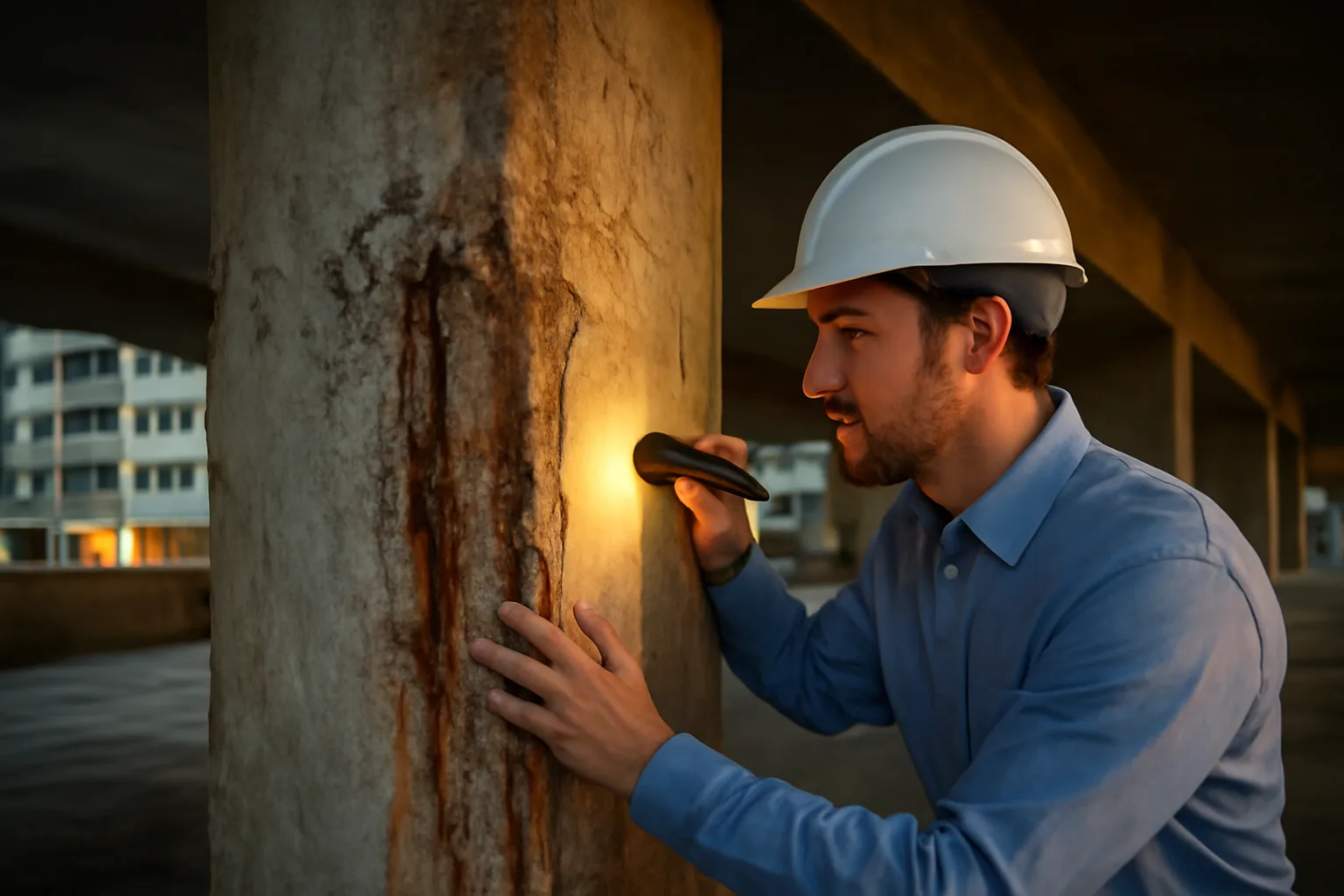
A structural integrity reserve study, called a SIRS, is a legally required inspection and reserve-funding analysis for Florida condominium buildings that are three stories or more in height. It's not optional. And it's not the same document as the general reserve study your association may already run for budgeting purposes. Under section 718.112(2)(g), Florida Statutes, a SIRS must be performed "at least every 10 years" by a licensed engineer or architect, and it has to evaluate specific structural components: the roof, load-bearing walls, floor, foundation, fireproofing and fire protection systems, plumbing, electrical systems, waterproofing and exterior painting, windows, and any other item that has a deferred maintenance expense or replacement cost exceeding $10,000 and that affects the structural integrity of the building [1]. The statute defines the study's purpose plainly: it exists to "determine, if any, necessary maintenance, repair, and replacement of the reserve components" and to establish reserve funding sufficient to pay for those items. This is different from asking "what is a reserve study for HOA" purposes generally, which we cover below. A SIRS is condo-specific, statute-driven, and tied to building height, not a voluntary planning tool. For a broader look at how these fit together with milestone inspections, see our reserve study explainer.
What is a reserve study, in plain terms?
A reserve study, at its core, is a professional evaluation of a property's shared components (roofs, pavement, elevators, pools, structural elements) that estimates their remaining useful life and the cost to repair or replace them. It converts that estimate into a funding plan so the association isn't caught flat-footed when the roof needs replacing in year 18 instead of year 25. Most reserve studies outside Florida's SIRS mandate are still governed by general association law, not a structural-specific statute. A typical study has two parts: a physical analysis (what components exist, their age, condition, remaining life) and a financial analysis (how much money needs to be set aside each year to fund replacements without a shock special assessment). In Florida, condo associations already had reserve-accounting requirements under section 718.112(2)(f), F.S., which requires reserves for roof replacement, building painting, pavement resurfacing, and "any other item that has a deferred maintenance expense or replacement cost exceeding $10,000" [1]. The SIRS requirement, added after the Champlain Towers South collapse in Surfside in 2021, layers a stricter, engineer-driven structural version on top of that for taller buildings. If you want the general (non-SIRS) version explained for any HOA type, our hoa reserve study page walks through it component by component.
What is a reserve study for an HOA (not a condo)?
A reserve study for an HOA works the same way conceptually: an inspection of common-area components and a funding schedule to pay for them over time. The key difference is that Florida's SIRS mandate under section 718.112, F.S. applies to condominiums, not homeowners' associations governed by chapter 720 [1]. That means a single-family-home HOA maintaining roads, a clubhouse, or a community pool is not subject to the SIRS deadline or the structural component list. Many HOAs still choose to commission a reserve study voluntarily, or their governing documents may require one, because underfunded reserves are a common source of surprise special assessments regardless of which statute applies. Cooperatives (co-ops) got their own parallel milestone and SIRS-style requirements added to chapter 719 in the 2022 and 2023 legislative sessions. So if your building is technically a co-op, don't assume you're exempt just because you're not a "condominium" in the strict legal sense. Confirm your entity type and applicable chapter with your association's counsel.
Which buildings actually need a SIRS?
| SIRS | Condos 3+ stories | Every 10 years | Licensed engineer or architect | s. 718.112(2)(g), F.S. |
|---|---|---|---|---|
| Milestone inspection | Condos/co-ops 3+ stories, building age-triggered | One-time, then per local building official | Licensed engineer or architect | s. 553.899, F.S. |
| General reserve funding | All Florida condos | Annual budget cycle | Board, informed by study | s. 718.112(2)(f), F.S. |
The SIRS requirement applies to condominium buildings that are three stories or more in height, based on the original certificate of occupancy, according to section 718.112(2)(g), F.S. [1]. Single-family homes, townhomes, and duplex-style condo buildings under three stories are excluded from the SIRS mandate specifically (though they may still owe general reserve contributions). The deadline for the first SIRS was December 31, 2024 for most existing associations, tied to the same legislative overhaul (SB 4-D in 2022, later amended by SB 154 in 2023) that also created the milestone inspection requirement [2]. After the initial study, associations must have it redone "at least every 10 years" [1]. Buildings within the milestone inspection zone (generally coastal, per local building official determination, or any building 3+ stories at 30 years old, 25 years if within 3 miles of the coast) often get their SIRS and milestone inspection scheduled together, since the same engineer visit can inform both, though they are legally distinct deliverables. See our milestone inspection coverage for how the two interact on your compliance calendar. | Requirement | Applies to | Frequency | Who performs it | Statute |
What is an HOA assessment (and how is it different from a special assessment)?
An HOA assessment is simply the money owners are required to pay their association to cover shared expenses: operating costs, insurance, utilities for common areas, and reserve contributions. Regular assessments are typically monthly or quarterly and are set in the annual budget. A special assessment is a separate, often one-time charge levied when the regular budget and reserves aren't enough to cover an unexpected or large cost, like a sudden roof failure, storm damage, or a reserve shortfall discovered during a SIRS. Florida condo associations get their authority to levy assessments from section 718.116, F.S., and the board's budgeting and reserve obligations are spelled out in section 718.112(2)(f)-(g), F.S. [1]. What are HOA assessments used for practically? Landscaping, insurance premiums, management fees, utilities for common elements, and (critically, post-Surfside) building reserves for the components a SIRS identifies. When reserves are underfunded, and a SIRS or milestone inspection turns up major deferred maintenance, a special assessment is often how the gap gets closed, sometimes running into tens of thousands of dollars per unit depending on the building's size and condition. Our hoa special assessment guide breaks down notice requirements, vote thresholds, and payment plan options boards can offer owners.
How much should an HOA (or condo) have in reserves?
There's no single dollar figure that's right for every building. The honest answer is that reserves should equal the fully-funded amount identified by a professional reserve study or SIRS for your specific components, ages, and replacement costs. A 10-unit, 3-story building from 1985 and a 200-unit tower from 2005 will have wildly different numbers. What Florida law does specify is a floor, not a target: since the 2022-2023 reforms, condo associations subject to SIRS can no longer waive or reduce reserve funding for the components identified in the study (roof, structure, waterproofing, electrical, plumbing, fireproofing, and any item over $10,000 with a deferred maintenance component) [1]. Before the reform, owners could vote annually to waive or underfund reserves; that option is now closed for SIRS-covered components in most associations. As a general planning heuristic used across the reserve-study industry, engineers often flag anything under 30% "funded" (actual reserve balance versus the fully-funded ideal balance) as a red flag likely to require a special assessment within a few years. That's an industry rule of thumb, not a statutory line, so treat it as a warning sign rather than a legal threshold. See florida condo reserve fund relief for what limited relief options the legislature has and hasn't extended to struggling associations.
How much does a reserve study or SIRS cost in Florida?
Costs vary a lot based on building size, number of components, and whether it's a first-time study or an update. For a rough sense of range: smaller condo buildings (under 50 units) often see SIRS costs somewhere in the $3,000 to $10,000+ range, while larger high-rises with more structural complexity can run well beyond that, sometimes into five figures, according to industry reporting and engineering firm estimates cited by Florida trade press covering the post-Surfside reform rollout. We want to be honest about the uncertainty here: DBPR does not publish a fee schedule for SIRS, and Florida Statutes don't set a price ceiling or floor, so any number you see (including ours) is a market estimate, not a regulated fee. Get multiple quotes from licensed engineers or architects and ask specifically whether the quote includes both the physical inspection and the financial/funding schedule, since some firms price those separately. A general (non-SIRS) reserve study for a smaller HOA without the structural-component depth can cost less, often in the low thousands, because it doesn't require the same engineering-level structural assessment. Whatever the study costs, it's a fraction of what an unplanned special assessment or emergency repair runs. That math alone is why deferring the study rarely saves money long-term.
Who is allowed to perform a SIRS?
Only a licensed engineer or licensed architect can perform a SIRS under section 718.112(2)(g), F.S. [1]. This isn't a job for a property manager, a general contractor, or an in-house maintenance staffer, no matter how experienced they are. Florida's Department of Business and Professional Regulation (DBPR) licenses and regulates engineers under chapter 471, F.S. and architects under chapter 481, F.S. Engineer license renewal requirements and standards are detailed in Florida Administrative Code rule 61G15-18.001 [3]. Boards should confirm any professional's license status directly through DBPR's license search before signing a contract. Because milestone inspections (s. 553.899, F.S.) also require a licensed engineer or architect, many associations coordinate the two engagements, sometimes with the same firm, to save on travel and site-access costs. That's a scheduling efficiency, not a legal requirement that they be combined.
What happens if an association misses the SIRS deadline?
Missing the SIRS deadline puts a board in a genuinely uncomfortable spot. Potential exposure to breach-of-fiduciary-duty claims from owners is one risk. Difficulty securing or renewing property insurance is another, since many carriers now ask for SIRS or milestone status before binding coverage. Complications for owners trying to sell or refinance units follow close behind, since some lenders and title companies now ask about SIRS compliance before closing. Florida Statutes don't spell out a specific fine schedule for a late SIRS the way some code violations do. Instead, the practical consequences run through insurance, financing, and civil liability channels. That's arguably worse than a fixed fine, because it's less predictable and can freeze a building's ability to sell units or get affordable coverage. If your association is behind, the right first move is getting the engineer or architect under contract immediately and documenting the board's good-faith effort, then talking to counsel about disclosure obligations to owners and buyers in the meantime. Don't guess at what your governing documents require here. That's a job for your association's attorney, not a board vote based on a forum post.
Are HOA and condo special assessments tax deductible?
Generally, no, not for the owner of a personal residence. Special assessments for improvements or capital repairs are typically treated by the IRS as additions to the cost basis of your unit, not as a deductible expense, similar to how a home improvement isn't deductible but increases what you can subtract from gain when you sell. IRS Publication 523 explains how improvements affect the cost basis of a home for sale purposes [4]. There are narrow exceptions. If part of the assessment funds a documented casualty loss (like storm damage) in a federally declared disaster area, some portion may be deductible or usable toward a casualty loss claim under IRS rules for personal-use property, but this is fact-specific and requires documentation tying the assessment to the specific loss, more than general repairs. IRS Publication 547 covers casualty, disaster, and theft loss rules in detail [5]. If the unit is a rental or business property, a portion of the assessment tied to repairs and maintenance (versus capital improvement) may be deductible as a business expense in the year paid. We're not going to give you a blanket yes or no here, because the honest answer depends on the nature of the assessment (repair versus improvement), your occupancy status, and whether a casualty loss applies. Talk to a CPA who handles real estate before assuming either way, and keep every notice, invoice, and board resolution tied to the assessment for your records.
How does a SIRS relate to a milestone inspection?
They're related but legally separate requirements, and boards sometimes conflate them. A milestone inspection, under section 553.899, F.S., is a structural safety inspection triggered by building age (30 years generally, 25 years if within 3 miles of the coast, then every 10 years after) and is filed with the local building official [2]. A SIRS, under section 718.112(2)(g), F.S., is a reserve-funding study tied to building height (3+ stories), not age, and its output feeds the association's budget and reserve line items rather than a building-code file [1]. A brand-new 4-story condo building needs a SIRS from year one of applicability under the phase-in schedule, but won't need a milestone inspection until it hits the age trigger. Boards juggling both often find it easier to keep a single compliance calendar tracking both deadlines, the responsible licensed professional for each, and the reserve-funding consequences that flow from the SIRS results. That's the kind of organizing task our $199 Building-Specific Board Compliance Kit is built to handle: it doesn't perform the inspection (only a licensed engineer or architect can do that), but it helps a board track deadlines, store the reports, and communicate status to owners.
Can a SIRS reserve requirement be waived by owner vote?
No, not for the structural components identified in a SIRS. Prior to the 2022-2023 reforms, Florida condo owners could vote annually to waive or reduce reserve funding for many components. That waiver option has been eliminated for SIRS-covered items under the current version of section 718.112, F.S. [1]. Associations can still make certain budgeting decisions about non-SIRS reserve items, and there have been legislative discussions and limited relief measures for associations facing steep special assessments, but full waiver of SIRS-mandated structural reserves is not currently available. Our florida condo reserve fund relief page tracks what limited flexibility does exist. Boards considering any reserve-funding strategy, including partial funding plans, financing, or phased special assessments, should run the plan past association counsel first. This is exactly the kind of governing-document and statutory question that shouldn't be decided from a blog post, including this one.
Where do I find the actual statute text and DBPR guidance?
For the SIRS and reserve requirements themselves, go straight to section 718.112, Florida Statutes, on the Florida Senate's official statutes site [1]. For milestone inspection requirements, section 553.899, F.S. is the controlling law [2]. For verifying an engineer's or architect's license before you sign a contract, use DBPR's license search tool directly. Statutes change almost every legislative session in this area. SB 4-D (2022) and SB 154 (2023) both amended these requirements significantly, and further changes are plausible. Always confirm current requirements with your association's counsel and your county building department before finalizing a compliance timeline, since local building officials can set additional milestone triggers beyond the state floor. For a full walkthrough of how reserve studies work for condo associations specifically, including funding methods and component lists, see our reserve study for condo association guide.
Frequently asked questions
What is a reserve study?
A reserve study is a professional evaluation of a property's shared components (roofs, structural elements, plumbing, elevators) that estimates remaining useful life and replacement cost, then converts that into a funding schedule. In Florida condos 3+ stories, the structural version is legally mandated as a SIRS under section 718.112(2)(g), F.S.
What is a reserve study for an HOA?
For an HOA (governed by chapter 720, not condo law), a reserve study is a voluntary or governing-document-required evaluation of common-area assets and a savings plan to fund their replacement. Unlike condo SIRS, HOAs aren't subject to Florida's mandatory structural reserve study statute.
What is an HOA assessment?
An HOA assessment is the recurring fee owners pay to cover shared expenses like insurance, maintenance, and reserve contributions. A special assessment is a separate, often one-time charge for unexpected costs, like a reserve shortfall found during a SIRS or storm damage repairs, authorized under section 718.116, F.S. for condos.
How much should an HOA have in reserves?
There's no universal dollar figure; the right amount equals the fully-funded balance calculated by a professional reserve study for your building's specific components and ages. For SIRS-covered Florida condos, waiving reserve funding for structural components identified in the study is no longer legally allowed under section 718.112, F.S.
How much does a reserve study cost?
Costs vary widely by building size and complexity. Smaller condo buildings often see SIRS quotes in the roughly $3,000 to $10,000+ range, with larger high-rises running higher, based on industry estimates. Florida Statutes and DBPR don't set a fixed fee, so get multiple quotes from licensed engineers or architects.
Are HOA special assessments tax deductible?
Generally no for a personal residence; special assessments for capital repairs typically add to your cost basis rather than being deductible, per IRS Publication 523. Exceptions may apply for documented casualty losses in declared disasters (see IRS Publication 547) or for rental/business property. Confirm with a CPA before assuming either way.
What buildings need a SIRS in Florida?
Condominium buildings three stories or more in height, based on the original certificate of occupancy, need a SIRS under section 718.112(2)(g), F.S. The first study was due by December 31, 2024 for most existing associations, then required at least every 10 years after.
Who can legally perform a SIRS?
Only a licensed engineer or licensed architect can perform a Structural Integrity Reserve Study under section 718.112(2)(g), F.S. Verify any professional's license status through DBPR's license search before signing a contract; property managers and contractors are not authorized to perform this study.
What's the difference between a SIRS and a milestone inspection?
A SIRS (s. 718.112, F.S.) is a reserve-funding study triggered by building height (3+ stories) and repeated every 10 years. A milestone inspection (s. 553.899, F.S.) is a structural safety inspection triggered by building age (30 years, or 25 near the coast), filed with the local building official.
Can owners vote to waive SIRS reserve funding?
No. Since the 2022-2023 legislative reforms, Florida condo associations subject to SIRS can no longer waive or underfund reserves for the structural components the study identifies. This closed a previously available annual-waiver option under section 718.112, F.S.
What components does a SIRS have to cover?
Per section 718.112(2)(g), F.S., a SIRS must evaluate the roof, load-bearing walls, floor, foundation, fireproofing and fire protection systems, plumbing, electrical systems, waterproofing and exterior painting, windows, and any other item with a deferred maintenance or replacement cost over $10,000 affecting structural integrity.
What happens if a Florida condo association misses its SIRS deadline?
There's no fixed statutory fine, but consequences run through insurance (carriers may deny or raise rates without a completed SIRS), financing and resale difficulty (lenders and title companies increasingly ask about status), and potential board liability exposure. Get the engineer under contract immediately and consult counsel about disclosure obligations.
Sources
- Florida Senate, Florida Statutes section 718.112: SIRS requirement, 10-year frequency, structural component list, $10,000 threshold, reserve waiver elimination for SIRS components, and general reserve requirements for roof/painting/pavement
- Florida Senate, Florida Statutes section 553.899: Milestone inspection requirement triggered by building age (30 years, or 25 years within 3 miles of coast) and 10-year re-inspection cycle
- Florida Administrative Code, Rule 61G15-18.001, Continuing Education Requirements for Professional Engineers: Florida engineer licensing and continuing education framework administered under DBPR-affiliated boards
- IRS, Publication 523, Selling Your Home: How capital improvements, including special assessments for improvements, affect the cost basis of a home rather than being currently deductible
- IRS, Publication 547, Casualties, Disasters, and Thefts: Rules for deducting casualty losses in federally declared disaster areas, relevant to special assessments tied to storm damage