Last updated 2026-07-24
TL;DR
Florida's milestone inspection law requires condo and co-op buildings 3+ stories to get a structural inspection by a licensed engineer or architect at 30 years (25 years within 3 miles of the coast), then again every 10 years. Phase 1 typically runs $2,500 to $15,000+; Phase 2, if triggered, costs far more. It's set in Fla. Stat. §553.899.
What is the Florida milestone inspection law?
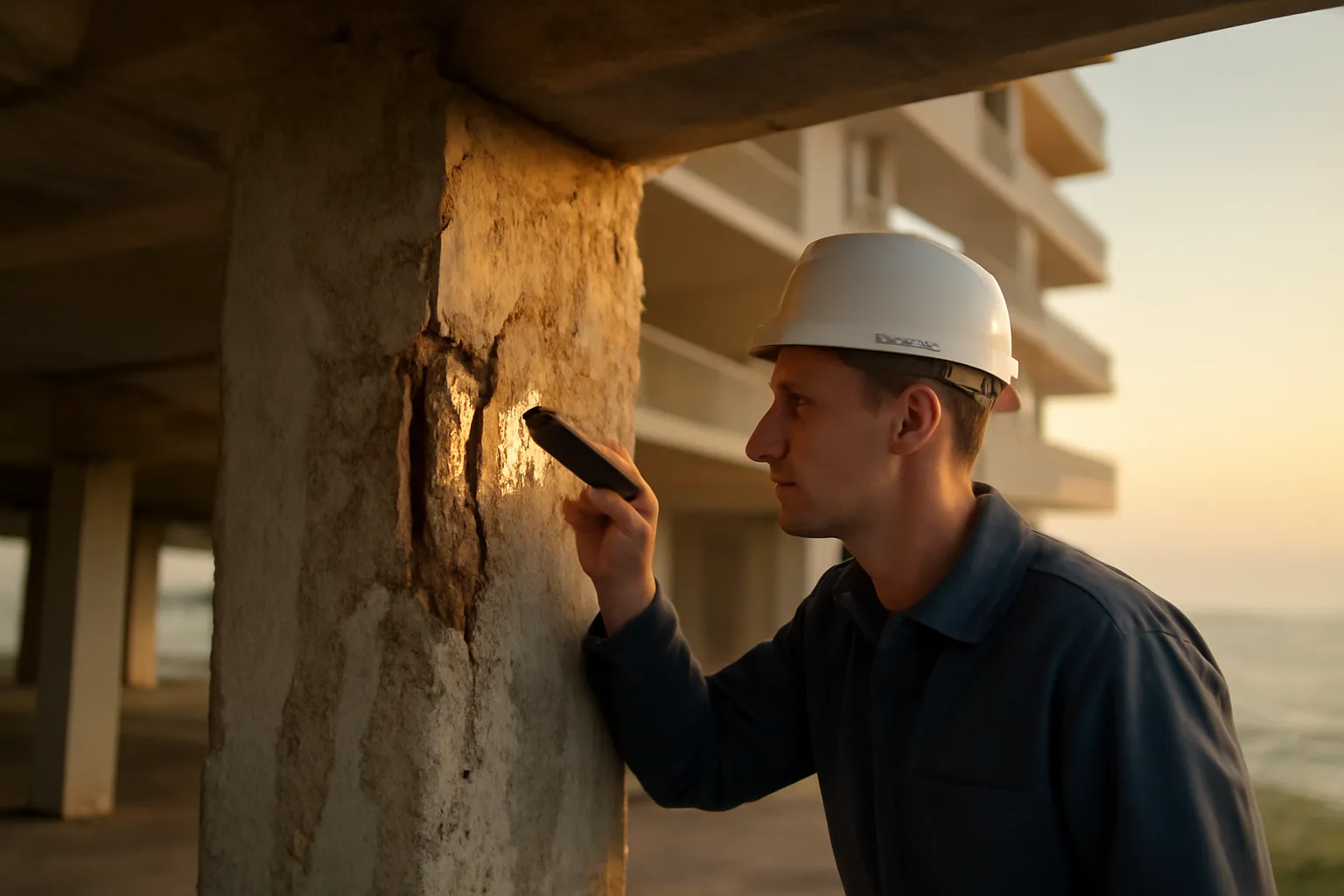
The milestone inspection law is a state structural safety requirement, not a local ordinance. It applies to condominium and cooperative buildings that are three stories or more in height, and it requires a licensed architect or engineer to physically inspect the building's structural components on a set schedule. The law is codified at Florida Statutes §553.899, created after the 2021 Surfside collapse killed 98 people [1]. The statute defines two phases. Phase 1 is a visual inspection: an engineer or architect walks the property, looks at load-bearing walls, roofs, foundations, and other structural elements, and files a report with the local building official. If Phase 1 turns up "substantial structural deterioration," the statute requires a Phase 2 inspection, which can include destructive or invasive testing (core samples, drilling into concrete, opening up walls) to find out how bad the problem actually is [1]. The law puts responsibility on the local building official to notify associations when an inspection is due. Boards shouldn't wait on that notice. Confirm your building's exact deadline with your association's counsel and your county building department, since some counties (Miami-Dade and Broward in particular) had their own recertification programs before the state law existed and now layer on top of it.
When is a milestone inspection due in Florida?
| 30 years from CO | More than 3 miles inland | Phase 1 by year 30, then every 10 years | |
|---|---|---|---|
| 25 years from CO | Within 3 miles of coastline | Phase 1 by year 25, then every 10 years | |
| Already past 30/25 years before 7/1/2022 | Either | Phase 1 required by 12/31/2024 | Local building officials can also set their own notification timelines, and some counties send reminder letters roughly a year out. Don't count on that letter arriving. If your board doesn't already have the certificate of occupancy date on file, pull it now. That single date drives every downstream deadline in your compliance calendar. |
The default trigger is 30 years from the building's certificate of occupancy date. If the building sits within three miles of the coastline, the trigger drops to 25 years, because salt air accelerates concrete and rebar corrosion [1]. After the first inspection, it repeats every 10 years for the life of the building. Buildings that hit their 30-year (or 25-year coastal) mark before July 1, 2022 had a compressed timeline: the statute required them to complete Phase 1 by December 31, 2024 [1]. That deadline has already passed for older buildings. If your association missed it, talk to counsel immediately about where you stand with your local building official. Here's the quick math reference: | Building age trigger | Distance from coast | Inspection due |
Which buildings need a milestone inspection?
The law applies to condominium and cooperative buildings that are three stories or more above ground, regardless of use. It covers residential condos, mixed-use buildings with condo units, and cooperative housing. Single-family homes, duplexes, and HOA-governed detached houses are not covered by §553.899, because the statute specifically targets condominium and cooperative structures [1]. Height is measured by number of habitable stories, not overall building height in feet, so a squat three-story building is just as covered as a 40-story tower. Attached townhome-style condos that are three stories can also fall under the law if they're legally structured as a condominium under Chapter 718. Some counties, most notably Miami-Dade and Broward, ran their own 40-year (and then 10-year) recertification programs long before Surfside. If your building is in one of those counties, you may have two overlapping compliance tracks: the county's local recertification program and the state milestone law. They don't automatically cancel each other out. This is a spot where you genuinely need a local land-use attorney or your county building department, not a guess.
How much does a milestone inspection cost?
Phase 1 inspections generally run from about $2,500 for a small, simple low-rise up to $15,000 or more for larger or more complex buildings, based on figures reported by Florida engineering firms and cited in state and local guidance during the law's rollout. There's no statewide fee schedule. Get at least two or three quotes from licensed engineers, because pricing varies a lot by region and building complexity. If Phase 1 finds substantial structural deterioration and triggers Phase 2, costs jump. Phase 2 can involve core drilling, load testing, and detailed forensic engineering, and depending on scope it can run tens of thousands of dollars just for the investigation, before any repair costs are even estimated. Some large or troubled buildings have reported Phase 2 and follow-up engineering costs well into six figures. The inspection fee itself is usually the cheap part. The real financial exposure is what the inspection finds. A building with deferred maintenance that gets flagged for Phase 2 can be looking at a special assessment that dwarfs the inspection cost many times over. That's the scenario boards should actually be planning reserves around, not the $5,000 engineer invoice.
What happens if a milestone inspection finds problems?
If the engineer or architect finds "substantial structural deterioration," the law requires them to notify the local building official within 45 days, and that finding triggers the Phase 2 process [1]. The building official can also require the association to take immediate action if there's an imminent safety risk, which in extreme cases has led to full or partial building evacuations elsewhere in the country following similar findings. Once Phase 2 is complete, the engineer issues a sealed report describing the condition of the structure and, if repairs are needed, a general description of what's required. The association is then on the hook to actually fund and complete those repairs, on top of paying for both inspection phases. This is where reserves and special assessments collide. If your association hasn't been fully funding reserves for structural components, a Phase 2 finding can force a large, sudden special assessment on every unit owner. Boards that want to avoid that surprise should look hard at their reserve study and structural integrity reserve study (SIRS) numbers well before the milestone deadline arrives, not after.
How does the milestone inspection relate to the SIRS requirement?
They're related but separate laws. The milestone inspection (§553.899) is a structural safety inspection. The Structural Integrity Reserve Study, or SIRS, is a financial planning requirement under Fla. Stat. §718.112, and it requires associations to study specific structural components (roof, load-bearing walls, foundation, plumbing, electrical, waterproofing, and more) and fund reserves for them without the option to waive or reduce that funding [2]. A milestone inspection tells you the structural condition of the building right now. A SIRS tells you what it will cost to replace or restore those components over their remaining useful life, and forces the association to reserve real money for it. Many associations schedule them close together, sometimes using the same engineering firm for efficiency, because the data overlaps. For buildings three stories or higher, SIRS became mandatory starting with reports due by December 31, 2024, under legislation passed in 2022 and amended since. If your building needs both, budget for them as a combined structural compliance project rather than two disconnected line items. Our SIRS guide breaks down that requirement in more detail.
What is a reserve study and what is it for?
A reserve study is a professional evaluation of a building's major shared components (roof, paving, painting, structural elements, plumbing, elevators) that estimates how much life each one has left and what it will cost to repair or replace it. The study then translates that into a funding schedule so the association knows how much to set aside each year. For an HOA, a reserve study for the association works the same way, but it may not be legally mandatory unless the HOA's documents require it or the association is condo-governed under Chapter 718. Condominium associations in buildings three stories and up now face the mandatory SIRS version, which is narrower in scope (structural components only) but far stricter in funding rules than a generic reserve study [2]. The honest answer on "how much should an HOA have in reserves" is that there's no single dollar figure that works across associations, because it depends entirely on the number, age, and replacement cost of components. What matters more is whether the association is funding at or near 100% of what the reserve study recommends. Associations that chronically underfund reserves are the ones that get hit hardest by milestone-triggered special assessments. Our reserve study for condo associations guide walks through how the numbers are actually built.
How much does a reserve study cost, and who pays for it?
Reserve study costs vary by building size and complexity, but Florida associations commonly report paying anywhere from roughly $1,000 for a small association to $10,000 or more for a large, component-heavy condominium, according to figures reported by Florida community association management and engineering firms during SIRS rollout coverage. A full SIRS, because it requires a licensed engineer or architect and more detailed structural analysis, tends to sit at the higher end of that range or above it for larger buildings. The association pays for it out of operating funds or, in some cases, reserves themselves, and the cost gets passed through to unit owners via regular assessments. This is different from a special assessment. It's a routine, budgeted expense like insurance or landscaping, not an emergency charge. Boards that skip or delay the reserve study to save a few thousand dollars usually pay for that decision later, in the form of a much larger emergency assessment when a big-ticket item fails without warning. A $199 kit won't replace the engineer's work, but a Building-Specific Board Compliance Kit can help a board track when studies and inspections are due, organize the resulting reports, and keep owners informed on schedule, which is often the part that actually falls apart on small volunteer boards.
What is an HOA assessment, and how is it different from a special assessment?
An HOA assessment, sometimes just called "assessments" or "dues," is the regular fee every owner pays to fund the association's operating budget and reserves. It's set annually based on the approved budget and is not optional. It's a contractual obligation tied to ownership, enforceable through liens in most states including Florida. A special assessment is a separate, one-time (or occasionally installment-based) charge levied outside the normal budget cycle, usually because of an unexpected expense, a reserve shortfall, or a large capital project like a milestone-triggered structural repair. Florida condo law under Chapter 718 sets out how associations can levy special assessments and what notice owners are entitled to before a vote [3]. Boards facing a possible structural repair bill should be upfront with owners early about the possibility of a special assessment rather than springing it on them after Phase 2 results come back. Our HOA special assessment explainer covers the notice and voting mechanics in more detail, and condo special assessment insurance covers whether that risk can be insured against (short answer: rarely, and not for deferred maintenance).
Are HOA special assessments tax deductible?
Generally, no, not for the individual owner's personal income taxes. This is one of the most common misunderstandings boards field from frustrated owners. The IRS treats special assessments for capital improvements to your own primary residence similarly to home improvement costs: not immediately deductible, though they may add to your home's cost basis and reduce capital gains tax when you sell [4]. There are narrow exceptions. If the unit is a rental property, special assessment costs related to repairs and maintenance may be deductible as a business expense in the year paid, and assessments for capital improvements to a rental may be depreciable over time. Owners should talk to a tax professional about their specific situation. A board shouldn't be giving individual tax advice, and this article isn't tax advice either. What a board can do is give owners clean paperwork: the amount, the date, the stated purpose (structural repair versus routine maintenance), and whether it was billed as one lump sum or in installments. That paperwork is what an owner's accountant will actually need.
How should a board budget and plan ahead of a milestone deadline?
Start by confirming your certificate of occupancy date and coastal distance, since those two facts set your deadline math under §553.899 [1]. Then work backward: engineers in high-demand areas of Florida have had backlogs of six months or more during peak compliance years, so don't wait until the calendar year of your deadline to request quotes. Run the milestone inspection and SIRS timelines side by side rather than treating them as separate projects. If your reserve study or SIRS shows underfunding on structural components, start having the special assessment conversation with owners now, in stages, rather than after a Phase 2 report lands with a large number attached. Some Florida legislation passed in 2023 and 2024 gave associations limited relief options around SIRS funding timelines and reserve waivers for certain deadlines. Those provisions have changed more than once, so confirm the current rules with your association's counsel before assuming any relief applies to your building. See our Florida condo reserve fund relief page for the general shape of what's been proposed and passed, but treat it as a starting point for a conversation with counsel, not a final answer.
Frequently asked questions
What is a reserve study?
A reserve study is a professional assessment of a building's major shared components (roof, paint, paving, plumbing, structural elements) that estimates their remaining useful life and replacement cost, then produces a funding plan so the association can save enough over time instead of facing a surprise special assessment when something fails.
What is a reserve study for an HOA?
For an HOA, a reserve study works the same way as for a condo: an evaluation of shared components with a funding schedule. It may not be legally required unless the governing documents mandate it, but lenders (including Fannie Mae) and prudent boards use one anyway to avoid underfunded reserves and emergency assessments.
What is an HOA assessment?
An HOA assessment is the regular fee owners pay, usually monthly or quarterly, to fund the association's operating expenses and reserve contributions. It's set by the approved annual budget and is a mandatory obligation of ownership, distinct from a one-time special assessment levied for unplanned or large capital expenses.
How much should an HOA have in reserves?
There's no single dollar amount; it depends on the number and replacement cost of the association's components. The better benchmark is funding percentage: associations should aim to fund reserves at or near 100% of what a current reserve study or SIRS recommends, since underfunded reserves are the leading cause of large surprise special assessments.
How much does a reserve study cost?
Costs commonly range from around $1,000 for a small association to $10,000 or more for a large, complex condominium, based on figures reported by Florida community association firms. A full SIRS, requiring a licensed engineer or architect, typically costs more than a basic reserve study because of its structural focus and depth.
Are HOA special assessments tax deductible?
Generally no, for an owner's personal residence. The IRS typically treats them like home improvement costs, not deductible in the year paid, though they may raise the property's cost basis and reduce capital gains tax at sale. Rental property owners may have different deduction or depreciation options; consult a tax professional.
When is a milestone inspection due in Florida?
At 30 years from the certificate of occupancy date, or 25 years if the building sits within three miles of the coast, then every 10 years after that, under Fla. Stat. §553.899. Buildings that already passed that age threshold before July 1, 2022 had to complete Phase 1 by December 31, 2024.
Which buildings are required to get a milestone inspection?
Condominium and cooperative buildings three stories or more in height, under Florida Statutes §553.899. Single-family homes and standard HOA-governed detached houses are not covered. Some counties, like Miami-Dade and Broward, layer additional local recertification requirements on top of the state law.
What is the difference between a milestone inspection and a SIRS?
A milestone inspection (§553.899) is a physical structural safety check by an engineer or architect. A SIRS (§718.112) is a financial reserve-funding study covering structural components. One assesses current condition; the other forces the association to save money for future repairs. Many buildings need both, often around the same time.
What happens if a milestone inspection fails or finds damage?
If Phase 1 finds substantial structural deterioration, the inspector must notify the local building official within 45 days, and the association must move to a more invasive Phase 2 inspection. Depending on findings, the building official can require repairs, and in severe cases has authority to restrict occupancy for safety.
How much does a milestone inspection cost in Florida?
Phase 1 typically costs about $2,500 to $15,000 or more depending on building size and complexity, based on figures from Florida engineering firms. If Phase 2 is triggered, costs rise substantially because of destructive testing and detailed forensic engineering, sometimes reaching well into six figures for large or troubled buildings.
Can an HOA or condo association delay or waive a milestone inspection?
No. Fla. Stat. §553.899 sets the inspection schedule and doesn't include a general waiver option for the inspection itself. Some separate legislation has adjusted SIRS reserve-funding timelines, but that's a different requirement; confirm current rules on both with your association's counsel and county building department.
Sources
- Florida Senate, Florida Statutes §553.899 (Milestone inspection): Milestone inspection triggers at 30 years (25 near coast), Phase 1/Phase 2 process, and the 12/31/2024 compressed deadline for older buildings
- Florida Senate, Florida Statutes §718.112 (Structural Integrity Reserve Study): SIRS requirement, mandatory structural component funding, and no-waiver provisions for covered associations
- Florida Senate, Florida Statutes Chapter 718 (Condominiums): Rules governing condo association special assessments and owner notice requirements
- Internal Revenue Service, Publication 523 (Selling Your Home): Special assessments for capital improvements can add to a home's cost basis rather than being immediately deductible
- Florida Department of Business and Professional Regulation, Chapter 61G15, F.A.C. (Board of Professional Engineers): State licensing rules governing the engineers authorized to perform milestone inspections
- National Institute of Standards and Technology, NCST Act Investigation Report on the Champlain Towers South Collapse (NIST NCSTAR 22): Federal investigation into the 2021 Surfside condominium collapse that prompted Florida's milestone inspection law
- Miami-Dade County Code of Ordinances, Chapter 8, Article II (Unsafe Structures / Building Recertification): Miami-Dade's pre-existing local 40-year and 10-year building recertification program that predates and layers onto the state milestone law
- Florida Senate, Bill Analysis and Fiscal Impact Statement for SB 4-D (2022): Legislative history behind the 2022 creation of the milestone inspection and SIRS requirements following the Surfside collapse