Last updated 2026-07-25
TL;DR
Florida requires a milestone inspection when a condo or co-op building 3+ stories hits 30 years old (25 years if within 3 miles of the coast), then again every 10 years. A licensed architect or engineer does Phase 1; if problems show up, Phase 2 digs deeper. Costs typically run $5,000 to $25,000+ depending on building size, per Fla. Stat. 553.899.
What is a Florida milestone inspection, exactly?
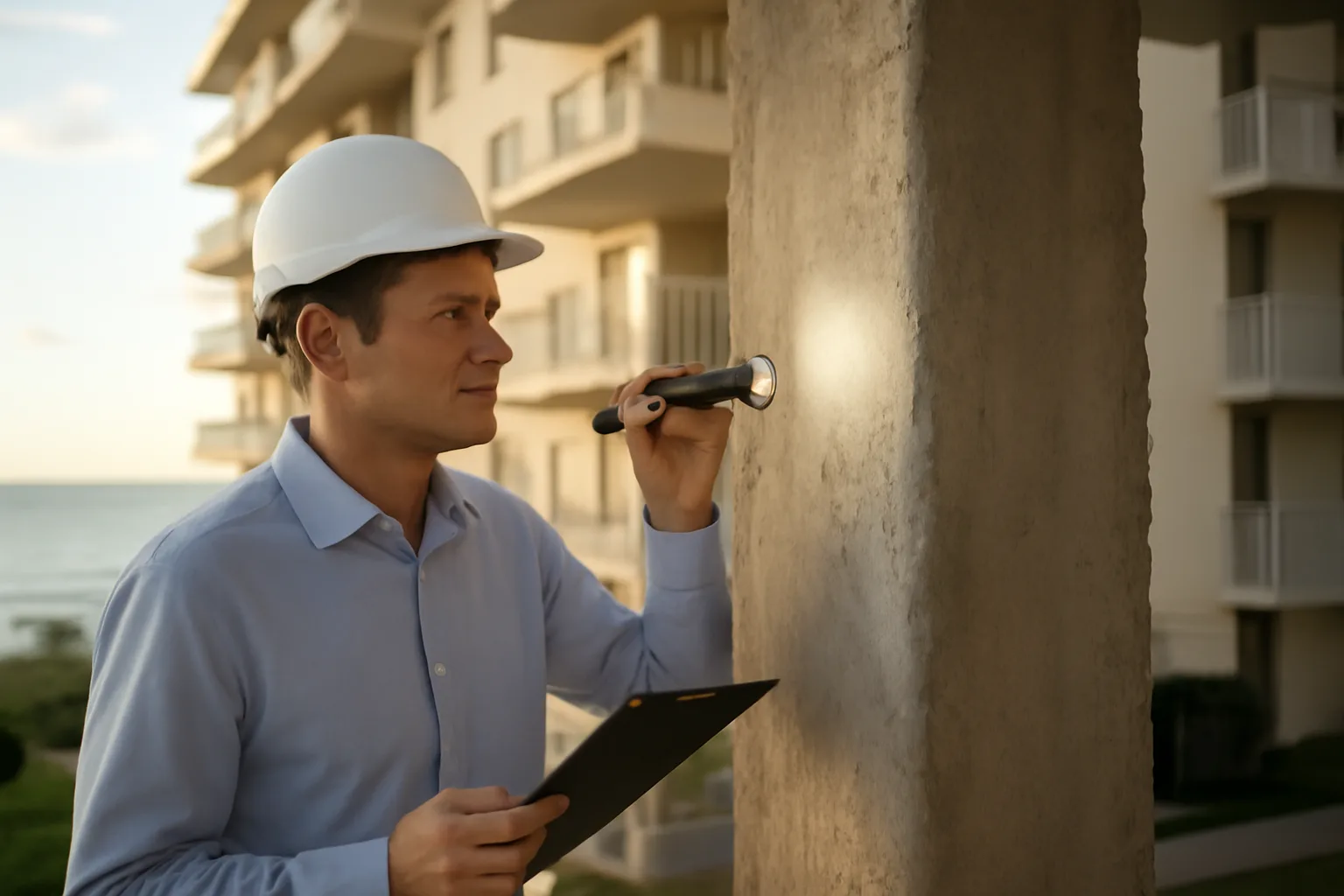
A milestone inspection is a structural check-up required by Florida law for condominium and cooperative buildings that are three stories or taller. It's not a cosmetic walkthrough. A licensed architect or engineer has to physically inspect the building's structural components, primary load-bearing systems, and look for signs of "substantial structural deterioration," the term used in the statute itself [1]. The law is Florida Statutes section 553.899, added after the 2021 Champlain Towers South collapse in Surfside that killed 98 people. Lawmakers passed it in Senate Bill 4-D during a 2022 special session, and it has been amended since [1] [2]. The inspection happens in two possible phases. Phase 1 is a visual survey, no destructive testing, no drilling into walls. If the inspector finds "substantial structural deterioration," the building moves to Phase 2, which allows more invasive testing, like removing sections of stucco or concrete to check rebar corrosion [1]. Most buildings that get a clean Phase 1 report never need Phase 2. But if your building is older, near saltwater, or has visible spalling concrete or rusted rebar staining, budget for the possibility.
When is my building's milestone inspection due?
| Coastal (within 3 miles), 25+ years old | Per local building official's phased schedule, generally by Dec. 31, 2024 or per county timeline | |
|---|---|---|
| Coastal, turning 25 in future years | By Dec. 31 of the year it turns 25 | |
| Inland, 30+ years old | Per local building official's phased schedule | |
| Inland, turning 30 in future years | By Dec. 31 of the year it turns 30 | Confirm your specific deadline with your local building department; some counties issued their own phased schedules for legacy buildings under the statute's transition provisions [1] [3]. |
The trigger is the building's age, measured from the date of the certificate of occupancy, and its distance from the coast. Buildings within 3 miles of the coastline must complete their first milestone inspection by December 31 of the year the building turns 25 years old. Buildings farther inland get until age 30 [1]. After that first inspection, the cycle repeats every 10 years for the life of the building. There's no exemption for buildings under three stories; the law specifically applies to condo and cooperative buildings of 3 stories or more, excluding single-family, two-family, and three-family dwellings [1]. Here's the part boards miss: for buildings that were already older than the threshold when the law took effect, DBPR and local building officials set phased deadlines based on age, generally requiring the oldest buildings to go first. If your building's C.O. predates good record-keeping, get your county building department to confirm the official age on record before you schedule anything. | Building age at law's effect | First inspection deadline |
Who can perform a milestone inspection in Florida?
Only a licensed architect or engineer registered in Florida can perform the inspection and sign the report. The statute is specific: the inspector must be "a licensed architect or engineer authorized to practice in this state" [1]. You can verify any professional's license status directly through the Florida Department of Business and Professional Regulation's license search tool. Don't let a contractor or property manager tell you they can sign off on this. They can't. The report has to go to the local building official, and it has to carry the seal of a licensed architect or engineer. A lot of boards ask if they can just use whoever did their last roof inspection or their insurance adjuster. No. Different license, different scope, different liability. Get bids from firms that specifically do Chapter 553 structural milestone work, and ask for references from other condo associations, not single-family home inspections.
How much does a milestone inspection cost?
Costs vary widely by building size, height, and whether Phase 2 testing is needed. Industry estimates commonly cited by Florida engineering firms and condo attorneys put Phase 1 inspections in the range of roughly $5,000 to $15,000 for a small to mid-size building, with larger or taller buildings running well over $20,000, and Phase 2 work (destructive testing plus repairs it uncovers) adding tens of thousands more depending on findings [3] [4]. There's no statewide fee schedule because pricing depends on square footage, number of stories, parking garage structures, and how spread out the buildings are in a multi-building association. A single 3-story building with 20 units costs far less to inspect than a 20-story coastal tower with a below-grade garage. The honest answer for budgeting: get three bids from licensed engineering firms before you assume a number. Boards that skip this step and budget a flat $10,000 sometimes get surprised by a $40,000 invoice once Phase 2 triggers. This is also where reserve planning intersects with the milestone requirement. If your reserve study hasn't accounted for inspection costs and potential Phase 2 remediation, your board is going to be looking at a special assessment vote with very little runway.
What happens if the inspection finds structural problems?
If Phase 1 finds "substantial structural deterioration," a term the statute leaves partly to professional judgment but generally means deterioration that affects the structural integrity of the building, the inspector moves to Phase 2 [1]. Phase 2 involves more invasive testing, like core sampling of concrete or exposing rebar to check for corrosion. Once Phase 2 is done, the engineer submits a sealed report to the association and the local building official identifying any needed repairs and a timeline. The board is then legally required to act. Florida law requires associations to promptly repair deterioration identified in a milestone inspection report; delay isn't really an option once the report is in the building official's hands, because local governments can escalate to code enforcement [1] [2]. This is usually the moment a special assessment conversation starts. If reserves aren't sufficient (a very common situation across Florida condos before the 2022 reform), the board has to figure out how to fund repairs, whether through reserves, a special assessment, a loan, or some mix. See our guide on hoa special assessment rules for how that process legally works in Florida.
What is a reserve study, and how is it different from a milestone inspection?
A reserve study is a financial and physical assessment of a building's common elements, projecting when major components (roof, paving, painting, structural elements, plumbing, electrical) will need replacement and how much money the association needs to save for it. It's a budgeting tool, not primarily a safety inspection. A milestone inspection, by contrast, is a structural safety check under Fla. Stat. 553.899, done by an architect or engineer, focused specifically on the building's structural integrity, not the full range of components a reserve study covers [1]. Florida's SIRS (Structural Integrity Reserve Study) requirement, created by the same 2022 legislative package, sits between the two. SIRS is required under Fla. Stat. 718.112(2)(g) for condo buildings 3 stories or more, and it specifically requires reserve studies to fully fund (no more waiving or underfunding) reserves for roof, load-bearing walls, primary structural members, floor, foundation, fireproofing, fire protection systems, plumbing, electrical, and waterproofing, among other required components [5]. See our SIRS breakdown and our general reserve study for condo association guide for the full component list and deadlines.
What is a reserve study for an HOA, and does Florida require it?
A reserve study for an HOA works the same way conceptually: a licensed professional or qualified reserve specialist inspects common-area components and building systems, estimates remaining useful life, and calculates the funding schedule needed to replace them without a surprise special assessment. Florida's SIRS requirement technically applies to condominium associations under Chapter 718, not to standalone HOAs governed by Chapter 720, though many HOAs with attached buildings 3+ stories should still commission independent reserve studies as a financial best practice even without a statutory mandate. If your association is structured as a co-op, similar milestone and reserve rules apply under Chapter 719 [1] [5]. The practical difference: condo boards under Chapter 718 face specific statutory reserve line items (structural components) they cannot waive or underfund starting with reserve funding for fiscal years beginning on or after January 1, 2025 for existing SIRS-required items [5]. HOA boards under Chapter 720 have more flexibility but less legal cover if reserves run dry.
How much should an HOA or condo have in reserves?
There's no single dollar figure; the correct reserve level is whatever a current reserve study says your specific components will cost to replace, spread across their remaining useful life. Generic advice like "keep 10% of your budget in reserves" is not how Florida's SIRS math works and can leave a building dangerously underfunded. For Florida condo associations with SIRS-required components (structural, roof, waterproofing, electrical, plumbing, fireproofing, load-bearing elements), the statute requires full funding, meaning the association can no longer vote to waive or reduce reserve contributions for those line items once the SIRS is complete [5]. That's a meaningful shift from pre-2022 practice, when many associations voted every year to underfund or skip reserves entirely. As a rough industry benchmark (not a legal standard), reserve specialists often flag associations funded below 30% to 50% of their fully-funded reserve requirement as being at meaningfully elevated risk of a special assessment within the next few years, though this varies enormously by building age and component condition. Get an actual reserve study; don't guess.
What is an HOA or condo assessment (and how does it differ from a special assessment)?
A regular assessment is the routine periodic fee (monthly or quarterly) every owner pays to cover operating costs and reserve contributions, set out in the association's budget. A special assessment is a separate, usually one-time charge levied when the regular budget and reserves aren't enough to cover an unexpected or large expense, like emergency repairs after a milestone inspection finding. Florida condo boards can generally levy special assessments without a membership vote unless the declaration says otherwise, though notice requirements apply: owners must typically get at least 14 days' notice of a board meeting where a special assessment will be considered, per Fla. Stat. 718.112(2)(c) [5]. Always confirm your declaration's specific voting and notice thresholds with the association's counsel, since some documents require a membership vote for assessments above a certain size. For a full walkthrough of how these get approved and challenged, see hoa special assessment.
Are HOA or condo special assessments tax deductible?
Generally, no, not for a personal residence. The IRS treats special assessments the same way it treats regular HOA dues for a primary residence: as a nondeductible personal expense, similar to how you can't deduct routine home maintenance costs [6]. There are narrow exceptions. If you rent out the unit, a special assessment tied to the rental portion of the property may be deductible as a rental expense, or depreciated if it's a capital improvement (like a new roof or structural repair) rather than a repair. If part of your home is used for a qualifying home office, a proportional share might factor into that deduction too. This is genuinely fact-specific and depends on whether the IRS would classify the assessment as a repair versus a capital improvement, so talk to a CPA before you assume anything is deductible, especially for a large post-milestone-inspection assessment [6]. Don't take tax advice from your board president or condo attorney on this one; it's outside their lane. Get a CPA who has actually handled Florida condo special assessment questions.
What should a board do to prepare for milestone inspection and SIRS deadlines together?
Treat the milestone inspection and SIRS as two related but separate compliance tracks, both with hard deadlines, both requiring licensed professionals, both feeding into the same conversation about reserves and assessments. Start by confirming your building's official age and coastal distance with your county building department; that sets your actual deadline, not a guess based on when residents think the building was built. Then get bids from at least three licensed structural engineering firms specifically experienced in Chapter 553 milestone work, not general contractors. Run your SIRS in parallel if you haven't already; the fully-funded reserve requirement changes your annual budget math regardless of what the milestone inspection finds. If your board is trying to track deadlines, licensed-professional requirements, and board meeting notice rules across both statutes without a dedicated system, that's exactly the gap a Building-Specific Board Compliance Kit is built to close: a $199 one-time tool that organizes your building's specific deadlines, generates the notices and meeting agendas you need, and keeps your paperwork straight so your board isn't reconstructing statute requirements from memory during a stressful budget season. It doesn't replace your engineer or your reserve specialist; it just keeps the compliance calendar from falling apart around them. Finally, loop in your association's counsel early, especially around special assessment notice requirements and any conflicts between your governing documents and the statute's default rules. Statutes get amended almost every legislative session; confirm current requirements with counsel and your county before finalizing any board decision.
Where the law could still change (and why you should double-check dates)
Florida's legislature has amended the milestone inspection and SIRS statutes multiple times since the original 2022 special session bill, including adjustments to SIRS deadlines and funding rules in 2023 and 2024 sessions [2] [5]. Boards that read a five-year-old news article and assume the rules are frozen are making a mistake. Before you finalize a budget, a special assessment vote, or an engineer contract, pull the current text of Fla. Stat. 553.899 and 718.112 directly from the Florida Senate's statutes website, and confirm with your association's attorney whether any recent amendments affect your building's specific deadline or funding requirement [1] [5]. The same goes for county-level phased deadlines, which some building departments have adjusted as they've worked through backlogs of aging buildings. If your association qualifies for any relief provisions (some limited flexibility has been discussed in various legislative sessions around SIRS funding timelines), check our florida condo reserve fund relief explainer and confirm current status with counsel, since relief provisions are exactly the kind of detail that changes session to session.
Frequently asked questions
What is a reserve study?
A reserve study is a professional assessment of a building's common elements and major systems that projects remaining useful life and calculates how much money an association needs to save to replace them without a surprise special assessment. It combines a physical inspection with a funding plan and is usually updated every few years.
What is a reserve study for an HOA?
For an HOA, a reserve study works the same way: a qualified specialist inspects shared components (roofs, paving, amenities, structural elements) and builds a savings schedule so the association isn't caught short. Florida's statutory SIRS mandate applies to condos under Chapter 718, but standalone HOAs benefit from the same practice even without a legal mandate.
What is an HOA assessment?
An HOA assessment is a fee owners pay to fund the association's operating budget and reserves. Regular assessments are routine and recurring; special assessments are additional one-time (or short-term) charges levied when the budget or reserves can't cover a specific large expense, like post-milestone-inspection repairs.
How much should an HOA have in reserves?
There's no flat percentage that's legally correct; the right amount is whatever a current reserve study calculates for your specific components' remaining life and replacement cost. For Florida condos, SIRS-required structural components must be fully funded starting with reserve budgets for fiscal years beginning on or after January 1, 2025, per Fla. Stat. 718.112(2)(g).
How much does a reserve study cost in Florida?
Costs vary by building size and complexity, but licensed reserve specialists commonly charge anywhere from a few thousand dollars for a small association up to well over $10,000 to $15,000 for larger, multi-building, or high-rise properties requiring more extensive component inspection and financial modeling. Get multiple bids; there's no fixed statewide rate.
Are HOA special assessments tax deductible?
Generally no, for a primary residence, similar to regular HOA dues. Exceptions can apply for rental properties (where the assessment may be deductible or depreciable as a rental expense) or a qualifying home office. Because this depends on whether the IRS treats the charge as a repair or capital improvement, confirm with a CPA.
What is a milestone inspection in Florida?
It's a structural safety inspection required by Fla. Stat. 553.899 for condo and cooperative buildings 3+ stories tall, performed by a licensed architect or engineer, due at 25 years (coastal) or 30 years (inland) and every 10 years after that. Phase 1 is visual; Phase 2 (invasive testing) triggers if deterioration is found.
Who pays for a milestone inspection?
The association pays, typically through reserves, the operating budget, or a special assessment if funds aren't available. Costs get allocated among owners according to the association's declaration, usually based on unit percentage ownership, the same way most common expenses are split.
What happens if my condo association skips the milestone inspection deadline?
Local building officials can pursue code enforcement action, including fines, against associations that miss their milestone inspection deadline under Fla. Stat. 553.899. Beyond legal exposure, skipping the inspection leaves the board and owners genuinely blind to structural risk, which is the exact failure the law was written to prevent after the 2021 Surfside collapse.
Is a milestone inspection the same as a SIRS?
No. A milestone inspection (Fla. Stat. 553.899) is a structural safety check by an architect or engineer. A SIRS (Fla. Stat. 718.112(2)(g)) is a reserve funding study covering a broader list of building components. Many buildings need both, on different but related timelines.
How far from the coast does a building need to be for the 30-year deadline instead of 25?
Buildings located within 3 miles of the coastline must complete their first milestone inspection by the year they turn 25; buildings farther inland get until age 30, per Fla. Stat. 553.899. Confirm your building's exact distance and classification with your county building department, since this determines your legal deadline.
Can a property manager or contractor perform a milestone inspection?
No. Only a Florida-licensed architect or engineer can perform and seal a milestone inspection report under Fla. Stat. 553.899. Verify any professional's license through DBPR's license search before hiring, since the report has to be submitted to the local building official under that professional's seal.
Sources
- Florida Senate, Statutes, Section 553.899: Milestone inspection requirements, age/coastal thresholds, phase 1/phase 2 process, licensed architect/engineer requirement
- Florida Senate, Bill Information, SB 4-D (2022 Special Session D): Origin of milestone inspection and SIRS statutes following the Surfside collapse
- Florida DBPR, Division of Florida Condominiums, Timeshares, and Mobile Homes: State regulatory oversight of condominium associations and related compliance guidance
- Florida Senate, Staff Analysis, SB 4-D: Legislative cost and impact analysis context for milestone inspection implementation
- Florida Senate, Statutes, Section 718.112: SIRS requirement, fully-funded reserve mandate for structural components, board meeting notice requirements for assessments
- IRS, Publication 530, Tax Information for Homeowners: Tax treatment of homeowner association dues and special assessments as generally nondeductible personal expenses