Last updated 2026-07-25
TL;DR
A Florida milestone inspection report is a licensed engineer's or architect's written evaluation of a building's structural integrity, required at 30 years of age (25 years if within three miles of the coast) and every 10 years after, under Fla. Stat. 553.899. It flags substantial structural deterioration and tells the board what repairs must happen and by when.
What is a Florida milestone inspection report, exactly?
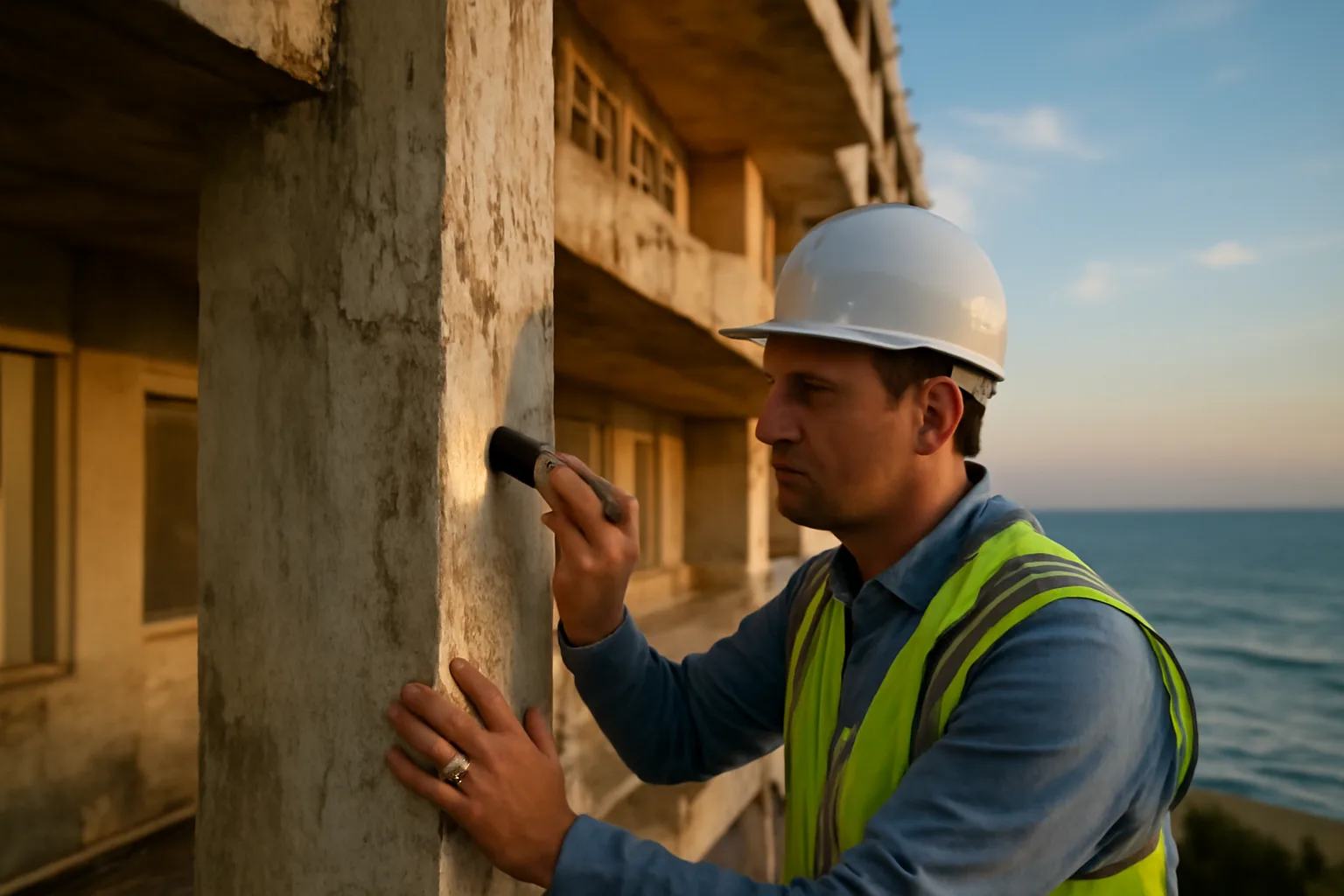
A milestone inspection report is the written document a licensed engineer or architect produces after physically inspecting a building's structure under Florida's milestone inspection law, Fla. Stat. 553.899 [1]. It's not a checklist or a photo log. The statute requires a "phase one" visual inspection first, and if the inspector finds "substantial structural deterioration," a mandatory phase two inspection follows with more invasive testing (core samples, exposed rebar checks, that kind of thing) [1]. The report has to identify visible signs of distress: cracking, spalling concrete, corroded reinforcement, water intrusion damage, and anything else that threatens the structural integrity of the building. It ends with the inspector's professional opinion on the condition of the load-bearing walls, floors, roof structure, and other primary structural systems. This applies to condominium and cooperative buildings that are three stories or more in height, per Fla. Stat. 553.899(1) [1]. Single-family homes, duplexes, and most low-rise HOA buildings under three stories are outside this law entirely, though local building departments can still require their own structural reviews. Boards often confuse the milestone report with a reserve study for the association's funding plan. They're related but legally distinct documents, produced by different professionals for different purposes. The milestone report is about physical safety right now. The reserve study is about money over the next 20 to 30 years.
When is the milestone inspection report due?
| Within 3 miles of coastline | Age 25 | Every 10 years | |
|---|---|---|---|
| More than 3 miles inland | Age 30 | Every 10 years | |
| Any building 3+ stories, already past trigger age before 7/1/2022 | Dec. 31, 2024 (or local deadline) | Every 10 years after | County building departments can adjust local deadlines and enforcement details, so always confirm the exact date with your county and the association's counsel rather than assuming the statewide default applies unmodified. |
The deadline depends on the building's age and how close it sits to the coast. Florida law splits buildings into two groups: those within three miles of the coastline, and everyone else [1]. Coastal buildings (within three miles of the coastline) need their first milestone inspection by December 31 of the year the building turns 25 years old, based on the certificate of occupancy date. Buildings farther inland get until age 30. After the first inspection, both groups repeat the process every 10 years [1]. For buildings that reached the trigger age before July 1, 2022 (when the current statute took effect after the Surfside collapse), the law required the initial inspection by December 31, 2024, unless the local building official set a different date [1]. That catch-up deadline has already passed for most older buildings, so if your building is in that window and hasn't had one done, talk to your association's counsel and your county building department immediately. Enforcement and any local grace periods vary by jurisdiction, so confirm timing with your county. Here's a quick reference: | Building type | Milestone deadline | Repeat interval |
What does the milestone inspection report have to include?
Under Fla. Stat. 553.899(4), the inspector's report must include a statement of the manner and type of inspection performed, and it must identify any "substantial structural deterioration" and recommend necessary repairs [1]. If the phase one report finds no substantial deterioration, that's it: the association is done until the next 10-year cycle. If substantial structural deterioration shows up, the statute requires a phase two inspection: more invasive testing to determine the full extent of the damage and what repair is necessary [1]. The report from phase two goes into detail on cause, extent, and recommended remediation, often with cost estimates or at least repair scope. The engineer or architect must be licensed in Florida. Boards should confirm licensure directly through the Florida Department of Business and Professional Regulation (DBPR), which maintains license lookup tools for engineers and architects at myfloridalicense.com. Do not accept a report from someone who isn't verified there. Once the report is complete, the association has to distribute it. Fla. Stat. 553.899 requires the association to provide the inspector's report to each unit owner, the local building official, and (for condos) file it as part of official association records within statutory timeframes [1]. Boards should also check Fla. Stat. 718.111 recordkeeping requirements for how long the report has to stay accessible to owners [2].
Who orders the milestone inspection, and who pays for it?
The board orders it. Fla. Stat. 553.899 puts the obligation on the association, not individual owners, to hire the licensed engineer or architect and schedule the inspection [1]. Boards typically get quotes from a few licensed firms; costs vary widely by building size, height, age, and coastal exposure, and there's no statewide standard price the statute sets. The association pays for it, usually out of operating funds or reserves, though many boards without reserves end up doing a special assessment to cover it. Milestone inspection cost is a separate line item from reserve funding for the repairs it may recommend. Here's the part boards get wrong most often: hiring the inspector is just step one. The board still has to review the findings with counsel, communicate them to owners, get contractor bids for any recommended repairs, and figure out financing (special assessment, loan, or reserves) if the deterioration findings require it. None of that paperwork and scheduling burden goes away just because the inspection happened. That's the exact gap a $199 Board Compliance Kit is built for: it organizes the milestone inspection timeline, tracks the phase one/phase two deadlines, and keeps owner communication documented, all built around your building's actual age and location. It doesn't replace the licensed engineer's inspection or give you a legal read on your governing documents; it keeps the paperwork and deadlines from falling through the cracks after the report lands on the board's desk.
What is a reserve study, and how is it different from a milestone inspection?
A reserve study is a financial and physical assessment of an association's common elements (roofs, pavement, pools, structural components, elevators, and more) that projects how much money the association needs to save each year to fund future repairs and replacements without a surprise special assessment. It's produced by a reserve specialist or engineer who inspects the property, estimates remaining useful life on each component, and calculates a funding schedule. A milestone inspection report answers "is this building structurally safe right now." A reserve study answers "how much money do we need, and when, to keep every major component funded." Florida's SIRS (Structural Integrity Reserve Study) requirement under Fla. Stat. 718.112(2)(g) specifically folds structural components into the reserve study for condo associations 3+ stories, tying the two processes together for buildings covered by both laws [3]. See our full breakdown of what a reserve study covers and how a SIRS differs from a standard reserve study for the mechanics.
What is a reserve study for an HOA?
For a homeowners association (as opposed to a condo), a reserve study covers shared amenities the HOA owns and maintains: clubhouse roofs, pool equipment, retention ponds, gates, shared pavement, and similar common property. It doesn't typically cover individual homes, since those are owner-maintained in most HOAs. Florida law doesn't impose the same mandatory SIRS or milestone inspection regime on HOAs that it does on condos 3+ stories. Fla. Stat. 720.303(6) requires HOA reserve funding decisions to be disclosed to members and voted on, but it doesn't mandate the same structural inspection cadence as 553.899 or the condo-specific SIRS rules in 718.112 [4]. That said, plenty of HOA governing documents (the CC&Rs) require regular reserve studies regardless of the statute, so check your declaration. A solid HOA reserve study answers three questions: what components need replacing, when, and how much it'll cost in current dollars and future dollars adjusted for inflation. Good ones run 20 to 30 years out.
How much does a reserve study cost?
Reserve study costs in Florida generally run from about $3,000 to $15,000+ depending on property size, number of components, and whether it's a "full" study (with on-site physical inspection of every component) versus an "update" study (desktop review of prior data). There's no single statewide fee schedule; providers price by scope, unit count, and site complexity, so get at least two quotes from licensed reserve specialists or engineers. For condo associations subject to the SIRS requirement, the study must be performed by a person qualified under Fla. Stat. 718.112(2)(g), which specifies who can conduct it: a licensed engineer or architect for the structural components, generally paired with reserve analysis for the rest [3]. Full SIRS studies for larger, older, or coastal buildings tend to land at the higher end of that range because of the structural inspection component layered onto the standard reserve components. Budget for this as a recurring cost, not a one-time expense. Reserve studies should be updated periodically (many boards do it every 3 to 5 years, or per the association's governing documents) since component conditions and costs change. See reserve study for condo associations for a fuller cost breakdown by building type.
How much should an HOA (or condo) have in reserves?
There's no single dollar figure or percentage that's "right" for every association; it depends entirely on your components, their remaining life, and replacement costs. What matters is whether your reserve funding matches what your reserve study (or SIRS) says you'll need. For Florida condominiums subject to the SIRS requirement, Fla. Stat. 718.112(2)(f) prohibits associations from waiving or reducing reserve funding for the structural components covered by the SIRS, starting with the fiscal year that begins on or after December 31, 2024 [3]. In practice, that means boards can no longer vote to underfund reserves for roofs, load-bearing walls, floors, foundations, and other structural items identified in the SIRS; full funding for those items became mandatory. A useful gut check: take your reserve study's total funding target for the current year, divide by what's actually sitting in the reserve account, and see how close you are. If you're badly underfunded relative to the study, expect either a special assessment, a loan, or a multi-year catch-up plan. Read more on Florida condo reserve fund relief options the legislature has floated for associations struggling to hit full funding on schedule.
What is an HOA assessment, and what are HOA assessments used for?
An HOA assessment is a fee the association charges owners to fund its operations and obligations. There are two basic types: regular (or "annual"/"periodic") assessments that cover routine operating expenses and reserve contributions, and special assessments, which are one-time charges for unexpected or large expenses that regular assessments and reserves don't cover. Regular assessments pay for landscaping, insurance, management fees, utilities for common areas, and the reserve contributions set by the reserve study. Special assessments typically get triggered by a big unplanned cost: a major repair the reserve study didn't fully fund, a milestone inspection finding that requires immediate structural work, an insurance deductible after storm damage, or a legal settlement. Boards have to follow their governing documents and Florida statute on notice and voting requirements before levying a special assessment. For condos, Fla. Stat. 718.112(2)(l) covers notice requirements for board meetings where a special assessment is considered [3]. See our detailed guide on HOA special assessments for the process, and condo special assessment insurance if you're weighing whether insurance can offset the hit.
Are HOA special assessments tax deductible?
Generally, no, not for the individual homeowner, in most circumstances. The IRS treats HOA assessments (regular and special) similarly to home maintenance costs, which are personal expenses and not deductible on a federal return, unless the assessment is for a capital improvement to a rental property you own, or in narrow cases tied to a casualty loss in a federally declared disaster area. This isn't tax advice specific to your situation. If a special assessment followed storm damage or another federally declared disaster, or if the property is a rental or investment unit, talk to a CPA about whether any portion qualifies as a deductible casualty loss or a capital expense added to your cost basis. The IRS publishes guidance on casualty losses in Publication 547, though rules changed significantly after the Tax Cuts and Jobs Act limited personal casualty loss deductions to federally declared disasters [5]. Don't assume deductibility without checking with a tax professional who's looked at your specific assessment and property use.
What happens if a building fails the milestone inspection?
There's no formal "pass/fail" grade in the statute. What happens is the inspector documents findings, and if there's substantial structural deterioration, the board has a legal and practical obligation to act on the phase two report's recommendations [1]. The local building official receives a copy of the report and can require repairs on a specific timeline, or in severe cases, can red-tag units or the building as unsafe for occupancy. This isn't hypothetical: Florida building departments have ordered evacuations of aging condo buildings after milestone or post-Surfside structural reviews found serious deterioration, and boards that dragged their feet faced fines and liability exposure. Don't wait for a crisis. If your milestone report or SIRS flags anything, get bids from licensed contractors immediately, brief owners honestly and in writing, and start the financing conversation (assessment, loan, or reserve draw) right away. The board that gets ahead of this saves owners money and avoids the legal exposure that comes with sitting on bad news.
How do milestone inspections, SIRS, and reserve studies fit together?
Think of it as three related but separate obligations for Florida condo buildings 3+ stories: the milestone inspection (structural safety check at age 25 or 30, then every 10 years) [1], the SIRS (structural reserve funding study, now with mandatory full funding for structural items) [3], and the general reserve study or reserve fund (money for everything else: roofs, paint, pavement, amenities). They run on different clocks and serve different purposes, but they feed each other. A milestone inspection finding substantial deterioration should directly inform the SIRS's structural component estimates. A well-run board tracks all three on one calendar, not three separate spreadsheets that nobody cross-checks. This is where most volunteer boards get overwhelmed, not because the individual requirements are complicated, but because keeping track of three overlapping deadlines, three sets of licensed professionals, and the owner communication for all of it is a lot of unpaid work. A $199 Board Compliance Kit is built around exactly this: it organizes your building's specific milestone, SIRS, and reserve deadlines into one schedule and helps the board document owner notices, so nothing slips through a scheduling gap. It's not a substitute for the licensed inspection or reserve study itself, and it doesn't interpret your declaration or bylaws; it just keeps the compliance calendar and communication straight.
Frequently asked questions
What is a reserve study?
A reserve study is a physical and financial assessment of an association's common property components (roofs, paving, pools, structural elements, and more) that estimates each component's remaining life and projects how much money the association needs to save annually to fund future repairs and replacements without a surprise special assessment.
What is a reserve study for an HOA?
For an HOA, a reserve study covers shared amenities the association owns, like a clubhouse, pool equipment, gates, retention ponds, and shared pavement. It estimates when each will need repair or replacement and how much the HOA should be setting aside now to cover that cost without a special assessment later.
What is an HOA assessment?
An HOA assessment is a fee the association charges owners to fund operations, maintenance, and reserves. Regular assessments cover routine annual costs; special assessments are one-time charges for unplanned or large expenses, like a major repair the reserve fund doesn't fully cover or a milestone inspection finding.
How much should an HOA have in reserves?
There's no universal dollar figure; it depends on your reserve study's findings for your specific components and their remaining life. The right benchmark is whether your funded reserves match your reserve study's target for the current year, not a generic percentage rule of thumb.
How much does a reserve study cost in Florida?
Costs generally run from about $3,000 to $15,000 or more, depending on property size, number of components, and whether it's a full physical study or a desktop update. SIRS studies for condos, which add structural inspection requirements under Fla. Stat. 718.112(2)(g), tend to run higher.
Are HOA special assessments tax deductible?
Generally no, for personal residences, since the IRS treats them as nondeductible personal maintenance expenses. Exceptions can apply for rental properties (as a capital cost) or in narrow casualty-loss situations tied to a federally declared disaster. Confirm with a CPA before assuming any deduction applies to your assessment.
When is a Florida milestone inspection required?
Florida condo and co-op buildings 3+ stories need their first milestone inspection by age 30, or age 25 if within three miles of the coastline, per Fla. Stat. 553.899. After that, inspections repeat every 10 years. Confirm exact local deadlines with your county building department.
Who has to perform the milestone inspection?
A Florida-licensed engineer or architect must perform the inspection and produce the report. Boards should verify licensure directly through DBPR's license lookup at myfloridalicense.com before hiring anyone, since the statute requires licensed professionals specifically for both phase one and phase two work.
What's the difference between a milestone inspection and a SIRS?
A milestone inspection is a structural safety check required at building age 25 or 30 and every 10 years after. A SIRS (Structural Integrity Reserve Study) is a funding study under Fla. Stat. 718.112(2)(g) that determines how much reserve money must be set aside for structural components, with full funding now mandatory for condos.
What happens if a milestone inspection finds substantial structural deterioration?
The statute requires a follow-up phase two inspection with more invasive testing to determine extent and needed repairs. The local building official gets a copy of the findings and can require specific repairs on a timeline, and in severe cases can restrict occupancy until repairs are complete.
Do HOAs (not condos) have to do milestone inspections?
Florida's milestone inspection law under Fla. Stat. 553.899 applies to condominium and cooperative buildings 3+ stories. It doesn't impose the same statutory requirement on single-family HOA communities, though an HOA's governing documents or local building codes may still require structural reviews.
Who pays for the milestone inspection and any required repairs?
The association pays, typically from operating funds or reserves. If reserves don't cover it, boards often levy a special assessment. There's no state fund that covers milestone inspection costs or resulting repairs; it's an association-level obligation under Fla. Stat. 553.899.
Sources
- Florida Legislature, Fla. Stat. 553.899: Milestone inspection requirements, deadlines by coastal distance, phase one/phase two process, and reporting obligations
- Florida Legislature, Fla. Stat. 718.111: Condo association recordkeeping requirements including inspection report retention
- Florida Legislature, Fla. Stat. 718.112: SIRS requirements, who may perform the study, and mandatory reserve funding for structural components starting fiscal year after Dec. 31, 2024
- Florida Legislature, Fla. Stat. 720.303: HOA reserve funding disclosure and member voting requirements
- Internal Revenue Service, Publication 547: Casualty loss deduction rules and federally declared disaster limitation after Tax Cuts and Jobs Act