Last updated 2026-07-24
TL;DR
Florida's milestone inspection law (Fla. Stat. 553.899) requires buildings 3+ stories to get a structural inspection at 30 years (25 years within 3 miles of the coast), then every 10 years after. SIRS reports under Fla. Stat. 718.112 are now mandatory for most condo associations. Deadlines and enforcement details keep shifting by county, so boards need to confirm current dates with their local building official and counsel.
What is the Florida milestone inspection law, exactly?
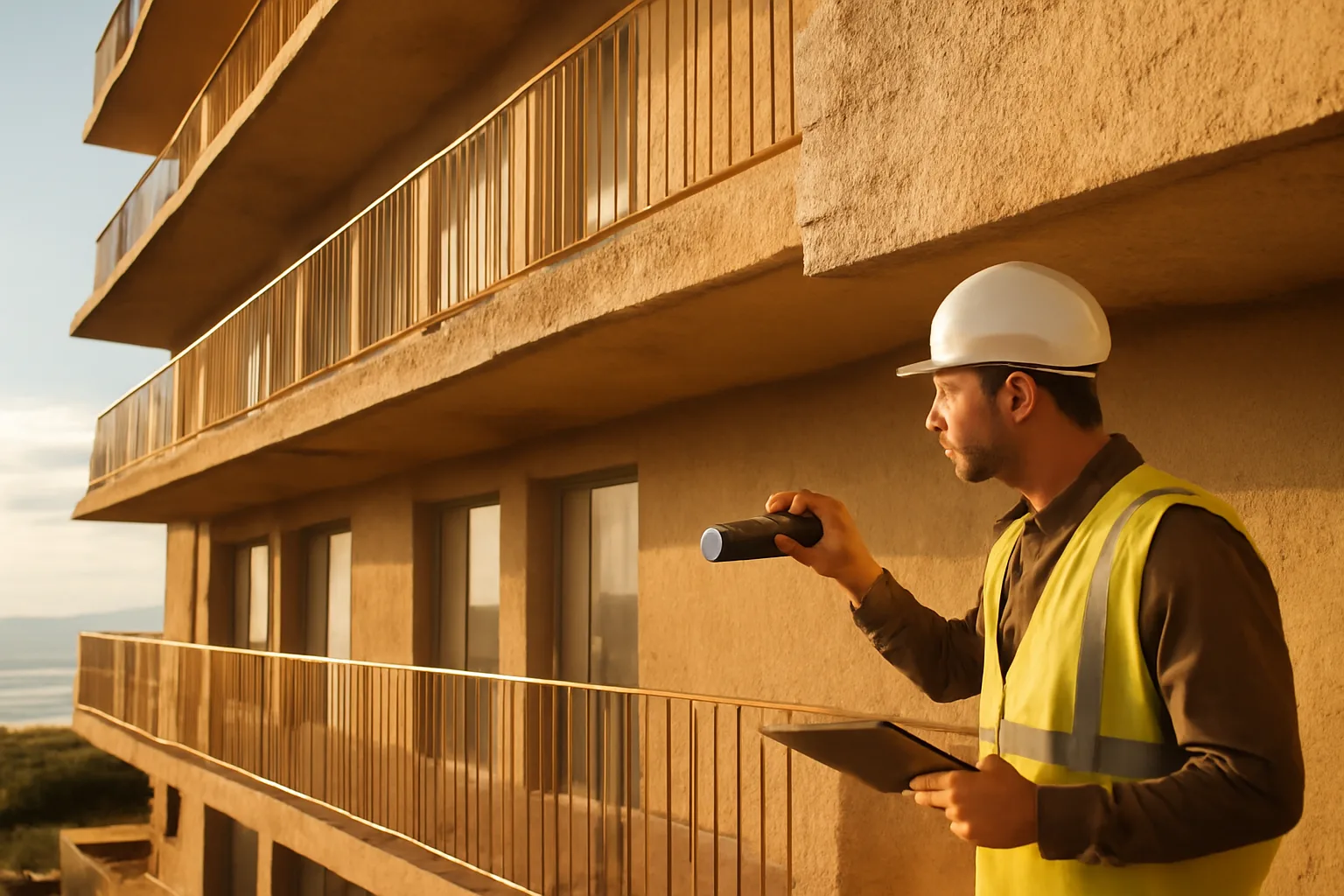
Florida's milestone inspection statute, Fla. Stat. 553.899, requires condominium and cooperative buildings that are three stories or taller to undergo a structural inspection once the building hits 30 years old, or 25 years old if it sits within three miles of a coastline. After that first inspection, the building needs another one every 10 years [1]. The law came out of the 2021 Surfside collapse, which killed 98 people in a beachfront condo tower near Miami. The Florida Legislature passed SB 4-D in 2022 and refined it further in 2023 with SB 154, tightening timelines and clarifying who pays and who inspects [2][3]. A licensed architect or engineer has to perform the inspection, not the board, not the property manager, not a handyman with a flashlight. The inspector produces a Phase 1 report, and if that report flags "substantial structural deterioration," the building moves to a more invasive Phase 2 inspection [1]. Boards don't get to skip this by voting on it. It's a state mandate tied to the building's age and location, not a governing-document choice.
What counts as a 'milestone inspection' deadline for my building?
The trigger date depends on when your certificate of occupancy was issued, and whether your building is within three miles of a coastline. Buildings that got their CO before July 1, 1992 had to complete their first milestone inspection by December 31, 2024, under the phased schedule DBPR and local building departments set up [1][4]. For everyone else, the math is simpler: take your CO date, add 30 years (or 25 if you're coastal), and that's your first inspection deadline. Then every 10 years after that, you're back in the queue. Here's the catch nobody warns boards about early enough: the 3-mile coastal rule doesn't just mean beachfront. Local building officials in counties like Broward, Miami-Dade, and Pinellas have been interpreting "coastline" broadly, and it can pull in buildings on inland waterways or bay-adjacent parcels that boards assumed were safe on the 30-year clock. Confirm your building's classification with your local building official directly. Don't guess, and don't rely on what the building next door is doing, because a few hundred yards can put you in a different bucket.
What is a SIRS and how is it different from a milestone inspection?
A Structural Integrity Reserve Study (SIRS) is a separate but related requirement under Fla. Stat. 718.112(2)(g), and it's about funding, more than safety. Where the milestone inspection asks "is this building structurally sound," the SIRS asks "do we have enough money saved to fix or replace the big stuff before it fails." A SIRS has to be performed at least every 10 years, and it must cover specific structural components: roof, load-bearing walls, primary structural members, floor, foundation, fireproofing and fire protection systems, plumbing, electrical systems, waterproofing and exterior painting, and windows and doors, if the estimated replacement cost of that item is more than $10,000 [5]. Associations with buildings three stories or higher were required to have their initial SIRS completed by December 31, 2024 [5]. A milestone inspection can happen without a SIRS being current, and vice versa, but in practice they feed each other. The engineer's milestone report often surfaces deterioration that becomes a line item the SIRS then has to fund. If your building failed its milestone Phase 1 and moved to Phase 2, expect your SIRS numbers to move too.
What is a reserve study, and how is it different from a SIRS?
A reserve study is the broader, older concept: a professional analysis of your association's common-element components (parking lots, pools, painting, roofs, elevators, whatever your governing documents cover) that projects when each will need repair or replacement and how much that will cost. Florida associations have used voluntary reserve studies for decades, long before SIRS existed. A SIRS is now a specific, mandatory subset of that idea, focused only on the structural and life-safety items listed in 718.112(2)(g), for condo buildings 3 stories and up. Think of the SIRS as the legally required floor, and a full reserve study as the ceiling: many boards choose to fund a complete reserve study that covers both the SIRS-mandated structural items and everything else (landscaping, painting, amenities) so they have one coherent capital plan instead of two documents that don't talk to each other. If you want the mechanics of how a reserve study gets built and who's licensed to do it, see our reserve study guide and the reserve study for condo association breakdown.
What is a reserve study for an HOA specifically?
Homeowners associations (single-family and townhome HOAs, not condos) are not covered by the SIRS mandate in 718.112, and they're not subject to the milestone inspection statute in 553.899 either, since that law is written around condo and co-op buildings. HOAs fall under Fla. Stat. Chapter 720, which has its own, lighter-touch reserve rules. That said, a reserve study for an HOA serves the same practical purpose: it's a component-by-component inventory of what the association owns (roads, clubhouse, pool, drainage, roofs on common buildings), paired with useful-life estimates and a funding plan so the HOA isn't blindsided by a $400,000 road resurfacing bill with nothing saved for it. Many HOA boards commission a reserve study anyway, not because Florida forces them to, but because lenders, insurers, and buyers increasingly ask for one. See hoa reserve study for how HOAs approach this differently from condos.
How much does a reserve study cost in Florida?
Costs vary a lot by building size and scope, and anyone who gives you one flat number is guessing. For a typical mid-size Florida condo (50 to 150 units), a full reserve study from a licensed provider generally runs somewhere between $3,000 and $15,000, depending on how many components are inventoried, whether it includes a physical site visit and component-by-component visual assessment (a Level 1 or 2 study), or is a simpler update to an existing study (Level 3) [6][7]. A SIRS specifically, because it's narrower in scope (structural items only) but requires an engineer or architect's stamp, often runs in a similar range for smaller buildings, but can climb well past $15,000 to $20,000+ for large, complex high-rises with multiple structural systems and prior deterioration flagged in the milestone report. Boards that skip the study entirely because of cost end up paying more later, either through a special assessment negotiated under pressure after a failure, or through the state's own default: without a completed SIRS, Florida law bars associations from waiving reserve funding for the SIRS-required components starting with fiscal years beginning on or after January 1, 2025 [5][8]. That's not a fee you can vote away.
How much should an HOA (or condo) have in reserves?
There's no single statutory percentage that says "your reserves should equal X% of replacement cost," and be skeptical of anyone who quotes one as Florida law. What the statute actually requires, for condos, is full funding of the SIRS-designated structural components starting with the fiscal year beginning January 1, 2025 or later, meaning the association has to budget reserves based on the study's findings rather than voting to underfund or waive them for those specific line items [5][8]. Industry reserve professionals (through groups like the Community Associations Institute and the Foundation for Community Association Research) commonly talk about a "percent funded" benchmark, where 70% or higher funded relative to the ideal reserve balance is considered healthy, and anything under 30% is a red flag. These are industry guidelines, not Florida statute, so don't cite them as law to your ownership. Practically, the honest answer is: however much your licensed reserve provider's study says you need, based on your specific components, their remaining useful life, and current replacement costs in your market. A building with a 40-year-old roof needs a very different reserve balance than one that re-roofed in 2019, even if they're identical in unit count.
What is an HOA assessment, and how is it different from a special assessment?
A regular (or "annual") assessment is the routine dues every owner pays, typically monthly or quarterly, that covers operating expenses and the ongoing reserve contributions set in the annual budget. Every condo and HOA owner in Florida pays this as a condition of ownership under their declaration. A special assessment is different: it's an additional, usually one-time charge the board levies outside the regular budget, typically to cover an unexpected expense, fund a shortfall the reserve study revealed, or pay for a major repair (like remediating the deterioration a milestone inspection flagged) that reserves don't fully cover. Florida law under Fla. Stat. 718.116 governs how condo assessments (including special ones) get levied and collected, including the association's lien rights if an owner doesn't pay . Special assessments tied to milestone or SIRS findings have become common since 2022, and they can be large: six-figure special assessments per unit have hit some South Florida buildings after Phase 2 milestone inspections uncovered concrete spalling or rebar corrosion that reserves hadn't anticipated. For more on how these get structured, see hoa special assessment.
Are HOA special assessments tax deductible?
Generally, no, not for the owner of a personal residence. The IRS treats regular and special assessments paid to a condo or HOA the same way it treats routine home maintenance and improvement costs: they're not deductible as an itemized expense on your personal tax return . There are narrow exceptions. If you own the unit as a rental or investment property, special assessments may be deductible as a business expense, or, in some cases, added to your cost basis in the property (which reduces capital gains tax when you sell), depending on whether the assessment covered a repair versus a capital improvement. If part of your assessment funds casualty-loss repairs after a federally declared disaster, there may be a separate deduction path under IRS casualty loss rules. This is genuinely a case-by-case tax question. Don't take a board member's or a neighbor's word for it. Talk to a CPA who knows Florida condo law and your specific ownership situation (primary residence vs. rental vs. mixed use) before you assume either way on your return.
What happens if a building fails its milestone inspection?
"Failing" isn't quite the right frame, since the milestone inspection isn't pass/fail in a binary sense. What happens is the Phase 1 inspector's report either finds no substantial structural deterioration (you're done until the next 10-year cycle) or it finds deterioration serious enough to trigger a mandatory Phase 2 inspection, which is more invasive and can include core sampling, opening up walls, and detailed structural analysis [1]. If Phase 2 confirms significant issues, the association has to submit repair plans to the local building official, generally within 365 days of receiving the Phase 2 report, and get those repairs underway on a timeline the building department sets [1]. Local building officials, not the state as a whole, have real enforcement teeth here: they can require buildings to be vacated if conditions are deemed unsafe, and they can compel repair timelines. This is exactly where reserve funding and milestone timing collide. A board that already has a current SIRS and healthy reserves can move fast on repairs. A board that's been waiving reserves for years is now facing a special assessment negotiation under a hard deadline set by a building official, not by the board's own calendar.
Has Florida changed the milestone or SIRS deadlines recently?
Yes, more than once, and boards need to stay current because this is one of the fastest-moving areas of Florida condo law. The original 2022 law (SB 4-D) set the framework. SB 154 in 2023 adjusted timelines and added clarity on inspector qualifications and reporting [2][3]. In 2024, the Legislature passed additional relief measures (sometimes called the "condo reserve fund relief" package) giving some associations limited flexibility on how they phase in full SIRS funding, without eliminating the underlying requirement [8]. The practical effect: the December 31, 2024 SIRS deadline held for most associations, but the rules around financing options, disclosure requirements to owners, and what counts as an acceptable interim funding plan have shifted year to year. Some counties have also adjusted local enforcement timelines and fee schedules for milestone inspection filings, so a rule that applied in Miami-Dade in 2023 may not match what Broward or Lee County requires today. For a full rundown of the relief provisions and what they actually changed (and didn't), see florida condo reserve fund relief. Bottom line: confirm current deadlines with your association's counsel and your county building department before you plan a budget cycle around a date you read somewhere last year.
Where do I find the actual statute and state guidance, not secondhand summaries?
Go to the primary sources directly instead of relying on board gossip or a property manager's memory of a seminar. The full text of the milestone inspection law lives at Fla. Stat. 553.899, searchable through the Florida Senate's official statutes site [1]. The SIRS and reserve funding requirements are in Fla. Stat. 718.112, in the same database [5]. For licensing questions (who's qualified to perform an inspection or reserve study, and how to verify a specific engineer or architect's license), the Florida Department of Business and Professional Regulation (DBPR) maintains license verification tools at myfloridalicense.com [4]. This is worth doing before you sign a contract, not after. A quick license lookup takes two minutes and confirms the person your board is about to pay actually holds an active Florida license in the right category. Boards juggling all of this at once (milestone deadlines, SIRS status, reserve line items, owner notices) often find the paperwork side eats more board-meeting time than the actual engineering does. That's the gap a $199 one-time Board Compliance Kit is built to close: it organizes your building's specific deadlines, tracks what's been filed and what's pending, and helps you communicate timelines to owners clearly. It doesn't replace your licensed inspector or reserve provider, and it can't tell you whether your specific building is compliant. It just keeps the schedule straight so nothing falls through a crack during a year when the rules keep moving.
Frequently asked questions
What is a reserve study?
A reserve study is a professional assessment of an association's common-element components (roofs, elevators, pools, structural systems, etc.) that estimates each item's remaining useful life and replacement cost, then builds a funding plan so the association saves enough over time. In Florida condos, a SIRS is now a mandatory, narrower version focused on structural components.
What is a reserve study for an HOA?
For an HOA (governed by Fla. Stat. Chapter 720, not the condo statute), a reserve study inventories shared assets like roads, clubhouses, and drainage systems, and projects when they'll need repair or replacement. HOAs aren't subject to Florida's SIRS mandate, but many commission studies voluntarily to avoid being blindsided by large unplanned costs.
What is an HOA assessment?
An HOA assessment is money owners are required to pay the association, either as a regular recurring due covering operating costs and reserves, or as a special assessment levied outside the normal budget to cover an unexpected or large expense. Assessments are enforceable obligations tied to ownership, not optional dues.
How much should an HOA have in reserves?
There's no fixed statutory percentage for HOAs. Industry benchmarks (from groups like the Community Associations Institute) often cite 70% funded or higher as healthy, but the real answer depends on a professional reserve study of your specific components. Condos have a firmer requirement: SIRS-designated structural items can't be underfunded starting fiscal year 2025.
How much does a reserve study cost?
Typical full reserve studies for mid-size Florida condos run roughly $3,000 to $15,000, depending on scope and whether it includes an on-site physical assessment. Large or structurally complex buildings needing a SIRS can run $15,000 to $20,000 or more. Get quotes from multiple licensed providers rather than assuming a flat number.
Are HOA special assessments tax deductible?
Generally no, for a personal residence. The IRS treats special assessments like ordinary home maintenance costs, not deductible expenses. Rental property owners may deduct them as business expenses or add them to cost basis, depending on whether the work was a repair or capital improvement. Confirm with a CPA for your specific situation.
What is a SIRS in Florida condo law?
SIRS stands for Structural Integrity Reserve Study, required under Fla. Stat. 718.112(2)(g) for condo buildings 3 stories or taller. It's a specialized reserve study covering structural and life-safety components (roof, foundation, load-bearing walls, plumbing, electrical, waterproofing, and more) with a $10,000 cost threshold per item. Initial SIRS reports were due December 31, 2024.
When is the milestone inspection deadline for my building?
It depends on your certificate of occupancy date and coastal proximity: 30 years after CO for most buildings, 25 years if within three miles of a coastline, then every 10 years after. Buildings with pre-July 1992 COs had a phased deadline of December 31, 2024. Confirm your exact date with your local building official.
Does a townhome HOA need a milestone inspection?
Only if the building meets the statute's criteria: three stories or more in height. Fla. Stat. 553.899 applies to condominium and cooperative buildings specifically, not typical single-family or two-story townhome HOAs. Most HOA communities fall outside this requirement, though local building departments make the final call on specific structures.
What happens if my association skips the SIRS or milestone inspection?
Skipping isn't really an option. Local building officials can compel compliance, and failing to have a required SIRS blocks the association from legally waiving reserves for structural components. Boards that ignore deadlines risk emergency special assessments, insurance complications, and potential liability exposure for directors under their fiduciary duty.
Who is qualified to perform a milestone inspection or SIRS in Florida?
A licensed architect or engineer must perform milestone inspections under Fla. Stat. 553.899. SIRS reports also require inspection by a licensed engineer or architect. Verify any inspector's active Florida license through DBPR's license search at myfloridalicense.com before signing a contract.
Can a board vote to waive reserve funding in Florida?
Not for SIRS-designated structural components. Since fiscal years beginning on or after January 1, 2025, Florida law prohibits condo associations from voting to waive or reduce reserves for items covered by the SIRS. Non-structural reserve items may still be subject to owner votes, depending on the association's documents and current law.
Sources
- Florida Senate, Fla. Stat. 553.899 (Building safety; condominium and cooperative buildings): Milestone inspection requirements: 30-year/25-year coastal trigger, 10-year recurrence, Phase 1/Phase 2 process
- Florida Senate, SB 4-D (2022): Original 2022 milestone inspection and SIRS legislation passed after Surfside
- Florida Senate, SB 154 (2023): 2023 amendments refining milestone inspection and SIRS timelines
- Florida Senate, Fla. Stat. 718.112 (Bylaws): SIRS requirements, structural component list, $10,000 threshold, funding waiver prohibition starting FY 2025
- Florida DBPR, Division of Florida Condominiums, Timeshares, and Mobile Homes: State oversight and guidance for condo association reserve and inspection compliance
- Florida Senate, 2024 condo relief legislation summary: 2024 adjustments to SIRS funding phase-in and disclosure requirements
- Florida Senate, Fla. Stat. 718.116 (Assessments; liability; lien and priority): Legal basis for regular and special assessments and association lien rights
- Internal Revenue Service, Publication 530: Homeowner tax deductibility rules relevant to HOA/condo assessments