Last updated 2026-08-14
TL;DR
There is no single new statewide December 2025 milestone inspection deadline. Florida's 30-year (25-year coastal) milestone inspection rule under 718.301 stays in force, with local deadline waves tied to each building's certificate of occupancy date. Watch your county building department and any 2025 legislative amendments; confirm specifics with your association's counsel.
Is there a new Florida condo milestone inspection deadline in December 2025?
No single statewide deadline changed on a December 2025 date. The confusion usually comes from local news coverage of individual buildings hitting their own milestone deadlines that month, not from a new law. Florida's milestone inspection requirement lives in section 553.899 of the Florida Building Code statute and section 718.301 and related provisions of the Condominium Act, and the trigger date is tied to each building's certificate of occupancy (CO), not a single calendar date for the whole state [1] [2]. Here's the mechanic that trips people up. A building that got its CO in, say, December 1995 hits the 30-year mark in December 2025. Multiply that across the thousands of condo buildings built in the mid-1990s condo boom on Florida's coasts, and you get a wave of "milestone inspection deadline" headlines clustering around the same month, even though it's really hundreds of separate, building-specific deadlines. So if your board saw a December 2025 headline and panicked, take a breath and check one thing first: your own building's actual CO date. That's the number that matters, not the news cycle. For a fast way to see the two-year and three-year Milestone-to-SIRS-to-reserves cascade laid out for your specific building, our Building-Specific Board Compliance Kit builds a dated task list off your CO year and county for $199 one time. It doesn't replace your engineer or your reserve study professional; it just keeps the paperwork and deadlines organized so nothing falls through a committee handoff.
What is the milestone inspection law and who does it apply to?
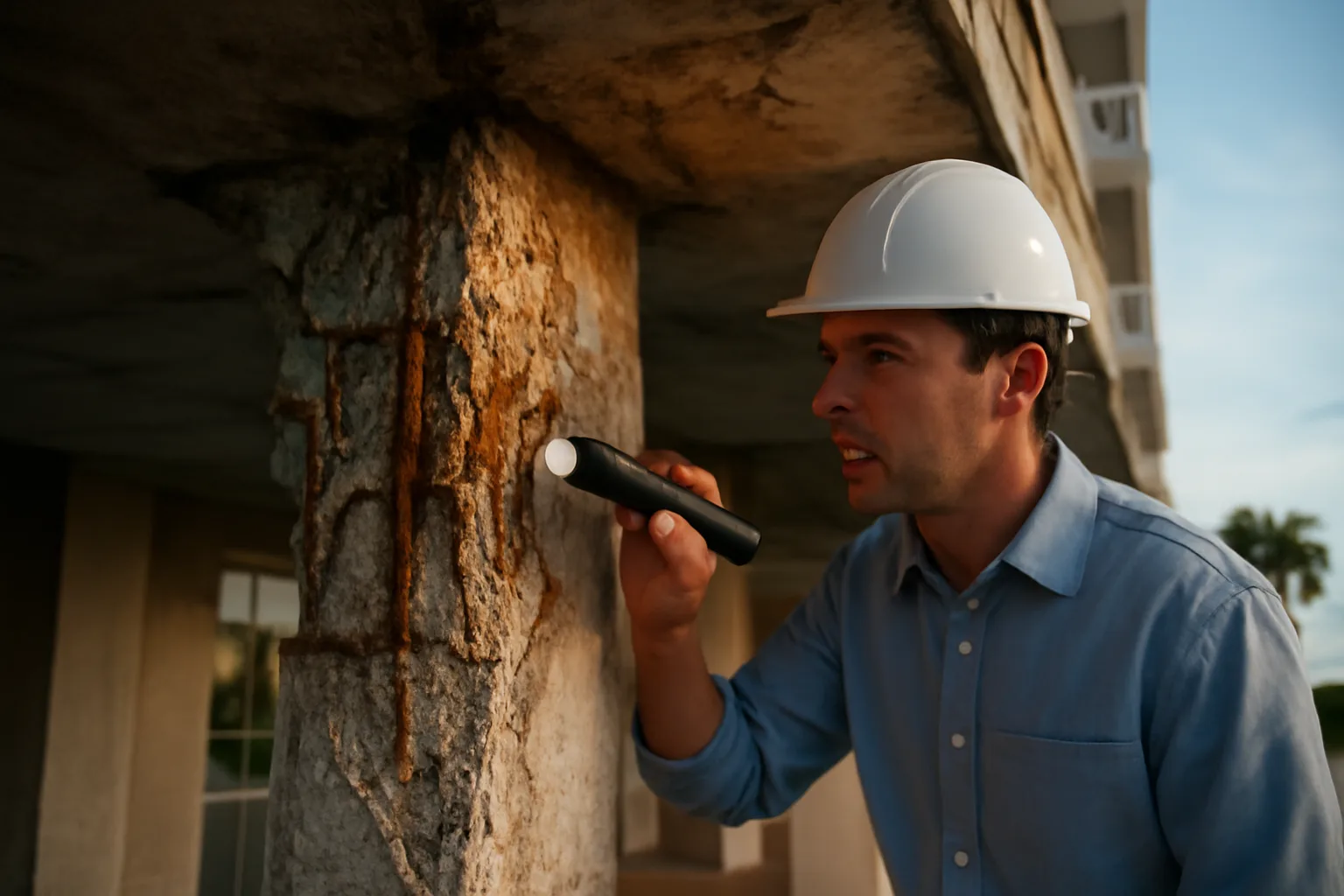
Florida's milestone inspection law requires a structural inspection by a licensed architect or engineer for condo and cooperative buildings three stories or more in height. Buildings within three miles of the coastline must have their first inspection by the time they reach 25 years of age, and all others by 30 years, then every 10 years after that [2]. The statute text (718.301, cross-referenced to 553.899, Florida Building Code) requires what's called a "Phase 1" visual inspection first. If the inspector finds "substantial structural deterioration," a Phase 2 inspection follows, which can include more invasive testing like core sampling or exposing rebar [1] [2]. The law applies specifically to condominiums and cooperative buildings of three stories or more. Single-family HOAs and most townhome associations under three stories generally fall outside the milestone inspection requirement, though some counties (Miami-Dade and Broward, notably) had their own older 40-year recertification programs that predate and run alongside the state law [3]. If your association isn't sure which regime applies, that's a question for your association's counsel and your county building department, not a generic checklist. Boards in buildings that are already past their 25 or 30 year mark and haven't scheduled an inspection should treat that as urgent, not routine. Local building officials can, and in some documented cases have, declared buildings unsafe for occupancy pending inspection results.
How do I find my building's actual milestone deadline?
Start with your certificate of occupancy date, which your property records or county building department has on file. That date, not any news story, sets your clock. Coastal buildings (within three miles of the coastline) get 25 years; everyone else gets 30 [2]. Several Florida counties, including Miami-Dade, Broward, and Palm Beach, publish their own local recertification or milestone compliance portals that list scheduled deadlines by building or folio number. Miami-Dade's Building Recertification Program, for instance, predates the state law and still runs its own 40-year and then 10-year recertification track for older buildings; boards there sometimes have to satisfy both a county recertification and the newer state milestone requirement, so check with both the county and counsel to be sure you're not missing one [3]. If your CO predates good digital record-keeping (common for buildings from the 1970s and 80s), a licensed engineer or your county's building department can usually help nail down the effective date from permit records. Buildings that reached 30 years (or 25, if coastal) before July 1, 2022, when the current law took effect, generally had to complete their first milestone inspection by December 31, 2024, under the phased schedule DBPR and the statute laid out [1] [4]. That earlier deadline wave is why most of the 2025 headlines are really about second-wave and newly-triggered buildings, not a brand new rule.
What happens if a building misses its milestone inspection deadline?
Missing the deadline doesn't erase the requirement; it just puts the association out of compliance and exposes the board to more scrutiny from local building officials, insurers, and unit owners. There's no flat statutory fine schedule for missing the date, but consequences show up indirectly and can be serious. A local building official can require compliance and, in the worst cases, can restrict occupancy of a building found structurally unsafe. Insurers increasingly ask for proof of milestone compliance before renewing a policy, and some are declining to renew or are raising premiums sharply for buildings that can't show one [5]. Lenders financing unit purchases in a building have also started asking for milestone and SIRS status as part of underwriting, which can freeze resales in a building that's behind. The honest fix once a board is late is straightforward, if not painless: engage a licensed architect or engineer immediately, get the Phase 1 inspection scheduled, and document every step in board minutes and owner communications. Boards that show they're actively correcting the problem generally fare better with insurers and county officials than boards that stay quiet.
What is a reserve study, and what is a reserve study for an HOA or condo association?
A reserve study is a professional assessment of a building's major common-element components (roof, structure, plumbing, elevators, pavement, and similar systems), their remaining useful life, and the cost to repair or replace them, used to calculate how much money the association should be setting aside each year [6]. For a condo association, Florida's Structural Integrity Reserve Study (SIRS) is a specific, statutorily defined version of this: it's required for condo buildings three stories or more and must be completed by a licensed engineer or architect (or a reserve specialist meeting statutory qualifications), and it must cover specific structural components listed in 718.112(2)(g), including roof, load-bearing walls, primary structural members, floor, foundation, fireproofing and fire protection systems, plumbing, electrical, and waterproofing [5]. For an HOA (homeowners association, as opposed to a condo), there's no statewide SIRS mandate in the way there is for condos, but a conventional reserve study is still standard best practice, and many governing documents or lenders require one. See our reserve study and HOA reserve study guides for the differences in scope and requirement. The SIRS output feeds directly into the association's reserve funding requirement: Florida law now requires condo associations to fund reserves for the SIRS-covered components at full, statutorily calculated levels, without the old member vote to waive or reduce them (that waiver option was eliminated for SIRS components effective for fiscal years beginning on or after January 1, 2025, following legislative amendments in 2022 and 2023) [4] [7]. Boards weighing what that funding change means for this year's budget should look at our reserve study for condo association piece and, for Miami-Dade / Broward-specific relief options, florida condo reserve fund relief.
How much does a reserve study cost?
Cost depends heavily on building size, component count, and whether it's a full SIRS with engineering-level detail or a simpler financial-only reserve study. For a typical Florida condo association, a full SIRS engineering study commonly runs from roughly $3,000 to $10,000+ for smaller buildings, and can run considerably higher, sometimes into the tens of thousands, for large, complex high-rises with many structural systems and a big unit count [8]. Those figures aren't a statutory number; they're market pricing reported by engineering and reserve-study firms and referenced in industry and consumer coverage of the SIRS requirement, so get at least two or three quotes from Florida-licensed providers before committing, and confirm the provider meets the qualification standard in 718.112(2)(g) [5] [8]. A basic (non-SIRS) reserve study for a smaller HOA, without the structural engineering component review, can sometimes come in lower, in the range reserve-study firms typically quote nationally of about $1,200 to $6,000 depending on property size and complexity, though Florida-specific SIRS work tends to run higher because of the mandated component list and licensed-professional requirement [8]. Boards should treat the reserve study fee as separate from the milestone inspection fee; they can sometimes be bundled with the same engineering firm, which can save money, but they are legally distinct deliverables answering different questions (structural safety vs. long-term funding).
How much should an HOA or condo have in reserves?
For SIRS-covered components, Florida condo law now requires funding at the level the study calculates as necessary to fully fund replacement of each component by the end of its estimated useful life, with no more full waiver of those reserves by member vote for fiscal years starting on or after January 1, 2025 [4] [7]. In plain terms: the days of voting to "skip" structural reserve funding are over for those specific components. For everything else, and for HOAs generally (which aren't bound by the SIRS statute), there's no single dollar figure that's "enough." It depends entirely on the age and condition of the components, local construction and labor costs, and how aggressively the association wants to avoid special assessments. Reserve-study professionals generally aim for a "percent funded" ratio, comparing current reserve balance to the ideal fully-funded balance for the building's age, and treat anything much below 70% funded as a warning sign that a special assessment is more likely down the road, though this is an industry rule of thumb, not a legal standard [6]. The honest answer for most boards: get the professional reserve study or SIRS done first, then fund to what it says, adjusted upward if your board wants a safety margin against unexpected cost increases in materials and labor, which have run well ahead of general inflation in Florida construction in recent years.
What is an HOA assessment, and what is a special assessment?
A regular HOA or condo assessment is the routine, budgeted fee (monthly or quarterly, typically) that every owner pays to cover operating expenses and reserve contributions. A special assessment is a separate, usually one-time charge the board levies outside the normal budget, typically to cover a large unbudgeted expense like a major repair, an insurance shortfall, or, increasingly in Florida, a milestone-inspection-triggered structural repair or a SIRS-mandated reserve catch-up . Boards can levy special assessments under the authority in their governing documents and Florida Statutes chapter 718 (for condos) or chapter 720 (for HOAs), generally following board approval and required owner notice, though the exact vote and notice thresholds vary by document and by whether the assessment exceeds certain statutory caps; confirm the specific procedure with your association's counsel before billing owners . Special assessments tied to milestone and SIRS findings have become one of the most disruptive financial events for Florida condo owners in the last three years, with some buildings hitting owners with bills in the tens of thousands of dollars per unit for structural remediation. See HOA special assessment for the mechanics of how boards calculate and notice them, and condo special assessment insurance if your board is exploring financing or insurance products to soften the blow for owners on fixed incomes.
Are HOA and condo special assessments tax deductible?
Generally, no, not for an owner's personal residence. The IRS treats regular HOA and condo assessments, and most special assessments, as nondeductible personal expenses in the same way as home maintenance costs, because they're considered capital in nature or personal living expenses rather than a deductible tax . There are narrow exceptions. If the unit is a rental property, special assessments related to repairs and maintenance may be deductible as a rental expense, or depreciated if they're for capital improvements, subject to normal IRS rules on repairs vs. improvements under Publication 527 for residential rental property . If a special assessment is tied to a documented casualty loss (like storm damage) in a federally declared disaster area, part of it might qualify under the casualty loss rules, but that's a narrow, fact-specific area of tax law. This is genuinely a question for a CPA or tax preparer, not a board decision. Boards should never tell owners an assessment is or isn't deductible; just point them to Publication 527 and their own tax preparer, since individual circumstances (rental vs. primary residence, itemizing vs. standard deduction) change the answer.
What's actually new in Florida condo law heading into 2025-2026?
The big structural change wasn't a new December 2025 deadline; it was the phase-out of the reserve waiver for SIRS components, effective for fiscal years beginning on or after January 1, 2025, which means most calendar-year associations are feeling the full-funding requirement in their 2025 budgets and beyond [4] [7]. The legislature has also passed periodic relief and clarification bills (in 2023, 2024, and again in 2025 sessions) addressing things like phased catch-up funding, developer-turnover timing, and clarifications to SIRS component definitions, so boards should check the current text of 718.112 and 718.301 on the Florida Senate's statutes site each year rather than relying on last year's summary [4]. DBPR, the Department of Business and Professional Regulation's Division of Florida Condominiums, Timeshares, and Mobile Homes, is the state agency that oversees condo association compliance and licensing questions, and its website is the most reliable place to check for current milestone and SIRS guidance updates, FAQs, and any newly published forms [4]. Boards should build a standing habit: check flsenate.gov's current chapter 718 text and the DBPR division's condo association page at least once a year, ideally right before budget season, because these rules have moved substantially three years running and there's no reason to expect that to stop.
How should a board plan its next 12 months around these deadlines?
Start with three dates, not one: your milestone inspection due date (from your CO year), your SIRS completion date (which for many associations was already required by December 31, 2024, with updates every 10 years matching the milestone cycle), and your annual budget adoption date, when the new full-funding reserve rules have to show up in the numbers [1] [5] [4]. A practical sequence: confirm your CO date and coastal status with the county, engage a licensed engineer for the milestone inspection (or confirm your prior one is current), get or update your SIRS with a qualified provider, then feed those numbers into the reserve schedule before the board finalizes next year's budget. Doing these in the wrong order (like setting a budget before the SIRS numbers are in) is one of the most common and expensive mistakes boards make. This is exactly the kind of multi-deadline, multi-professional sequencing that gets lost in volunteer board handoffs, especially when a board president's term ends mid-cycle. That's the specific gap our Building-Specific Board Compliance Kit is built to close for $199 one time: it takes your building's CO date, coastal status, and county, and turns the statute into a dated task list your whole board can follow, alongside links to your milestone, SIRS, and reserve study documentation. It's an organizing tool, not a substitute for the licensed engineer, reserve specialist, or attorney the statute actually requires.
Frequently asked questions
What is a reserve study?
A reserve study is a professional evaluation of a building's major common-element components (roof, structure, elevators, plumbing, and similar systems) that estimates each one's remaining useful life and replacement cost, then calculates how much an association should save each year to pay for eventual repairs without a surprise special assessment.
What is a reserve study for an HOA?
For an HOA, a reserve study is generally a financial planning document, not a state-mandated structural inspection. It's usually recommended by governing documents or lenders rather than required by Florida statute the way a condo SIRS is, though the underlying methodology (component list, useful life, funding plan) is similar.
What is an HOA assessment?
An HOA assessment is the regular fee, usually monthly or quarterly, that every owner in the association pays to fund operating costs and reserve contributions, set through the annual budget process under the association's governing documents and, in Florida, chapter 720 or chapter 718 depending on association type.
How much should an HOA have in reserves?
There's no single statutory dollar figure for HOAs. Reserve professionals typically aim for a funding level around 70% or more of the "fully funded" ideal for the building's age and component condition, though the right number depends on your specific reserve study results, not a generic rule.
How much does a reserve study cost in Florida?
Reserve-study and SIRS pricing varies by building size and complexity. Industry pricing commonly cited runs roughly $3,000 to $10,000+ for a condo SIRS depending on size, and can run higher for large, complex high-rises; a simpler non-SIRS reserve study can sometimes cost less. Get multiple quotes from Florida-licensed providers.
Are HOA and condo special assessments tax deductible?
Generally no, for a personal residence, according to standard IRS treatment of association charges as nondeductible personal expenses. Exceptions can apply for rental properties (as a rental expense or depreciated capital improvement) or in some documented casualty-loss situations. Confirm with a CPA using IRS Publication 527.
Did Florida move the milestone inspection deadline in December 2025?
No statewide deadline changed on a December 2025 date. Milestone deadlines are set individually per building based on the certificate of occupancy date (25 years for coastal buildings, 30 for others), so a wave of buildings hitting their individual deadlines in December 2025 can look like a policy change when it isn't one.
What is the difference between a milestone inspection and a SIRS?
A milestone inspection is a structural safety check by a licensed architect or engineer, required at 25 or 30 years and every 10 years after, under 718.301 and 553.899. A SIRS is a reserve-funding study covering specific structural components under 718.112(2)(g). Many associations schedule both around the same time, but they answer different questions.
What happens if my condo building misses its milestone inspection deadline?
There's no flat statutory fine, but consequences include potential occupancy restrictions from local building officials, insurance non-renewal or premium increases, and lender resistance to financing unit sales. The fix is to engage a licensed engineer immediately and document the corrective steps for owners and officials.
Can my association still waive SIRS reserve funding by a member vote?
No, not for SIRS-covered structural components. Florida eliminated that waiver option for fiscal years beginning on or after January 1, 2025, following 2022 and 2023 legislative changes, so those specific reserve line items must be funded at the statutorily calculated level.
Where do I find my building's certificate of occupancy date to calculate my milestone deadline?
Check your county building department's permit or property records, or ask your property manager or association attorney to pull it. Some counties, including Miami-Dade and Broward, also run their own recertification portals where you can look up scheduled dates by folio or building number.
Does the milestone inspection law apply to HOAs, or only condos?
It applies specifically to condominium and cooperative buildings three stories or more, under 718.301 and 553.899. Most single-family HOAs and low-rise townhome communities fall outside this requirement, though boards should confirm their specific status with counsel since some mixed-use or converted properties have unusual histories.
Sources
- Florida Senate, Florida Statutes section 553.899 (Milestone inspections): Statutory basis and phased timeline for milestone structural inspections
- Florida Senate, Florida Statutes section 718.301: 25-year coastal / 30-year milestone inspection trigger and 10-year recurring requirement
- DBPR, Division of Florida Condominiums, Timeshares, and Mobile Homes: State agency overseeing condo association compliance, milestone, and SIRS guidance
- Community Associations Institute (CAI), Reserve study best practice guidance: Reserve study methodology, percent-funded benchmark concept
- Florida Senate, Florida Statutes section 718.112(2)(g): SIRS required components list and licensed-professional qualification requirement
- Florida Senate, SB 154 (2023) summary and enrolled bill text: 2023 amendments eliminating the reserve waiver for SIRS components effective for fiscal years beginning on or after January 1, 2025
- Florida Senate, Florida Statutes section 718.116: Statutory basis for condo association assessments including special assessments
- IRS, Publication 527, Residential Rental Property: Tax treatment of HOA/condo assessments and repairs vs. improvements for rental property owners