Last updated 2026-08-14
TL;DR
Florida requires milestone structural inspections at 30 years (25 years within 3 miles of the coast), then every 10 years, for buildings 3+ stories. SIRS reports are due by December 31, 2024 for most associations, with 2025 amendments adjusting funding timelines. Confirm your building's exact deadline with a licensed engineer and your association's counsel.
What is the Florida condo milestone inspection deadline right now, in 2025?
If your condo or co-op building has 3 or more habitable stories, you're already under a state deadline, and 2025 is when a lot of buildings that pushed things off in 2024 are running out of runway. The milestone inspection statute, Florida Statutes section 553.899, requires the first structural inspection when a building reaches 30 years of age, or 25 years if it sits within 3 miles of a coastline, then again every 10 years after that [1]. Here's the part that trips boards up: the 25-year coastal trigger isn't about whether you can see the ocean from your balcony. It's a straight-line distance measurement from the building to the coast as determined under the statute, and local building officials make the call on exact boundaries. If you're not sure which clock applies to your building, that's a question for your local building department, not a guess. For buildings that hit their 30-year (or 25-year coastal) mark before July 1, 2022, the statute gave local enforcement agencies room to set a compliance deadline, and many required the Phase 1 inspection by December 31, 2024, with Phase 2 (if triggered) following on a schedule set by the local building official [1][2]. For buildings turning 30 (or 25 coastal) in 2025 or later, the deadline is simpler: the inspection is due before the end of the year the building reaches that age threshold, unless your local building official sets an earlier date. The short version for 2025: if your building's original certificate of occupancy is 30+ years old (or 25+ years old and coastal), you should already have a licensed engineer or architect under contract, if not finished with Phase 1. Waiting until the calendar forces your hand is how boards end up with emergency special assessments instead of planned ones.
What counts as a milestone inspection, and what's the difference between Phase 1 and Phase 2?
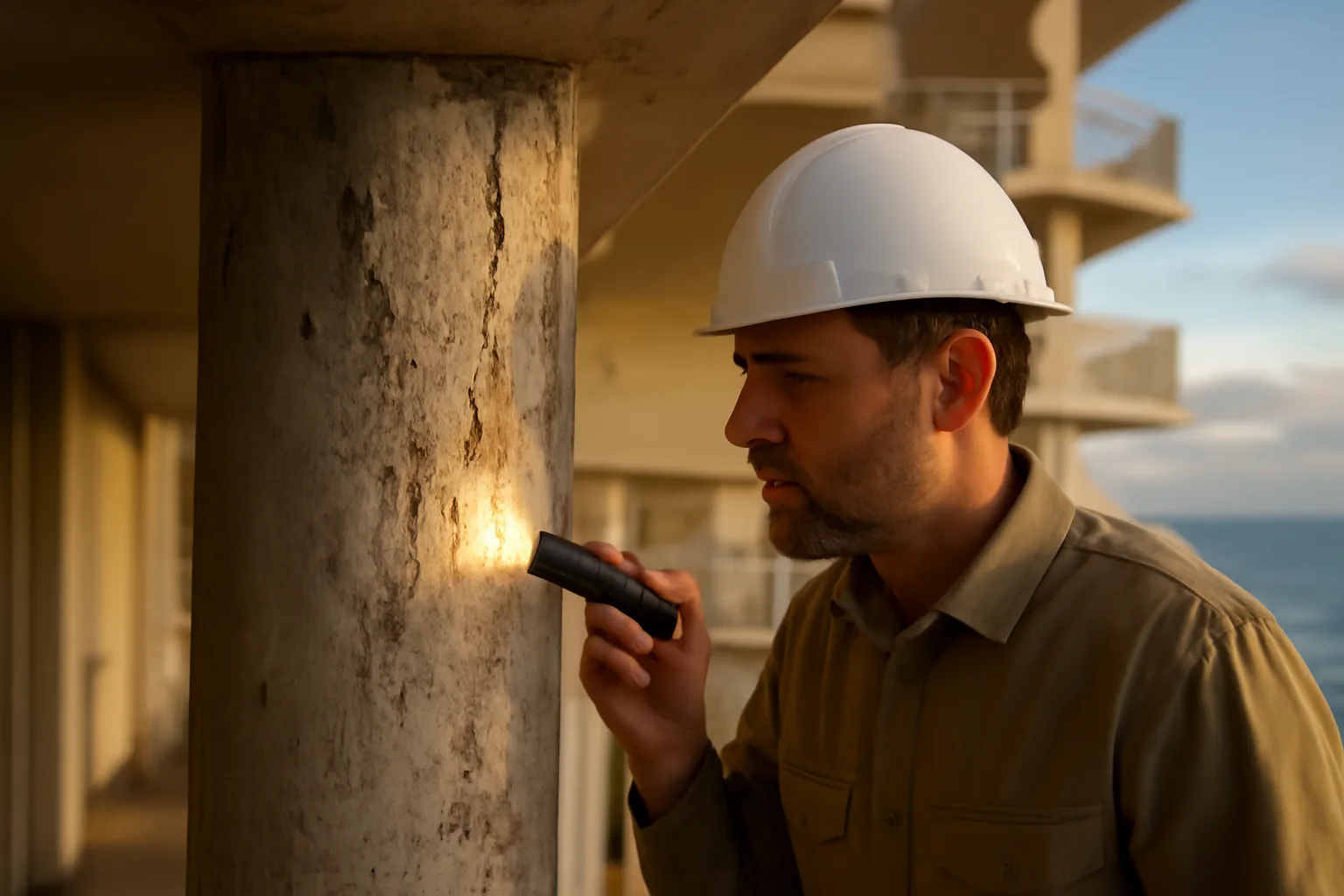
A milestone inspection under Florida law is a structural inspection performed by a licensed architect or engineer, done in two possible phases. Phase 1 is a visual examination of the load-bearing walls, floors, roof, and other structural components, without any need to open up walls or run destructive tests [1]. If the Phase 1 inspection turns up 'substantial structural deterioration,' the inspector moves to Phase 2, which allows more invasive testing, like taking core samples of concrete, opening up sections of wall, or running other diagnostic tests to figure out how serious the problem is [1]. DBPR's guidance describes the milestone inspection program as applying to condominium and cooperative buildings that are 3 stories or more in height, based on the number of stories above ground, as determined by the Florida Building Code [3]. The inspector then files a sealed report with the local building official and the association. That report has real teeth: it becomes a document your association's SIRS (Structural Integrity Reserve Study) has to account for, and it's the kind of record that shows up in insurance underwriting, mortgage lending reviews (Fannie Mae and Freddie Mac both ask condo questionnaires about structural inspection status), and resale disclosures.
What is a reserve study, and what is a SIRS?
A reserve study is a professional assessment of a building's major common-area components (roof, structure, plumbing, electrical, pavement, and so on) that projects when each component will need repair or replacement and how much money the association should be setting aside now to pay for it later. It's the financial planning tool that keeps a special assessment from being a surprise. A Structural Integrity Reserve Study (SIRS) is Florida's more specific, statutorily mandated version of this, required under section 718.112(2)(g) of the Florida Statutes for condominium associations with buildings 3 stories or higher. A SIRS has to be performed at least every 10 years, and it must cover specific structural components: roof, load-bearing walls, primary structural members, floor, foundation, fireproofing and fire protection systems, plumbing, electrical, waterproofing, and exterior painting, among others listed in the statute [4]. Unlike a routine budget-planning reserve study, a SIRS doesn't just estimate cost. It requires the association to reserve full funding for these specific structural items, with no ability for owners to waive or reduce structural reserve funding starting with the first fiscal year that begins on or after December 31, 2024 [4][5]. That funding requirement is the part causing sticker shock in a lot of buildings this year. Most associations that hadn't already done one were required to complete their initial SIRS by December 31, 2024. If your association's SIRS deadline has already passed and you haven't completed one, talk to counsel immediately; this isn't a box you can check retroactively without consequence, and buyers' lenders are increasingly asking for SIRS status directly.
What is a reserve study for an HOA, and does it work differently than for condos?
A reserve study for an HOA covers the same basic idea (funding future repairs to shared infrastructure) but the legal requirement is much lighter than what condos face. Florida's homeowners' association statute, chapter 720, doesn't impose the SIRS mandate or the milestone inspection requirement; those apply specifically to condominiums and cooperatives under chapters 718 and 719, and to buildings 3 stories or taller [1][4]. That said, plenty of HOAs still commission voluntary reserve studies, because the underlying math (roads wear out, roofs age, pools need resurfacing) doesn't care what statute governs your association. If your HOA has multi-story buildings or condo-like common structures, it's worth checking with counsel whether any part of chapter 718 could apply to your specific structure, and whether your county has its own local ordinance layered on top; some counties, especially in South Florida, adopted local structural inspection rules well before the state's 2022 law. For deeper background on how reserve studies work for HOAs specifically, see hoa reserve study and the general primer at reserve study.
How much should an HOA or condo have in reserves?
There's no single dollar figure or percentage that Florida law requires an association to hold in reserves generally; the amount is supposed to be whatever a proper reserve study or SIRS says is needed to fully fund the projected cost of each component by the time it needs work. For condo associations under the SIRS mandate, the funding has to match the study's findings for the 10 specific structural components, and boards can no longer vote to waive or underfund those specific line items for fiscal years starting on or after December 31, 2024 [4]. A rough industry rule of thumb some reserve professionals use is that healthy reserves should be funded at 70% or more of the calculated full-funding requirement, though this isn't a legal threshold in Florida, it's a benchmark used in the reserve-study industry more broadly. What actually matters for your building is the number your reserve study or SIRS produces, not a generic percentage pulled from somewhere else. Underfunded reserves are the single biggest driver of large special assessments. If your association has been keeping reserves artificially low to hold down monthly fees, the SIRS mandate is designed specifically to stop that practice for the structural components it covers. For a fuller breakdown of assessment math, see reserve study for condo association.
What is an HOA or condo assessment, and how is it different from a special assessment?
A regular assessment is the routine monthly or quarterly fee owners pay to the association to cover operating expenses and reserve contributions. It's built into the annual budget and disclosed to owners in advance. A special assessment is a one-time (or limited-duration) additional charge the board levies when the regular budget and reserves aren't enough to cover a specific cost, often a major repair, an insurance shortfall, or, increasingly in Florida, the cost of a milestone inspection's Phase 2 repairs or a SIRS-driven reserve catch-up. Special assessments have become common in Florida since 2022 precisely because many buildings had years of underfunded reserves and are now required to fund structural components properly, sometimes all at once. Boards levying a special assessment need to follow their declaration's notice and voting requirements, and should document the reserve study or engineer's report driving the number. For details on structuring these, see hoa special assessment.
Are HOA or condo special assessments tax deductible?
Generally, no, not for the individual homeowner claiming a personal deduction, and this is one of the most common misconceptions boards run into when owners push back on a big bill. The IRS treats special assessments for capital improvements to the property (a new roof, structural repairs, elevator replacement) as an addition to your cost basis in the unit, not a currently deductible expense. That basis increase matters when you sell: it can reduce the taxable gain on the sale by adjusting your cost basis upward. IRS Publication 523 addresses how improvements affect the basis of a home for sale purposes [6]. If part of the assessment covers a rental unit or a home office used for business, a portion may be deductible as a business expense, but that's a facts-and-circumstances question for a CPA, not a general rule. Boards should not represent to owners that a special assessment is tax deductible. That's exactly the kind of statement that belongs in a conversation with each owner's own tax preparer, not board communication.
How much does a reserve study or SIRS cost in Florida?
Costs vary a lot by building size, number of components being studied, and whether it's a basic reserve study or the more detailed SIRS with its mandated structural components. Public reporting and industry sources have put typical reserve study costs anywhere from roughly $3,000 to $20,000+ for larger or more complex buildings, though exact pricing depends heavily on unit count, number of buildings, and whether a site visit and physical inspection are included versus a desktop update. SIRS costs tend to run higher than a basic reserve study because the scope is narrower but more technical (structural components specifically) and because it typically has to be performed or overseen by a licensed engineer or architect, per the statute's requirements [4]. Milestone inspections themselves are billed separately by the inspecting architect or engineer, and Phase 2 testing (core samples, invasive testing) adds cost on top of Phase 1. Boards should get at least two or three quotes from licensed, Florida-registered professionals and ask directly whether the quote covers a full SIRS meeting all ten statutory component categories, or a narrower scope. A cheap quote that misses a required component isn't actually cheaper once you have to redo it.
What happened with Florida's condo reserve laws in 2025?
The Florida Legislature has continued adjusting the 2022 post-Surfside reforms (originally SB 4-D, then further shaped by SB 154 in 2023) in response to boards and owners reporting serious financial strain from sudden, full reserve funding requirements hitting all at once [5][7]. Bills considered in the 2025 legislative session addressed things like allowing limited short-term financing options for SIRS-driven costs, clarifying inspection timelines, and giving some associations narrow paths to phase in funding. Because legislative sessions produce amendments every year and governors sign bills throughout the year, any specific 2025 statutory change should be verified directly against the current text of chapter 718 on the Florida Senate's official statutes site, and confirmed with your association's counsel before you rely on it for a board decision [1][4]. Don't plan a special assessment or a reserve waiver vote based on a news headline; get the current statute text and a lawyer's read on how it applies to your specific building and county. For a broader look at relief measures some associations may qualify for, see florida condo reserve fund relief.
What happens if a Florida condo association misses its milestone inspection or SIRS deadline?
Consequences run from administrative to serious. Local building officials can require compliance and, in some jurisdictions, pursue code enforcement action against the association for failing to complete a required milestone inspection. DBPR, which regulates community associations in Florida, has authority to investigate complaints related to association operations, including reserve and disclosure requirements [3]. Beyond regulatory risk, a missed or incomplete SIRS creates real practical problems: mortgage lenders reviewing condo questionnaires (Fannie Mae's Form 1076/Freddie Mac's Form 476 process) increasingly ask about structural inspection and reserve study status, and a building flagged as noncompliant or under review can see unit sales stall because buyers can't get financing. Insurers ask similar questions during underwriting. The practical fix isn't complicated, just consistent: get the milestone inspection scheduled with a licensed engineer or architect, get the SIRS done by a qualified professional covering all statutory components, and keep dated records of both so you can answer lender and buyer questions without scrambling. A $199 Building-Specific Board Compliance Kit can help a board organize those deadlines, track which inspection phase applies, and keep the paperwork straight, though the actual inspection and reserve study still have to be performed by the licensed professionals the statute requires.
How should a board actually plan for these deadlines in 2025 and beyond?
Start with the two dates that matter most for your specific building: the milestone inspection deadline (30 years from certificate of occupancy, or 25 if coastal, then every 10 years) and the SIRS deadline (initial study due, then updates at least every 10 years) [1][4]. Write both dates down, put them in the board's calendar, and confirm them against your county building department's records, since local officials can set specific compliance deadlines within the statutory framework. Next, get quotes from at least two licensed engineering or architecture firms for the milestone inspection, and at least two reserve-study professionals for the SIRS, well before the deadline year. Waiting until the year the building turns 30 to start calling firms means competing with every other aging building in your county for the same limited pool of licensed inspectors. Finally, model out the reserve funding impact honestly with your treasurer or a financial professional. If full SIRS funding for structural components means a meaningful assessment or fee increase, tell owners early, in writing, with the reserve study numbers attached. Owners handle bad news better when it comes with documentation and lead time, not as a surprise vote at an annual meeting. Boards juggling multiple compliance dates (milestone inspection, SIRS, annual budget disclosures, insurance renewal) sometimes find it useful to put everything on one master compliance calendar rather than tracking each requirement separately in different files.
Frequently asked questions
What is a reserve study?
A reserve study is a professional evaluation of a building's major shared components (roof, structure, plumbing, paving, and so on) that estimates their remaining useful life and the cost to repair or replace them, so the association can plan funding instead of relying on emergency special assessments.
What is a reserve study for an HOA?
For an HOA, a reserve study serves the same planning function as for a condo: it projects the future repair and replacement costs of shared infrastructure like roads, pools, and clubhouses. Florida's chapter 720 doesn't mandate reserve studies for most HOAs the way chapter 718 mandates SIRS for condos, but many HOAs commission them voluntarily.
What is an HOA assessment?
An HOA assessment is a fee the association charges owners, either as a routine recurring charge covering operating costs and reserves, or as a special assessment covering an unplanned or large one-time cost like a major repair. Governing documents set the notice and approval process for each type.
How much should an HOA have in reserves?
Florida law doesn't set a universal dollar figure; the target is whatever a current reserve study calculates as necessary to fully fund each component by the time it needs replacement. For condo SIRS-covered structural items, boards can no longer waive full funding starting with fiscal years beginning on or after December 31, 2024.
How much does a reserve study cost?
Costs typically range from roughly $3,000 for smaller, simpler properties to $20,000 or more for larger buildings with many components, per industry reporting. SIRS studies, which are narrower but more technical, often cost more per component due to the licensed engineering expertise required.
Are HOA special assessments tax deductible?
Generally no, for personal residences. The IRS typically treats special assessments for capital improvements as additions to your home's cost basis rather than a deductible expense, per IRS Publication 523. A portion may be deductible if the unit is a rental or business property; consult a CPA.
When is the Florida milestone inspection deadline for a building 30 years or older?
Buildings must complete their first milestone inspection by December 31 of the year they turn 30 (or 25 if within 3 miles of the coast), unless the local building official sets an earlier date. Buildings that already passed that age before July 1, 2022 generally had a 2024 compliance deadline set by local officials, per Florida Statutes section 553.899.
What is the difference between Phase 1 and Phase 2 milestone inspections?
Phase 1 is a visual structural inspection by a licensed engineer or architect. If it finds substantial structural deterioration, Phase 2 follows, allowing invasive testing like concrete core samples to assess the severity and needed repairs, per Florida Statutes section 553.899.
Does the milestone inspection law apply to HOAs or only condos?
Florida's milestone inspection statute (553.899) and SIRS mandate (718.112) apply to condominium and cooperative buildings 3 stories or taller. Standard single-family or townhome HOAs under chapter 720 aren't covered by these specific statutes, though local county ordinances can impose additional requirements.
What happens if my condo association misses the SIRS deadline?
Consequences can include local code enforcement action, DBPR complaint exposure, and practical fallout like lenders and title companies flagging the building during mortgage underwriting, which can stall unit sales. There's no simple retroactive fix; talk to your association's counsel immediately if a deadline has passed.
Can a Florida condo association still waive reserve funding?
For the structural components covered by SIRS, no, not starting with fiscal years beginning on or after December 31, 2024; that waiver option was eliminated by 2022-2024 legislative reforms. Non-SIRS reserve items may still have different waiver rules depending on current statute language; confirm with counsel.
Who can perform a milestone inspection or SIRS in Florida?
A licensed architect or engineer must perform milestone inspections and SIRS reports under Florida Statutes sections 553.899 and 718.112. Boards should verify a professional's Florida license status through DBPR before signing a contract.
Sources
- Florida Statutes section 553.899, Milestone Inspections: 30-year (25-year coastal) milestone inspection trigger, Phase 1/Phase 2 process, and inspection timing requirements
- Florida Senate, 2022 Session, SB 4-D: Original 2022 post-Surfside legislation establishing milestone inspection and reserve requirements
- DBPR, Division of Florida Condominiums, Timeshares, and Mobile Homes: DBPR's regulatory role over condominium associations including milestone inspection and reserve compliance matters
- Florida Statutes section 718.112, Bylaws; SIRS requirement: Structural Integrity Reserve Study requirement, mandated structural components, and elimination of waiver for fiscal years beginning on or after December 31, 2024
- Florida Senate, 2023 Session, SB 154: 2023 amendments adjusting SIRS funding timelines and reserve requirements following the 2022 reforms
- IRS Publication 523, Selling Your Home: Capital improvement special assessments generally adjust cost basis rather than being currently deductible
- Florida Senate, 2022 Session, Bill Analysis for SB 4-D: Legislative background and intent behind the 2022 structural safety and reserve reforms