Last updated 2026-07-24
TL;DR
A milestone inspection report is the licensed architect or engineer's written findings on a Florida building's structural condition, required under F.S. 553.899 for condo and co-op buildings 3+ stories, due by the 30th year (25th if within 3 miles of the coast) and every 10 years after. Boards must act on it, usually by funding repairs and updating reserves.
what is a milestone inspection report
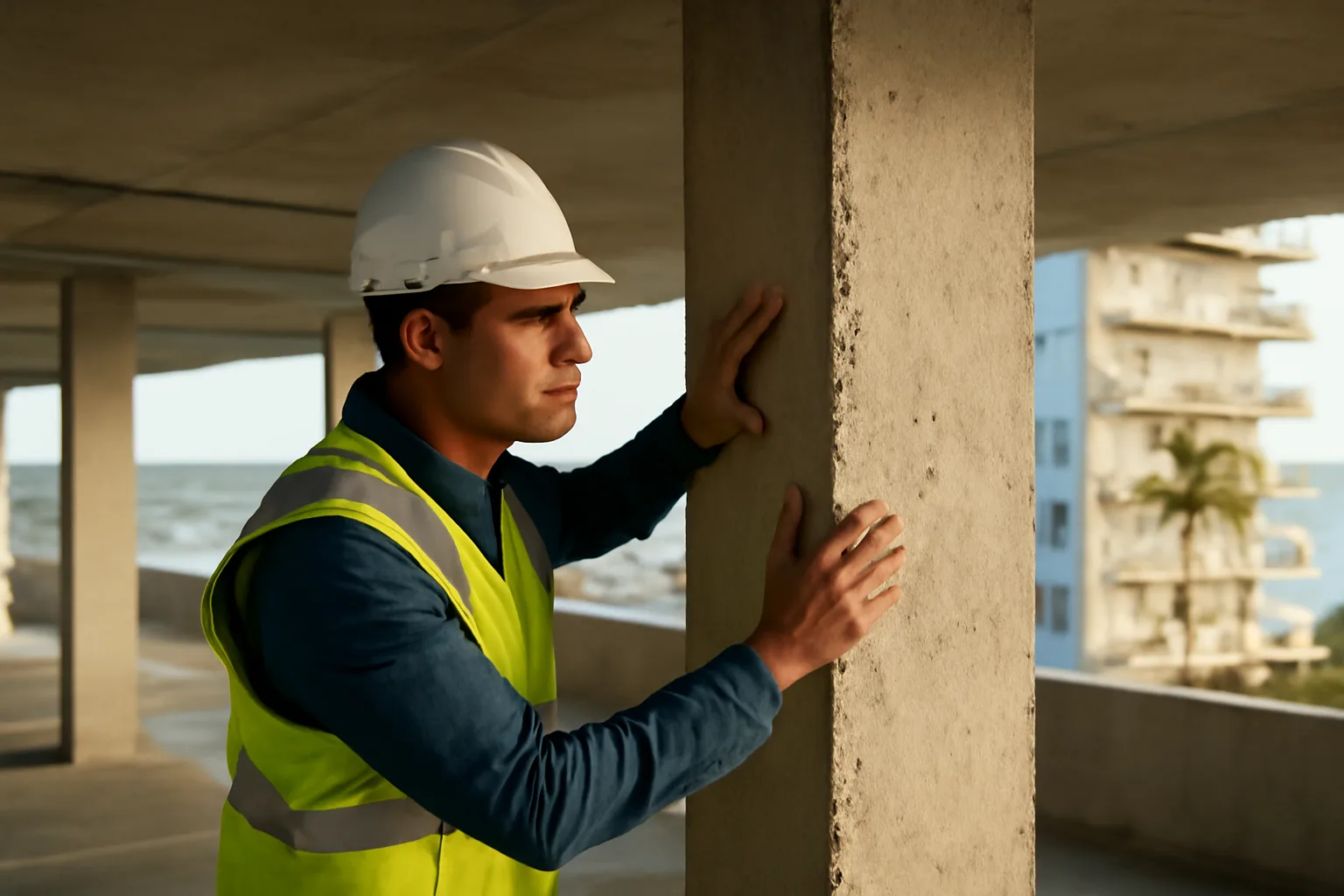
A milestone inspection report is the written product of a structural inspection performed by a licensed Florida architect or engineer on a condominium or cooperative building that is three stories or more. Florida Statutes section 553.899 created this requirement after the Champlain Towers South collapse in Surfside in June 2021, which killed 98 people [1]. The report itself happens in two phases. Phase one is a visual inspection of the building's structural components, looking for signs of "substantial structural deterioration," a term the statute actually defines rather than leaves vague [2]. If the phase one inspection finds nothing concerning, that's often the end of it until the next 10-year cycle. If the inspector finds distress, cracking, spalling, corrosion, or other red flags, the law requires a phase two inspection, which can include more invasive testing (core samples, load testing, opening up finishes to look at rebar). The final report has to include the engineer's or architect's opinion on the general structural condition of the building, per DBPR guidance on the milestone inspection program [3]. It is not a pass-fail checklist. It's a professional opinion with recommendations, and boards are expected to act on those recommendations, not file the report and move on.
who has to get a milestone inspection and when
| Within 3 miles of the coastline | By December 31 of the year the building turns 25 | Every 10 years after | |
|---|---|---|---|
| More than 3 miles from the coastline | By December 31 of the year the building turns 30 | Every 10 years after | For buildings that were already older than these thresholds when the law took effect in 2022, DBPR set a phased deadline schedule so that not every old building in the state needed an inspector on the same day. Check your local building official's schedule for your specific building's exact date, because some counties issued their own local deadline letters ahead of the statewide cutoffs [3]. The local building official, not the state, is the one who actually confirms your building's applicable deadline and can grant certain extensions. Confirm your building's exact deadline with your local building department, and loop in your association's counsel if there's any ambiguity about which cycle year applies. |
Any condominium or cooperative building in Florida that is three stories or more in height must get a milestone inspection, according to F.S. 553.899(3) [2]. Single-family homes, duplexes, and most HOA buildings under three stories are not covered by this statute, though some HOAs with taller structures may still fall under it depending on how the building is classified. The timing depends on the building's age and its distance from the coast: | Building type | Initial inspection deadline | Repeat cycle |
what has to be in the milestone inspection report itself
The statute requires the inspector to prepare a report that includes, at minimum, the inspection dates, the building's address, the architect's or engineer's observations and recommendations regarding the structural condition, and whether any signs of substantial structural deterioration were found [2]. If the inspector finds deterioration, the report must include recommendations for the extent of any repairs and whether a phase two inspection is needed. Once the report is complete, the association has a legal duty to distribute it. Under F.S. 553.899(8), the association must provide a copy of the inspection report summary to each unit owner, post it on the association's website if it has one, and submit it to the local building official within statutory timeframes [2]. The building official actually gets a copy of the report itself, more than a summary, and the association has to give the full report to any owner who asks for it. This part gets boards in trouble more than the inspection itself. A report that sits in a board member's inbox instead of getting posted and distributed is a compliance failure independent of whatever the engineer found. Boards that treat the report as a private document are taking on liability they don't need to take on.
what happens after the report finds problems
If the milestone inspection turns up substantial structural deterioration, the board's job shifts from waiting on a report to funding and managing repairs. This is where the milestone inspection collides head-on with the structural integrity reserve study (SIRS) requirement under F.S. 718.112(2)(g), because the two are meant to work together: the milestone inspection tells you what's structurally wrong right now, and the SIRS tells you what you need to be saving for over the useful life of major structural components [4]. Boards facing a bad milestone report typically have three financing paths: draw down existing reserves, levy a special assessment, or borrow against future assessments through a bank loan or line of credit. None of these are free, and none of them are popular with owners. A board that gets a phase two report calling for concrete restoration on a beachfront tower is potentially looking at a special assessment measured in the tens of thousands of dollars per unit, depending on scope. This is also the moment boards discover whether their reserve study was realistic. If reserves were underfunded or waived by prior owner votes, a bad milestone report can force an immediate special assessment with very little runway. That's the scenario Florida lawmakers were trying to prevent with the SIRS mandate, and it's worth reading up on florida condo reserve fund relief if your board is weighing a phased funding approach versus one large assessment.
what is a reserve study
A reserve study is a professional evaluation of a building's major shared components (roof, structure, plumbing, electrical, paving, pools, and similar systems) that estimates each component's remaining useful life and the cost to repair or replace it. The study then converts those estimates into a funding schedule showing how much the association should be setting aside each year. For Florida condos, the version that matters most right now is the SIRS, the structural integrity reserve study required under F.S. 718.112(2)(g) for condo buildings three stories or higher [4]. A SIRS has to be performed by a licensed engineer or architect and cover specific structural components: roof, load-bearing walls, floor, foundation, fireproofing and fire protection systems, plumbing, electrical, waterproofing, exterior painting, and windows and doors, per the statute's enumerated list. General reserve studies that cover things like landscaping or a clubhouse interior are still useful for HOA budgeting but they are a separate exercise from the SIRS mandate. For a deeper walkthrough of how a reserve study is actually conducted and what it costs, see our guide on reserve study for condo association.
what is a reserve study for an hoa
For a homeowners association, a reserve study serves a similar purpose to the condo version but usually isn't legally mandated the same way. Most HOAs in Florida are not required by state statute to complete a formal, engineer-prepared reserve study unless their governing documents say so, though many HOA declarations do require some form of reserve funding or a reserve study as a matter of contract, not statute. Where HOAs do overlap with the state's structural rules is when the community includes buildings three stories or taller, which can trigger both the milestone inspection requirement and, depending on how the association is structured, elements of the SIRS rules that otherwise apply to condos. Check with your association's counsel on which statutes actually apply to your specific HOA structure, because the condo statute (F.S. 718) and the HOA statute (F.S. 720) treat reserves very differently, and a lot of the online confusion between the two comes from people assuming HOA reserve rules mirror condo reserve rules. They don't, categorically. See our hoa reserve study guide for how HOAs typically approach this even without a hard state mandate.
how much does a reserve study cost
Reserve study costs vary widely based on building size, number of components being evaluated, and whether it's a full structural SIRS or a general reserve study. Industry pricing (from firms that publish rate sheets and reserve study associations) commonly ranges from around $3,000 to $15,000 or more for a single condo building, with larger or more complex properties running higher [5]. A SIRS, because it requires a licensed engineer's structural assessment in addition to the standard financial reserve components, tends to sit at the higher end of that range compared to a basic reserve study that a reserve specialist (not necessarily an engineer) could perform for a smaller HOA. Costs also depend on whether the study is a full study (with an on-site inspection of every component) or an update study (using previous data with a shorter site visit). Full studies every 3 to 5 years with update studies in between is a common approach for HOAs not under the SIRS mandate, though condo associations subject to F.S. 718.112(2)(g) don't have that update-study option for the SIRS itself; it has to be done to the statute's specifications. Boards shopping for a reserve study or SIRS provider should get at least two or three quotes and confirm the provider is a licensed engineer if a SIRS is what's required, more than a reserve study company that doesn't employ a licensed engineer for the structural components.
how much should an hoa have in reserves
There's no single dollar figure or percentage that Florida law sets as "correct" for an HOA's reserve balance, and be skeptical of any source that gives you a flat number without qualifying it. The honest answer is that adequate reserves are whatever the underlying reserve study calculates for your specific components, ages, and replacement costs, funded on either a straight-line or component method. For Florida condo associations, F.S. 718.112(2)(f) requires reserve funding for roof, load-bearing walls or other structural components covered by the SIRS, and other items with a useful life of less than the term of the study, without allowance for owners to waive or reduce funding for those specific SIRS components, following the 2022 and 2023 legislative changes [4]. That's a meaningful shift; before those changes, a majority of owners could vote to waive or reduce reserve funding for the whole association. For SIRS-covered components, that waiver option has been eliminated for post-2024 fiscal years. For HOAs outside the condo statute, the association's own declaration usually sets reserve funding rules, and many are still fully discretionary at the annual meeting. A rough industry rule of thumb some reserve professionals use is that a community should be funded to at least 70% of its full reserve component obligations to avoid a high risk of a special assessment, though this is a professional guideline from the reserve study industry, not a Florida statutory threshold, and boards should treat it as a benchmark to discuss with their own reserve preparer rather than a legal requirement [6].
what are hoa assessments and how do they relate to reserves
An HOA assessment is a fee the association charges owners to fund shared expenses: routine operating costs (landscaping, insurance, management fees) and reserve contributions (savings for future big-ticket repairs and replacements). Most declarations authorize two kinds: regular assessments, billed monthly or annually as part of the budget, and special assessments, one-time charges levied when the regular budget and reserves can't cover an unexpected or underfunded cost. A special assessment often follows directly from a milestone inspection report or SIRS finding a funding gap. If the reserve study says the roof needs replacing in two years at $800,000 and the reserve account only has $200,000 saved, the board has to either raise regular assessments sharply, levy a special assessment for the shortfall, or take out a loan and assess owners to repay it. See our guide on hoa special assessment for how boards typically calculate and notice these charges, and how owners can request records showing the calculation.
are hoa special assessments tax deductible
Generally, no, not for a personal residence. The IRS treats HOA assessments, including special assessments, similarly to home maintenance costs, which are not deductible on a primary residence under current federal tax law . There are narrow exceptions: if the assessment funds a capital improvement to a rental property you own and rent out, it may be depreciable or partially deductible as a business expense, and if a portion of the assessment goes toward a casualty-loss repair in a federally declared disaster area, there can be limited deductibility under IRS casualty loss rules. This is genuinely a question for a CPA, not a board member or a property manager. The IRS's own guidance on rental property expenses (Publication 527) is the right starting reference point if you're renting out the unit in question , but don't take a blanket answer from an online forum as gospel here. Boards themselves have no role in determining tax treatment for owners; that's between the owner and their tax preparer.
how milestone inspections, SIRS, and special assessments fit together
These three things are not separate silos, even though they come from different statute sections and different professionals prepare them. The milestone inspection (F.S. 553.899) is the structural health check. The SIRS (F.S. 718.112(2)(g)) is the long-range funding plan for structural components. The special assessment is what happens when the health check finds a problem the funding plan didn't cover. A board that's on top of its statutory calendar treats these as one continuous workflow: get the milestone inspection done on schedule, get the SIRS done and updated (it doesn't need to be redone every year, but the underlying cost estimates age quickly with construction inflation), fund reserves according to the SIRS without shortcuts, and if a milestone report finds deterioration, immediately model what that does to the reserve funding plan and whether a special assessment is now unavoidable. This is genuinely a lot for a volunteer board to track manually across a spreadsheet and a shared drive, especially across all the state and county deadline layers, which is the exact problem our $199 one-time Building-Specific Board Compliance Kit is built to solve: it organizes your building's specific milestone and SIRS deadlines, tracks what's been filed with your local building official, and helps the board communicate the timeline to owners. It doesn't replace your engineer or your reserve specialist, and it makes no compliance determination about your building; it just keeps the paperwork and dates straight so nothing slips through a volunteer board's cracks.
what boards should do with the report once it's in hand
First, confirm the distribution requirements are met: post to the website, send the summary to owners, file with the local building official within the statutory window [2][3]. Second, get the report in front of the board's engineer of record or a structural engineer if the report itself doesn't already include cost estimates, because milestone reports sometimes flag deterioration without pricing out the fix. Third, run the numbers against your current reserve balance and SIRS funding schedule to see the real gap, not a guessed one. Fourth, decide the financing approach and get legal counsel involved before any vote, particularly if a special assessment is likely to run into six figures across the building. Owners have a right to timely, accurate information under Florida's condo record-keeping statute (F.S. 718.111), and boards that try to soften bad news or delay disclosure tend to face far worse blowback (and sometimes litigation) than boards that are upfront early [4]. Finally, put the next milestone cycle date and the next SIRS update on a calendar that survives a change in board membership. Ten years sounds like a long time until you're the board president who inherited a missed deadline from three boards ago.
Frequently asked questions
What is a reserve study?
A reserve study is a professional assessment of a building's major shared components (roof, structure, plumbing, paving, and similar systems) that estimates remaining useful life, replacement cost, and how much the association should save each year to fund those replacements without a surprise special assessment.
What is a reserve study for an HOA?
For an HOA, a reserve study evaluates shared assets like roofs, roads, amenities, and mechanical systems and builds a savings schedule for their eventual replacement. Unlike Florida condo SIRS requirements under F.S. 718.112(2)(g), most HOAs aren't statutorily required to get one unless their governing documents mandate it.
What is an HOA assessment?
An HOA assessment is a fee charged to owners to cover the association's operating costs and reserve savings. Regular assessments are billed monthly or annually; special assessments are one-time charges when the regular budget or reserves can't cover an unexpected cost, like a milestone inspection repair finding.
How much should an HOA have in reserves?
There's no fixed statutory dollar amount for HOAs generally. The right figure comes from your building's own reserve study, based on component ages and replacement costs. Some reserve professionals use 70% of full funding as a rough benchmark to avoid special-assessment risk, but that's an industry guideline, not Florida law.
How much does a reserve study cost?
Reserve study costs commonly range from about $3,000 to $15,000 or more depending on building size and scope, with SIRS studies (which require a licensed engineer for structural components) usually costing more than a basic HOA reserve study. Get quotes from at least two or three licensed providers before choosing.
Are HOA special assessments tax deductible?
Generally no, for a personal residence, since the IRS treats them like ordinary home maintenance costs. There are narrow exceptions for rental properties or certain disaster-related casualty losses. Talk to a CPA about your specific situation; boards themselves make no tax determinations for owners.
What triggers a milestone inspection in Florida?
A condo or cooperative building three stories or more must get a milestone inspection by the year it turns 25 if within 3 miles of the coast, or 30 if farther inland, under F.S. 553.899(3), and every 10 years after that. Confirm your building's exact deadline with your local building official.
Who has to receive a copy of the milestone inspection report?
Under F.S. 553.899(8), the association must give each unit owner a copy of the inspection summary, post it on the association's website if one exists, and submit the report to the local building official within the statutory timeframe. Full reports must be provided to any owner who requests one.
What happens if a milestone inspection finds structural problems?
The engineer moves to a phase two inspection with more invasive testing, then issues recommendations for repair. The board typically has to fund the fix through existing reserves, a special assessment, a loan, or some combination, and should immediately re-check its SIRS funding schedule against the new cost estimate.
Is a SIRS the same thing as a milestone inspection?
No. The milestone inspection (F.S. 553.899) checks current structural condition. The SIRS (F.S. 718.112(2)(g)) is a separate, ongoing reserve-funding study for specific structural components. They're related and often reviewed together, but they're different statutory requirements prepared on different schedules.
Can owners vote to waive reserve funding after the SIRS changes?
No, not for SIRS-covered structural components. Following Florida's 2022 and 2023 legislative changes, owners can no longer vote to waive or reduce reserve funding for SIRS components starting with fiscal years after December 31, 2024, per F.S. 718.112(2)(f). Confirm current-year specifics with association counsel since this area has been actively amended.
How often does a reserve study need to be updated?
There's no single statewide mandate on update frequency for general reserve studies; many associations do a full study every 3 to 5 years with lighter update studies between. Florida's SIRS has its own required visual inspection cycle tied to the milestone inspection schedule; check current statute language with counsel.
Sources
- Florida Statutes, Section 553.899, Structural inspections: Milestone inspection requirements, definitions, deadlines, and report distribution rules for buildings three stories or more.
- Florida DBPR, Milestone Inspections information: State guidance describing the milestone inspection program and report/summary requirements.
- Florida Statutes, Section 718.112, Bylaws: SIRS structural component list, reserve funding requirements, and elimination of waiver for SIRS components.
- Community Associations Institute, Reserve study cost guidance: Typical reserve study pricing factors and ranges for community associations.
- Community Associations Institute, Best Practices: Reserve Studies (report summary): Industry benchmark of roughly 70% funded as a risk threshold used by reserve professionals.
- IRS Publication 527, Residential Rental Property: Tax treatment of HOA assessments for rental versus personal-use property.