Last updated 2026-07-25
TL;DR
A Florida milestone inspection is a structural review of a condo or co-op building 3+ stories, done by a licensed architect or engineer, required at 30 years old (25 years if within 3 miles of the coast) and every 10 years after. It's separate from a SIRS reserve study, though both stem from the 2022 statute overhaul after Surfside.
what is a milestone inspection in florida, exactly
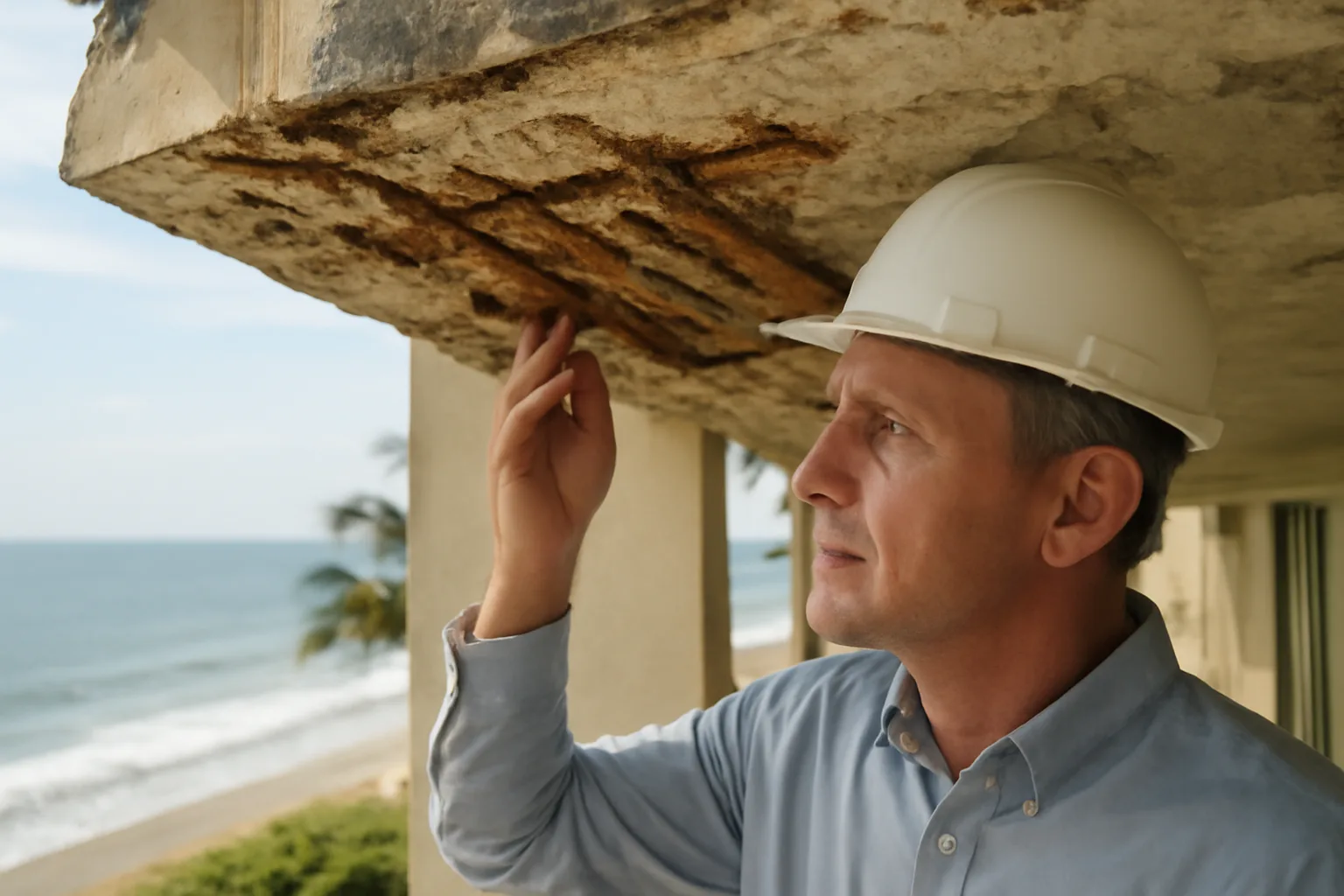
A milestone inspection is a structural safety check required under Florida Statutes section 553.899 for condominium and cooperative buildings that are three stories or taller. A licensed architect or engineer has to perform it, not a general contractor and not a property manager. The inspection has two phases: Phase 1 is a visual survey of the building's structural condition, and if the inspector finds "substantial structural deterioration," the building moves to Phase 2, which requires more invasive testing, like removing stucco or concrete cores to see what's happening underneath [1]. The law defines the trigger age as 30 years from the certificate of occupancy date, or 25 years if the building sits within three miles of the coastline, because salt air speeds up concrete and rebar corrosion. After that first inspection, the building needs another one every 10 years [1]. This isn't a paperwork requirement you can wave off. Florida passed this law directly in response to the June 2021 Champlain Towers South collapse in Surfside, which killed 98 people. The Miami-Dade grand jury investigation and subsequent legislative session (Senate Bill 4-D, signed in May 2022) rewrote structural inspection and reserve rules statewide [2].
who has to order the milestone inspection, the board or an engineer
The board orders it, but only a licensed engineer or architect can perform it. Florida law puts the obligation squarely on the condominium association or cooperative association to hire the inspector once the building hits the age threshold [1]. Local building officials also have a role. Under 553.899, the local enforcement agency (usually the county or city building department) has to notify the association in writing when the milestone inspection is due, and the association then has 180 days to complete it once notified [1]. Some counties, notably Miami-Dade and Broward, already had their own 40-year recertification programs before the 2022 law and now layer the state milestone rule on top, so boards in South Florida should check with their county building department directly, not assume the state timeline is the only one that applies. DBPR, Florida's Department of Business and Professional Regulation, oversees community association managers and licensing but doesn't perform the inspections itself. Boards can check an inspector's license status through DBPR's licensing search before signing a contract [3].
what does a milestone inspection actually check
The inspection looks at the structural and life-safety systems of the building, not cosmetic issues like paint color or landscaping. Phase 1 covers a visual examination of load-bearing walls, floors, roofs, and other structural elements, focused on finding signs of "substantial structural deterioration" such as cracking, spalling concrete, exposed and corroding rebar, or water intrusion damage to structural members [1]. If the inspector doesn't find substantial deterioration, the report is done at Phase 1 and gets filed. If they do find it, Phase 2 kicks in: this involves more destructive testing, like coring concrete samples or removing finishes to inspect what's behind them, to determine the extent of the problem and what repairs are needed [1]. The statute requires the inspector to submit a sealed report to the association and to the local building official. That report has to identify any substantial structural deterioration and give a recommended timeline for repairs [1]. The board then has to distribute a summary to unit owners and, depending on what's found, may need to move fast on repairs or a special assessment.
how much does a milestone inspection cost
There's no single statewide price because it depends heavily on building size, height, age, and how much of the building's structure is exposed or accessible. Reported ranges from engineering firms and condo attorneys across South Florida generally land between roughly $6,000 for a smaller Phase 1 report on a mid-rise building and well over $20,000 to $30,000+ for larger high-rises, and Phase 2 (if triggered) adds significant additional cost because of the invasive testing and lab analysis involved. Those figures aren't from a single government source, so treat them as a planning range, not a quote. Get bids from at least two or three licensed engineering firms before committing, and ask specifically whether the quote includes both phases or just Phase 1. This cost is separate from, and usually much smaller than, whatever repairs get recommended afterward. A building with real deterioration can face repair bills in the hundreds of thousands to millions of dollars, which is a big part of why the reserve funding rules changed at the same time as the inspection rules.
is a milestone inspection the same thing as a sirs report
No, and this confusion causes real problems for boards. A milestone inspection under section 553.899 is a structural safety check performed by an engineer or architect. A Structural Integrity Reserve Study (SIRS) under section 718.112(2)(g) is a financial planning document that estimates the remaining useful life and replacement cost of specific structural components, so the association can fund reserves properly [3]. They overlap in subject matter (both look at roofs, load-bearing walls, waterproofing, electrical systems, plumbing, and so on) but they answer different questions. The milestone inspection asks "is this building structurally sound right now?" The SIRS asks "how much money do we need in reserves to replace or repair these components before they fail?" Florida law requires SIRS studies for condo associations with buildings three stories or higher, and the initial SIRS was due by December 31, 2024 for most associations, with updates required at least every 10 years after [3]. If you want the deeper breakdown of what a SIRS covers, see our reserve study guide.
what is a reserve study and what is it for
A reserve study is a professional assessment of a building's major shared components (roof, structure, paving, plumbing, electrical, elevators, and similar systems), estimating how much life each has left and how much it will cost to repair or replace. The goal is simple: figure out how much money the association needs to be setting aside now so it doesn't have to hit owners with a surprise special assessment later. A reserve study for an HOA works the same way conceptually, though HOAs (homeowners associations governing single-family homes) aren't currently subject to Florida's SIRS mandate the way condos are, since that mandate applies specifically under chapter 718 to condominium associations. HOAs can still order a voluntary reserve study, and many boards do, because underfunded reserves are one of the most common reasons HOA special assessments blindside homeowners. A good reserve study typically breaks components into three categories: those needing replacement soon, those with moderate life left, and long-term items. It gives a percent-funded number (how close current reserves are to the ideal target) and a recommended funding plan. For condo-specific detail on how this works under Florida law, see our hoa reserve study guide and our reserve study for condo association page.
how much does a reserve study cost
For a typical Florida condo association, a full reserve study (with a site visit, component inventory, and funding plan) commonly runs somewhere between $3,000 and $10,000+ depending on building size and complexity, though larger high-rises with more mechanical systems and structural components can run higher. A SIRS specifically, since it has statutory content requirements under 718.112(2)(g), will often cost more than a generic reserve study because the preparer has to be a licensed engineer or architect, or in some cases a reserve specialist meeting the statute's qualifications, and has to address defined structural categories. There isn't a state-published fee schedule, so get multiple bids. Ask providers whether their price includes an on-site visual inspection of all common elements or just a desktop review, since desktop-only studies are cheaper but far less reliable. Compare this cost against what's at stake: an underfunded reserve account is the single biggest driver of large surprise special assessments, the kind that run into tens of thousands of dollars per unit.
how much should an hoa or condo have in reserves
There's no flat percentage or dollar figure that applies to every building, because the right reserve amount depends entirely on the age, size, and condition of the specific structural and mechanical components. What Florida law does require, for condo associations under chapter 718, is that reserve funding for the SIRS-covered components (roof, structure, fireproofing, plumbing, electrical, waterproofing, exterior painting, and load-bearing walls, among others) can no longer be waived or reduced below what the study recommends, starting with budgets adopted on or after December 31, 2024 [3] [4]. That's a meaningful shift. Before the 2022 law, associations could vote to underfund or fully waive reserves. That option is now gone for the SIRS-covered components in buildings subject to the milestone inspection requirement. Non-SIRS reserve items (things like painting common areas that aren't structural, or amenities) may still be subject to different membership vote rules, so this is a good spot to confirm specifics with association counsel. As a practical benchmark, reserve professionals generally aim for a "percent funded" figure in the 70% range or higher as healthy, though many older Florida buildings were sitting well under 50% funded before the law changed, which is exactly the gap SIRS is designed to close [3].
what is an hoa assessment, and how is it different from a special assessment
An HOA assessment is simply the regular fee (usually monthly or quarterly) that owners pay to fund the association's operating budget and reserves. This is the routine due, not an emergency charge. A special assessment is a separate, additional charge the board levies when the regular budget and reserves can't cover a specific cost, like a major roof replacement, a milestone inspection's Phase 2 repairs, or a sudden insurance premium spike. Special assessments are the mechanism boards reach for when reserves are underfunded and a big bill lands anyway. Florida condo boards do have some ability to levy special assessments without a full membership vote, depending on the declaration and the amount, but large assessments often still require board approval procedures and proper notice under chapter 718's meeting and budget rules. For a full breakdown of how these work and what triggers them, see our hoa special assessment page.
are hoa special assessments tax deductible
Generally, no, not for the individual homeowner claiming a personal itemized deduction, and this is one of the most common questions boards get from frustrated owners after a big bill lands. The IRS treats HOA assessments, including special assessments, as a personal, nondeductible living expense in most cases, similar to how regular HOA dues aren't deductible for a primary residence . There are narrow exceptions. If the property is a rental or investment property, a special assessment tied to a capital improvement can sometimes be added to the property's cost basis and depreciated, or in some cases a portion tied to repairs on a rental unit may be deductible as a business expense. If the assessment funds something tied to a home office deduction or a casualty loss in a federally declared disaster area, there may be a partial deduction path. This is genuinely a case-by-case tax question, not a board-level determination, so owners should talk to a CPA or tax attorney about their specific situation rather than relying on a rule of thumb. The IRS's own guidance on rental property expenses and repairs versus improvements is the right starting reference point .
what happens if a board misses the milestone inspection or sirs deadline
Local building officials can pursue code enforcement action against the association, and in some counties that includes fines that accrue daily until compliance. Beyond the county-level enforcement, a board that fails to get a required milestone inspection or SIRS done can also face exposure on the civil side, since unit owners or buyers relying on disclosures could have grounds for claims if the board knew about the requirement and didn't act. There's also a practical, immediate cost: lenders and title companies increasingly ask for milestone inspection and SIRS status before closing a sale or refinancing in a condo building, and Fannie Mae and Freddie Mac have both tightened project review standards for condos with unresolved structural or reserve issues since 2021. A building that's out of compliance can effectively become harder to sell into, which hurts every owner's property value, more than the board's paperwork record. Boards juggling a milestone inspection deadline, a SIRS deadline, and a reserve funding transition all at once often lose track of which document is due when and to whom. That's the exact gap our $199 one-time Building-Specific Board Compliance Kit is built to close: it organizes deadlines, tracks which inspector or reserve specialist is on file, and helps the board communicate status to owners clearly. It doesn't replace the licensed engineer or reserve specialist the statute requires, and it isn't legal advice about your specific governing documents. Start at /board-kit-builder.
where florida's rules stand after surfside, and what might still change
Florida rewrote its structural safety and reserve laws fast after Surfside, and the legislature has continued to tweak details in subsequent sessions, including adjustments to SIRS deadlines and reserve waiver rules. Senate Bill 4-D (2022) created the current milestone inspection statute (553.899) and the SIRS requirement (718.112(2)(g)) [3]. Later sessions have adjusted implementation timing and clarified which associations and building types are covered. Because this area keeps moving, don't treat any single blog post, including this one, as the final word for your building. Confirm current deadlines and requirements with your association's attorney and with your county building department, since local enforcement timelines (the 180-day notice window, for example) can vary by jurisdiction [1]. If your building sits near the coast, also confirm the exact three-mile boundary determination with your local building official, since that distance decides whether you're on the 25-year or 30-year clock. For boards juggling reserve funding changes on top of the inspection deadline, our florida condo reserve fund relief piece covers recent legislative adjustments to funding timelines, and our condo special assessment insurance page covers how insurance products are starting to respond to special assessment risk.
Frequently asked questions
What is a milestone inspection in Florida?
It's a structural inspection required under Florida Statutes 553.899 for condo and co-op buildings three stories or taller, performed by a licensed architect or engineer, due at 30 years old (25 years if within 3 miles of the coast) and every 10 years after that.
What is a reserve study?
A reserve study is a professional evaluation of a building's major shared components (roof, structure, plumbing, electrical, and similar systems) that estimates remaining useful life, replacement cost, and how much the association should be saving in reserves to cover those future costs.
What is a reserve study for an HOA?
It's the same concept applied to a homeowners association: an assessment of shared components like roads, clubhouses, pools, or drainage systems, used to set a reserve funding target. HOAs aren't currently subject to Florida's condo SIRS mandate, but many still order voluntary reserve studies to avoid surprise assessments.
What is an HOA assessment?
An HOA assessment usually refers to the regular dues owners pay for operating costs and reserves. A special assessment is a separate, additional charge levied when a specific cost, like a major repair, isn't covered by the regular budget or reserve fund.
How much should an HOA have in reserves?
There's no universal percentage that fits every property, since it depends on component age and condition. For Florida condos, chapter 718 now requires full funding of SIRS-covered structural components starting with budgets adopted on or after December 31, 2024, removing the old waiver option for those items.
How much does a reserve study cost?
Typical Florida condo reserve studies run roughly $3,000 to $10,000 or more depending on building size and complexity, with SIRS studies often costing more because a licensed engineer or architect must address specific structural categories defined by statute.
Are HOA special assessments tax deductible?
Generally no for a primary residence; the IRS treats them as a personal nondeductible expense. Exceptions can apply for rental or investment properties, where a capital improvement assessment may add to cost basis or a repair-related portion may be deductible. Talk to a CPA about your specific situation.
Is a milestone inspection the same as a SIRS report?
No. A milestone inspection (553.899) is a structural safety check by an engineer or architect. A SIRS (718.112(2)(g)) is a financial reserve study estimating replacement costs and useful life for structural components. Many buildings need both, on different but overlapping timelines.
How much does a milestone inspection cost in Florida?
Reported ranges vary widely by building size, generally from roughly $6,000 for a smaller Phase 1 report to $20,000-$30,000+ for larger high-rises, with Phase 2 invasive testing adding significant cost if substantial deterioration is found. Get multiple bids from licensed engineering firms.
Who orders the milestone inspection, the board or the engineer?
The board (the condo or co-op association) is legally responsible for hiring a licensed architect or engineer to perform the inspection once the building reaches the age threshold. The local building official notifies the association when it's due, and the association typically has 180 days to complete it.
What happens if my condo building's structure fails the milestone inspection?
If Phase 1 finds substantial structural deterioration, the inspector moves to Phase 2, which involves more invasive testing to determine the scope of damage. The engineer's sealed report goes to the association and the local building official, and repairs, often funded by a special assessment, typically follow on a recommended timeline.
Does Florida's milestone inspection law apply to HOAs or just condos?
It applies to condominium and cooperative buildings three stories or taller under Florida Statutes 553.899. Single-family HOA communities generally aren't subject to this specific statute, though any building meeting the height and age criteria, regardless of association type, should confirm applicability with local building officials.
Sources
- Florida Legislature, Florida Statutes section 553.899: Milestone inspection requirements, phases, age thresholds, and local building official notification
- Florida Senate, Senate Bill 4-D (2022 Special Session): 2022 legislation creating milestone inspection and SIRS requirements
- Florida Legislature, Florida Statutes section 718.112: SIRS requirement, definition, structural components covered, and reserve funding mandate starting December 31, 2024
- IRS, Publication 527, Residential Rental Property: Tax treatment of assessments and capital improvements on rental property
- Florida Senate: Statutory provisions governing condominium association board membership and transition, relevant to who has authority to order inspections
- Florida Department of Business and Professional Regulation (DBPR): Official state guidance explaining what a milestone inspection is and its requirements for condominium buildings in Florida
- Florida Senate: Statutory requirements for maintenance, reserves, and structural integrity reserve studies for condominium associations
- Internal Revenue Service: IRS guidance on tax treatment of homeowner association assessments and special assessments
- Florida Senate: Statutory provisions on homeowners' association assessments and financial reporting requirements