Last updated 2026-08-14
TL;DR
Washington law (RCW 64.34.380 for older condos, RCW 64.90.550 under the newer act) requires most condo associations with significant common elements to get a reserve study done at least every three years and update it annually. Boards must fund reserves based on that study or disclose in writing why they're not, and give buyers a resale certificate showing reserve status.
What is a reserve study, and does Washington law actually require one?
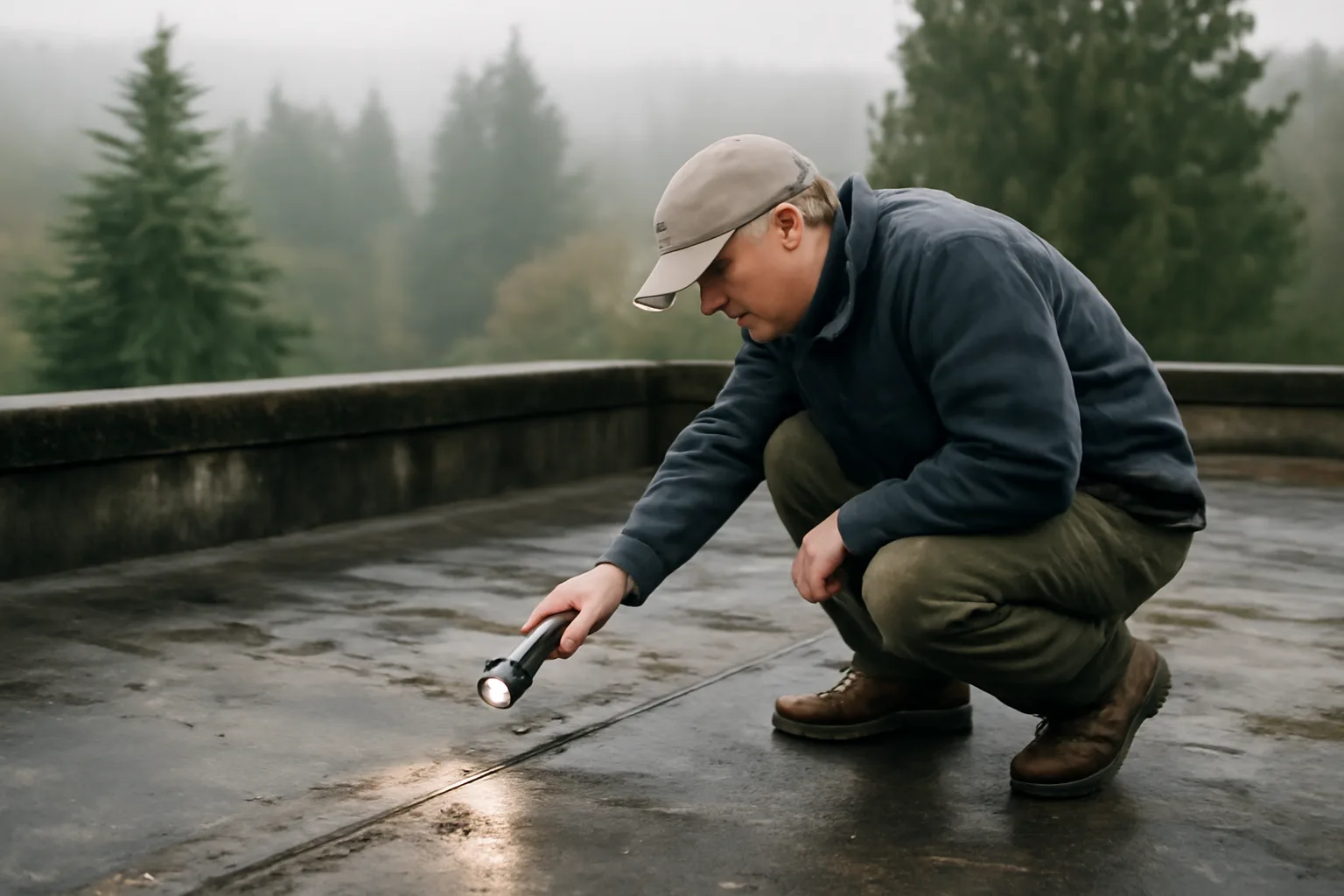
A reserve study is a physical inspection and funding plan for an association's major shared components, things like roofs, siding, pavement, elevators, and pool equipment, done by someone trained to estimate remaining useful life and replacement cost. It answers two questions: what will breaking things cost to fix, and how much should the association be saving each month to have that cash when the bill comes due. Washington doesn't leave this optional for most condos. Older associations created under the original Washington Condominium Act follow RCW 64.34.380, which requires the board to "cause a study of the reserve accounts to be conducted at least once every three years" for any association with significant assets in reserve components [1]. Associations formed or that opted into the newer Washington Uniform Common Interest Ownership Act follow the parallel provision at RCW 64.90.550, which uses nearly identical language and the same three-year cycle [2]. The statute isn't just "nice to have." It ties into disclosure obligations, resale certificates, and how a board can legally justify (or fail to justify) its budget. A board that skips the study isn't automatically in violation of nothing, it's exposed if an owner or buyer later challenges why reserves were underfunded. For comparison, Florida's structural inspection and reserve rules (SIRS under Florida Statutes chapter 718) are tied to building age and height. Washington's law isn't age-triggered the same way. It applies based on whether the association has "significant" reserve components, not a specific building age threshold, which is a real difference boards moving between states need to understand. See our comparisons hub if you're benchmarking Washington against other states.
What is a reserve study for an HOA (versus a condo association)?
Same concept, slightly different statute. Washington's Homeowners' Association Act, chapter RCW 64.38, covers non-condo HOAs (detached homes, townhomes with an association but no condominium form of ownership). RCW 64.38.070 requires many of these associations to prepare a reserve study or a reserve summary depending on the association's size and the amount of common-element responsibility it carries [3]. A reserve study for an HOA is functionally the same document as for a condo: an inventory of components the association is legally responsible to maintain, their condition, remaining life, and a funding schedule. The difference is which components get counted. A single-family HOA that only maintains a clubhouse, a shared road, and some retention ponds has a much smaller reserve study than a mid-rise condo tower with elevators, a parking garage, and a roof membrane. Smaller HOAs (generally those with limited common assets or budgets under a statutory threshold) can sometimes get away with a reserve study summary rather than a full study, but boards should not assume they qualify without checking the current text of RCW 64.38.070 with counsel, since these size thresholds get adjusted. If your association is a true condominium (units + common elements, governed by a declaration recorded as a condominium), RCW 64.34.380 or RCW 64.90.550 controls instead of 64.38. Boards sometimes get this wrong, assume they're under the HOA statute when they're legally a condo, and end up with the wrong compliance checklist.
How much should an HOA (or condo) have in reserves?
There's no single dollar figure or percentage that Washington law mandates as a reserve balance target. The law requires the process (get the study, review it, fund according to it or explain in writing why not), not a specific number like "25% funded" or "$5,000 per unit." That said, industry benchmarks are useful context. National reserve study firms and the Community Associations Institute commonly describe reserves funded below 30% of the ideal ("fully funded") level as "poorly funded," and associations under 70% funded face materially higher special assessment risk within a five-year window, based on aggregated data reported by reserve study providers and cited across state reserve guidance documents. Washington's statute itself doesn't set a percentage; it requires the board to adopt a plan and disclose the plan's funding status to owners and buyers. What the study actually produces is a year-by-year contribution schedule: how much the association needs to put into reserves annually to cover projected replacements 5, 10, and 30 years out. A well-run board treats that schedule as the floor for budgeting, not a suggestion. Boards that consistently underfund relative to their own study's recommendation are the ones that end up needing a special assessment when the roof or the elevator finally fails. For Florida-specific SIRS funding requirements (which do include hard percentage and "no waiver" rules under Florida Statutes 718.112), see our SIRS guides hub. Washington's approach is looser by design, but that flexibility cuts both ways: it also means Washington boards get less legal cover if they underfund and something breaks.
How much does a reserve study cost in Washington?
Expect a full reserve study for a mid-size Washington condo (30 to 100 units) to run roughly $2,000 to $6,000, with larger or more complex properties (high-rises, extensive amenities, multiple building types) running higher, sometimes $8,000 to $15,000 or more. These are national industry ranges reported by reserve study providers and state condo associations, since Washington doesn't publish a state fee schedule for reserve studies the way it might for licensed trades. Cost depends heavily on a few things: number of components inventoried, whether it's a full study with an on-site visual inspection versus an update-only (desktop) review, square footage, and how many separate structures or systems the study has to cover. A full study with a site visit typically costs two to four times what an annual desktop update costs, because the update just adjusts the existing inventory for inflation and one year of aging rather than re-inspecting everything. Boards budgeting for this should treat it as a recurring line item, not a one-time expense. RCW 64.34.380 and RCW 64.90.550 both call for updates at least every three years, and most reserve professionals recommend an annual desktop update in between full studies to keep the funding plan current with real-world cost inflation, which has run well above general CPI for construction materials and labor in recent years.
What is an HOA assessment, and how is it different from a special assessment?
An HOA assessment is the regular fee owners pay, usually monthly or quarterly, that funds both operating expenses (insurance, landscaping, management fees, utilities) and reserve contributions. It's set by the board through the annual budget process and is a routine, expected cost of ownership, not a penalty or a one-time event. A special assessment is different: it's an additional, usually one-time (or short-term installment) charge levied outside the regular budget, typically because reserves fell short of an actual repair cost, an emergency came up, or a legal judgment needs to be paid. Washington condo boards get their authority to levy both regular and special assessments from RCW 64.34.360, which governs assessments generally, including the board's ability to assess for reserves, common expenses, and (with some restrictions) emergency repairs [4]. The practical relationship: the whole point of a properly funded reserve study is to make special assessments rare or unnecessary. A board that follows its reserve study's contribution schedule year after year is building the cash cushion that avoids the surprise five-figure bill. A board that defers reserve funding to keep monthly assessments artificially low is just shifting that cost to a future special assessment, usually a bigger one, because deferred maintenance gets more expensive, not less. For a deeper look at how special assessments get triggered and structured, see hoa special assessment and condo special assessment insurance for how insurance interacts with assessment risk.
Are HOA special assessments tax deductible?
Generally, no, not for the homeowner, and this surprises a lot of owners hit with a large bill. The IRS treats regular HOA assessments and most special assessments for a primary residence as a non-deductible personal expense, similar to how regular home maintenance isn't deductible. There are narrow exceptions. If part of the special assessment is specifically for a capital improvement that increases your home's basis (rather than routine repair or replacement), it may be added to your cost basis and reduce capital gains tax when you sell, per general IRS guidance on improvements to property in IRS Publication 523 (Selling Your Home). If the unit is a rental property, a special assessment tied to a repair may be deductible as a rental expense in the year paid or depreciated if it's a capital improvement, under ordinary rules in IRS Publication 527 (Residential Rental Property). Boards themselves aren't the ones filing this on an owner's return, but a board that keeps clean records distinguishing "capital improvement" line items (new roof, structural repair) from "routine maintenance" line items within a special assessment does owners a real favor at tax time. Ask your association's tax preparer or CPA, not the board, for anything owner-specific here. This is genuinely a case where "talk to your accountant" isn't a dodge, it's the correct answer, because individual tax situations (rental vs. primary residence, timing of sale) change the answer.
What happens if a Washington board skips or delays the reserve study?
Washington's statutes don't spell out a specific fine or penalty schedule for missing the three-year reserve study cycle the way some states do for missed building inspections. But skipping it creates real exposure in a few concrete ways. First, disclosure failure. Both RCW 64.34.380 and RCW 64.90.550 require the reserve study (or the board's written statement of why it hasn't done one, along with its funding plan) to be part of the annual budget disclosure to owners. A resale certificate given to a buyer under RCW 64.34.425 has to reflect the association's reserve account status. If there's no current study, that gap shows up as a red flag to a buyer's lender or attorney, and it can slow down or kill sales in the building. Second, breach-of-duty exposure for the board. If a major system fails, an elevator, a roof, a garage deck, and owners face a large special assessment, a board with no reserve study (or a stale one) has a much harder time showing it acted with reasonable business judgment. Washington courts generally apply a business judgment standard to condo board decisions, but that protection assumes the board actually gathered relevant information, which a reserve study is. Third, insurance and lender friction. Fannie Mae and Freddie Mac condo project review guidelines look at reserve funding and study currency as part of project eligibility for buyers seeking conventional financing. A building without a current reserve study, or one showing severe underfunding, can end up on a lender's ineligible list, which hurts every owner trying to sell or refinance, more than the board.
How does Washington's reserve study law compare to Florida's SIRS requirement?
| Trigger | Any condo with "significant" reserve components | Buildings 3+ stories, 25/30-year milestone age thresholds | |
|---|---|---|---|
| Study frequency | At least every 3 years | Every 10 years (SIRS); milestone inspection at 25 or 30 years depending on coastal location | |
| Funding mandate | Board must fund per study or disclose in writing why not | Full funding required for SIRS-covered components, no waiver or pooling allowed as of 2024 rules | |
| Who performs it | Reserve study professional (no state-mandated license category) | Licensed engineer or architect for the structural inspection portion | |
| Penalty structure | No explicit statutory fine; exposure via disclosure/lender/liability | DBPR oversight, statutory reporting deadlines, potential liability under 718.112 | Florida's law got dramatically stricter after the 2021 Champlain Towers South collapse in Surfside, which killed 98 people and led directly to the SIRS and milestone inspection requirements added to chapter 718 [5]. Washington hasn't had a comparable legislative trigger event, and its reserve law reflects an older, more general "disclose and plan" philosophy rather than Florida's newer "fund it or else" structure. Boards managing buildings in both states, or advising owners who split time between a Washington condo and a Florida unit, need to track two very different compliance calendars. See florida condo reserve fund relief for how Florida associations have tried (with limited success) to get temporary relief from the newer, stricter funding rules. |
They solve related problems very differently, and boards who've lived under one system shouldn't assume the other works the same way. | Feature | Washington (RCW 64.34.380 / 64.90.550) | Florida (Fla. Stat. ch. 718, SIRS) |
Who actually performs a Washington reserve study, and what should be in it?
Washington doesn't have a state-mandated professional license specifically for "reserve study specialist," unlike Florida's requirement that milestone inspections be done by a licensed engineer or architect. Most Washington associations hire firms whose preparers hold the Reserve Specialist (RS) credential through the Community Associations Institute, or the PRA (Professional Reserve Analyst) credential through the Association of Professional Reserve Analysts. Neither credential is a Washington state license requirement, they're industry certifications, but hiring an uncertified person to do this work is a common way boards end up with a study that doesn't hold up to scrutiny. A solid reserve study, regardless of who prepares it, should include: a full component inventory with quantities and locations, current replacement cost for each component, estimated remaining useful life, a percent-funded calculation comparing current reserves to the theoretical fully-funded balance, and a multi-year (often 20 to 30 year) cash-flow funding plan showing recommended annual contributions. Boards should ask for both the full study and a plain-language summary. The full study is a working document for the treasurer and management company. The summary is what actually needs to go to owners and into resale disclosures, and a preparer who can't produce a readable summary is often not the right hire. Once the study is in hand, the harder job starts: actually adopting a funding schedule, communicating it to owners without triggering panic, and tracking whether the board is staying on pace year over year. This is where a lot of boards, frankly, drop the ball, not because they disagree with the study but because nobody owns the follow-through. A structured compliance kit, like the Building-Specific Board Compliance Kit at $199, which organizes reserve study deadlines, funding schedules, and owner disclosure timelines into one calendar, exists for exactly this gap. It doesn't replace the licensed reserve study professional or give legal advice on your declaration, it just keeps the paperwork and dates from falling through the cracks between studies.
What should a Washington board do right now to stay ahead of this?
Start by confirming which statute actually governs your association. If you're a true condominium formed before July 2018 and haven't opted into the new act, you're under RCW 64.34.380. If formed after, or if you've opted in, you're under RCW 64.90.550. Non-condo HOAs check RCW 64.38.070 instead. This isn't a guess-and-check exercise, pull your declaration and confirm with counsel, since getting the wrong statute means tracking the wrong deadline. Next, find your last reserve study. If it's more than three years old, or nonexistent, that's the first item for the next board meeting agenda, not a someday project. Get quotes from two or three RS- or PRA-credentialed firms; costs vary enough (that $2,000 to $6,000+ range) that a single quote isn't enough to budget against. Then look at the funding schedule the study recommends against what the association is actually contributing. If there's a gap, the board has two honest options: raise assessments to close the gap over a reasonable period, or formally document, in writing, to owners, why the board is choosing a different funding level and what the risk is. Silence isn't a third option; it's just deferred disclosure that becomes a bigger problem later. Finally, build the reserve study cycle into a standing calendar the board actually checks, not a folder nobody opens until a sale falls through over a missing resale certificate disclosure. For general background on how reserve studies work across states, see reserve study and hoa reserve study. Every rule here should be confirmed against the current statute text and your own governing documents with your association's counsel, since Washington's legislature has amended these RCW sections before and will again.
Frequently asked questions
What is a reserve study?
A reserve study is a professional assessment of an association's major shared physical components (roofs, elevators, pavement, siding), estimating their remaining useful life, replacement cost, and how much money the association needs to save annually to cover future replacements without a surprise special assessment.
What is a reserve study for an HOA?
For a homeowners' association (non-condo, under RCW 64.38 in Washington), a reserve study inventories the common elements the HOA is responsible to maintain, roads, clubhouses, retention ponds, and produces a funding schedule. Smaller HOAs may qualify for a reserve summary instead of a full study depending on size thresholds in the current statute.
What is an HOA assessment?
An HOA assessment is the regular fee, usually monthly or quarterly, owners pay to fund operating costs and reserve contributions. It's set through the annual budget and is different from a special assessment, which is a one-time or short-term additional charge for unbudgeted costs or reserve shortfalls.
What are HOA assessments used for?
Regular assessments cover day-to-day operating costs (insurance, landscaping, utilities, management) and reserve fund contributions for future major repairs. Special assessments cover unexpected or underfunded costs, like a roof failure the reserve fund couldn't cover, and are billed outside the normal budget cycle.
How much should an HOA have in reserves?
Washington law sets no specific percentage; it requires the board to get a reserve study and either fund per its recommendation or disclose in writing why not. Industry guidance generally treats reserves below 30% of full funding as high-risk for near-term special assessments, though this isn't a legal threshold in Washington.
How much does a reserve study cost?
A full reserve study for a mid-size Washington condo (30 to 100 units) typically costs $2,000 to $6,000; larger or more complex properties can run $8,000 to $15,000 or more. Annual desktop updates between full studies cost less, often a fraction of the full study price.
Are HOA special assessments tax deductible?
Generally no, for a primary residence, similar to regular home maintenance costs. A portion tied to a documented capital improvement may add to your home's cost basis (reducing capital gains at sale, per IRS Publication 523), and rental property owners may deduct or depreciate assessment costs under IRS Publication 527. Ask a CPA.
Does Washington law require a reserve study every year?
No. RCW 64.34.380 and RCW 64.90.550 require a full reserve study at least every three years, though most reserve professionals recommend an annual desktop update in the years between full studies to keep the funding plan current with inflation and one year of component aging.
What's the difference between Washington's reserve study law and Florida's SIRS law?
Washington requires a reserve study every three years for condos with significant common components, but doesn't mandate full funding or building-age triggers. Florida's SIRS (Fla. Stat. ch. 718) requires a structural inspection every 10 years plus milestone inspections at 25 or 30 years, and mandates full funding of covered reserve components with no waiver allowed.
Who is legally required to perform a Washington reserve study?
Washington doesn't mandate a specific license for reserve study preparers. Most boards hire firms with an RS (Reserve Specialist, via CAI) or PRA (Professional Reserve Analyst) credential, industry certifications rather than state licenses, since these preparers are trained in component inventory, remaining life estimates, and funding plan modeling.
What happens if a Washington condo board never gets a reserve study done?
There's no explicit statutory fine, but exposure comes from three directions: disclosure failures in resale certificates (RCW 64.34.425), breach-of-duty liability if a major system fails without a documented funding plan, and lender friction, since Fannie Mae and Freddie Mac condo project reviews consider reserve study currency and funding levels.
Do small HOAs in Washington still need a reserve study?
It depends on size and common-element responsibility. RCW 64.38.070 allows smaller associations, generally those below certain budget or unit-count thresholds, to prepare a reserve study summary instead of a full study. Boards should confirm current thresholds with counsel, since the statute has been amended before.
Sources
- Washington State Legislature, RCW 64.34.380: Older Washington condo associations must conduct a reserve study at least every three years
- Washington State Legislature, RCW 64.90.550: Associations under the newer Washington Uniform Common Interest Ownership Act follow a parallel three-year reserve study requirement
- Washington State Legislature, RCW 64.38.070: Washington HOAs (non-condo) may need a reserve study or summary depending on size and common-element responsibility
- Washington State Legislature, RCW 64.34.360: Washington condo boards derive assessment authority, including special assessments, from this statute
- Florida Senate, Florida Statutes Chapter 718: Florida's condominium act governs SIRS and milestone inspection requirements
- Florida Senate, Florida Statutes 718.112: Florida requires full funding of SIRS-covered reserve components with no waiver allowed as of current law
- Washington State Legislature, RCW 64.34.425: Washington resale certificates must reflect the association's reserve account status
- Internal Revenue Service, Publication 523 (Selling Your Home): A special assessment for a capital improvement may be added to a home's cost basis, affecting capital gains tax at sale
- Internal Revenue Service, Publication 527 (Residential Rental Property): Special assessments on rental property may be deductible or depreciable depending on whether they're repairs or capital improvements