Last updated 2026-07-25
TL;DR
A Structural Integrity Reserve Study (SIRS) is a Florida-mandated inspection of a condo's roof, structure, plumbing, electrical, and other key systems, done to set full, no-waiver reserve funding under section 718.112, F.S. Buildings 3+ stories must complete one by December 31, 2024, and every 10 years after. Cost typically runs $2,500 to $10,000+ depending on building size.
What is a structural integrity reserve study (SIRS)?
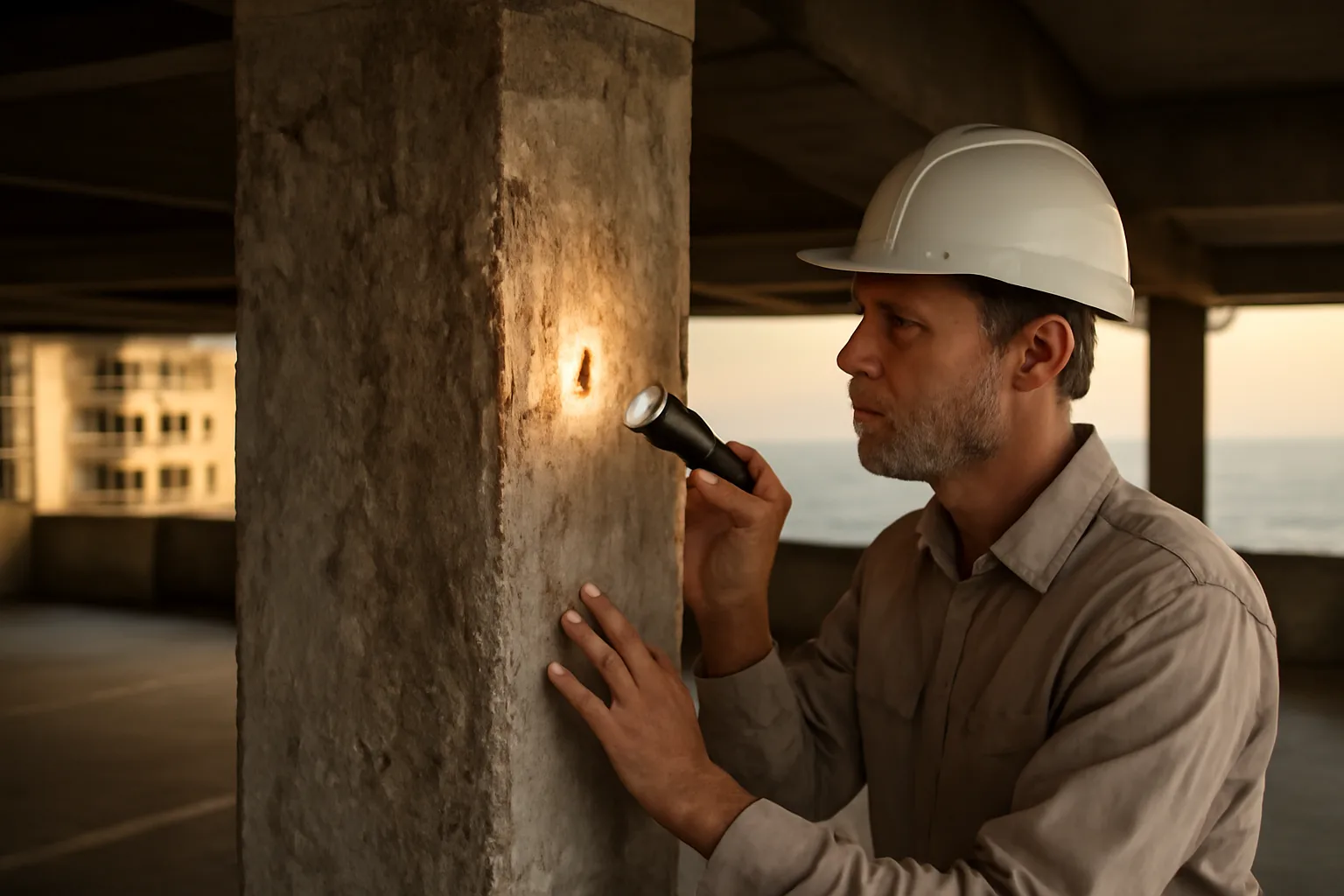
A SIRS is a professional inspection and funding analysis of a condominium building's major structural and mechanical components, required under Florida Statutes section 718.112(2)(g). It's narrower than a general reserve study. Florida law lists exactly which components must be studied: roof, load-bearing walls or other primary structural members, floor, foundation, fireproofing and fire protection systems, plumbing, electrical systems, waterproofing and exterior painting, windows and exterior doors, and "any other item that has a deferred maintenance expense or replacement cost that exceeds $25,000 and the failure to replace or maintain such item negatively affects the items listed" [1]. A licensed engineer or architect has to perform the visual inspection portion. That's not optional and it's not something a board handles in-house. The statute requires the study be based on a visual inspection, at minimum, of these components, and it must estimate remaining useful life and remaining replacement cost for each [1]. The practical output for your board is a schedule and a number: what needs replacing, roughly when, and what it will cost in current dollars. That number then drives your reserve funding requirement, which is the part that catches most boards off guard.
What's the difference between a SIRS and a regular reserve study?
A traditional Florida condo reserve study could cover almost anything the association wanted to fund: paint, pool furniture, landscaping, clubhouse carpet. Associations could also vote to waive or reduce reserve funding for any of it, year after year. SIRS changed that for the specific structural components listed in the statute. Once your association has a SIRS, the reserves for those SIRS-designated components can no longer be waived, underfunded, or used for anything other than their designated purpose, per section 718.112(2)(f)6 [1]. A board can still waive or reduce reserves for non-SIRS items (say, a clubhouse renovation fund), but not for the roof, structure, plumbing, and the other named systems once a SIRS exists. Think of it as two buckets now: SIRS reserves (locked, full-funding, no board discretion to underfund) and everything else (still flexible, still waivable by a unit-owner vote in most cases). For background on the general reserve study process, see our reserve study guide.
Which Florida buildings need a SIRS, and by when?
Condominium buildings that are three stories or higher and subject to Chapter 718 need a SIRS. The original statutory deadline was December 31, 2024, for the first study, per section 718.112(2)(g) as amended by SB 4-D and later legislation [1] [2]. After the first SIRS, associations must have a new one done at least every 10 years, per the same statute [1]. Milestone inspection triggers a related but separate deadline: buildings 3 stories and up generally need a Phase 1 milestone inspection at 25 years from certificate of occupancy (30 years for buildings not within 3 miles of the coast), with local building officials having authority to adjust some of these thresholds under section 553.899, F.S. [3]. SIRS and milestone inspections are not the same requirement, but many boards schedule the engineering visits together to save on site visit fees. HOAs for single-family homes and townhomes are not covered by the SIRS statute. This is a condominium and cooperative requirement under Chapters 718 and 719. If your association is a true HOA (not a condo association) governed by Chapter 720, SIRS doesn't apply to you directly, though some multi-story HOA-governed buildings with condo units may still be swept in depending on how the property is legally structured. Confirm your building's status with your association's counsel.
What is a reserve study for an HOA versus a condo association?
A reserve study, in the general sense, is a financial and physical assessment of an association's common-element assets: what they are, how long they'll last, and how much money needs to be set aside now so replacement doesn't require a special assessment later. Every well-run community association should have one, condo or HOA. For a Florida condo association under Chapter 718, reserve studies (and specifically SIRS for qualifying buildings) are legally required, with specific components and funding rules set by statute [1] [1]. For a Florida HOA under Chapter 720, there's no statutory mandate to do a reserve study or to fund reserves at all, unless the association's own declaration or bylaws require it. Many HOA boards still order one voluntarily because it's the only way to actually know what a roof, road resurfacing, or pool resurfacing will cost in real dollars, and when. So "what is a reserve study for an HOA" and "what is a reserve study for a condo" have the same technical answer (an inspection plus a funding schedule), but very different legal weight behind them. See our hoa reserve study and reserve study for condo association guides for the specifics of each.
How much does a SIRS or reserve study cost in Florida?
Costs vary a lot by building size, number of components, and whether an engineer needs to do invasive testing versus a visual walk-through. Realistic ranges reported by Florida engineering and reserve-study firms and referenced in state guidance run roughly from $2,500 for a small, straightforward building to $10,000 or more for a large, complex high-rise with multiple structural systems and parking garages [4]. Bundling your SIRS study visit with your milestone inspection visit, when timing allows, often saves money because the engineer is already on-site examining the same structural elements. Ask any firm you're considering for a written scope: which components are they inspecting, is it visual-only or does it include probing/testing, and does the deliverable include the remaining-useful-life and cost table the statute requires. Don't confuse a cheap "reserve study" quote with a compliant SIRS. Some financial planning firms sell general reserve schedules without a licensed engineer's or architect's visual inspection component, which is required by the statute [1]. If the report wasn't prepared with that inspection, it likely doesn't satisfy 718.112(2)(g).
How much should an HOA or condo have in reserves?
There's no single dollar figure that applies to every building; it depends entirely on your components, their age, and their replacement cost. The honest answer is: enough to cover the full, unwaived replacement cost of every SIRS component on a straight-line schedule to its expected end of life, plus whatever else your board chooses to fund for non-SIRS items. For SIRS components specifically, section 718.112(2)(f)6 requires funding based on the study's estimate, with no ability to underfund below what the study calculates once a SIRS exists [1]. For non-SIRS reserve items, Florida law (718.112(2)(f)) still requires funding based on the reserve study unless owners vote to reduce or waive it, subject to limits that tightened after the 2022-2023 reform bills. A rough industry rule of thumb some reserve specialists use is that reserves should be funded to somewhere between 70% and 100% of the theoretical "fully funded" level to avoid special assessments, but that's a planning heuristic, not a legal standard, and Florida's SIRS law effectively pushes the structural components toward the 100% end regardless. If your board is trying to figure out where you stand, ordering the study is the only way to get a real number rather than a guess. Our florida condo reserve fund relief page covers what temporary relief options, if any, exist for cash-strapped associations.
What is an HOA assessment, and how is it different from a special assessment?
An HOA (or condo) assessment is simply the fee owners pay the association to fund operations and reserves. Regular assessments are the recurring monthly or quarterly dues set in the annual budget. A special assessment is a one-time, additional charge levied outside the regular budget, usually because reserves fell short of an actual repair bill or a new legal requirement (like SIRS) surfaced a funding gap that reserves hadn't covered yet. Florida condo boards get authority to levy special assessments from section 718.116 and from the association's own declaration, generally without needing a unit-owner vote unless the declaration says otherwise. That's part of why SIRS matters so much: a board that discovers a $2 million structural repair need with no reserves saved can, and often does, hit owners with a large special assessment with little warning. The goal of proper SIRS-driven reserve funding is to convert big, unpredictable special assessments into small, predictable monthly increases instead. It doesn't always work out that way if a building has been underfunded for decades, which is exactly the situation many post-Surfside associations are now digging out of. For a deeper look at how special assessments work and get triggered, see hoa special assessment.
Are HOA and condo special assessments tax deductible?
Generally, no, not for a primary residence. The IRS treats regular and special HOA/condo assessments as nondeductible personal expenses in most cases, similar to how routine home maintenance isn't deductible, per longstanding IRS guidance on home ownership costs [5]. There are narrow exceptions. If part of the assessment funds a capital improvement to a home used for rental or business purposes, that portion may be depreciable or partially deductible as a business expense, subject to the usual rules in IRS Publication 527 for residential rental property [6]. If you use part of your unit exclusively for a home office, a portion of the assessment tied to that space might factor into the home office deduction calculation. This is genuinely a case where you need an actual CPA, not a blog post. Assessment tax treatment depends on how the association classifies the charge, whether it's for a capital improvement versus a maintenance item, and your personal use of the property. Don't assume a $15,000 SIRS-driven special assessment is deductible just because it felt like an emergency; talk to your tax preparer before you file.
What happens if a board skips or delays the SIRS?
Boards that miss the SIRS deadline expose themselves and the association to real risk. Local building officials and DBPR (the Florida Department of Business and Professional Regulation, which regulates condominium associations) can take enforcement action, and failing to have the required study can complicate insurance renewals, mortgage approvals for buyers (many lenders now ask for SIRS/milestone status before financing a unit), and refinancing [4]. DBPR's Division of Florida Condominiums, Timeshares, and Mobile Homes maintains licensing and complaint oversight over community association managers and can investigate association compliance issues [4]. Boards should also know that individual board members can face personal liability exposure if they knowingly ignore a statutory requirement that leads to demonstrable harm, though the specifics depend on your association's insurance and the facts of any claim; ask your association's counsel about director and officer coverage specifics. Beyond legal exposure, the practical cost of delay is usually financial. A structural problem that would have cost $500,000 to address at year 25 can balloon to several million dollars by year 35 if deferred, because deterioration compounds and emergency repairs cost more than planned ones. Waiting doesn't make the number smaller.
How should a board budget and communicate a SIRS-driven funding increase?
Start with the study itself. Get the SIRS done by a licensed engineer or architect, get the full component list and cost estimates in writing, and have your management company or treasurer model out what full, unwaived funding looks like as a monthly per-unit number. Then bring it to owners early and often, not as a surprise vote. Boards that spring a large assessment on owners with 30 days notice generate lawsuits, recalls, and unit sales at a discount. Boards that walk owners through the SIRS findings over two or three meetings, with the actual engineer's report available, generally get less pushback, even when the number is large. This is also where organizing your paperwork matters more than people expect. Between the milestone inspection report, the SIRS report, the reserve schedule, and the board's own meeting minutes and owner notices, a board can easily lose track of deadlines across a 10-year and 25/30-year cycle running in parallel. That's the gap our $199 Building-Specific Board Compliance Kit is built to close: it organizes your building's specific inspection and reserve deadlines, drafts the owner communication timeline, and keeps a compliance calendar so nothing slips between annual board turnover. It doesn't replace your engineer or your reserve specialist; it keeps their reports, deadlines, and required notices in one place your board can actually manage. Start at /board-kit-builder.
What should a board do in the first 90 days after getting SIRS results?
First, get the report reviewed by your association's manager and, if the numbers are large, by counsel, to understand exactly which components are now locked into full funding under 718.112(2)(f)6 [1]. Second, have your treasurer or accountant model at least two funding paths: a straight special assessment to close any existing shortfall immediately, versus a phased increase in regular assessments over 2 to 5 years combined with a smaller assessment. Third, schedule an owner meeting specifically about the SIRS results, separate from your annual budget meeting, so it doesn't get buried in routine business. Florida law requires specific notice procedures for board meetings under 718.112(2)(c), and getting the notice and posting right avoids a challenge to whatever funding decision the board makes. Fourth, check your insurance. A completed SIRS and milestone inspection sometimes helps with property insurance underwriting, since insurers increasingly ask about structural inspection status before binding or renewing coverage on older coastal buildings. If your association carries a special assessment line item in its coverage, review whether it would apply here; see condo special assessment insurance for how that coverage typically works and where it falls short.
How does SIRS interact with the milestone inspection deadline?
They're separate statutes with separate purposes, but they overlap in timing for a lot of Florida buildings. The milestone inspection (section 553.899, F.S.) is a life-safety structural inspection: Phase 1 at 25 years (30 if more than 3 miles from the coast) from certificate of occupancy, with a Phase 2 (more invasive) inspection required if Phase 1 finds substantial structural deterioration [3]. SIRS (section 718.112(2)(g)) is a financial planning requirement: it tells the association how much to save and when components will need replacement, based on remaining useful life [1]. A building could pass its milestone inspection with no life-safety concerns and still have a SIRS report showing the roof needs replacement in 6 years at a cost that requires a funding increase starting now. Because both often require an engineer to physically inspect the same structural components, many Florida associations now schedule them together, or at least use the same engineering firm, to reduce duplicate site visits and fees. Ask your engineer directly whether their milestone inspection report can double as source data for the SIRS, since the statute requirements differ enough that one report doesn't automatically satisfy both.
Frequently asked questions
What is a reserve study?
A reserve study is a professional assessment of a building's major components (roof, structure, plumbing, paving, and similar big-ticket items), estimating each one's remaining life and future replacement cost, then calculating how much money the association needs to save annually to cover those costs without a surprise special assessment.
What is a reserve study for an HOA?
For an HOA, a reserve study works the same way as for a condo: an inspection and funding schedule for shared assets like roofs, roads, pools, or clubhouses. Unlike condos under Chapter 718, Florida HOAs under Chapter 720 aren't legally required to do one unless their own governing documents say so.
What is an HOA assessment?
An HOA assessment is the fee owners pay to fund the association's operating budget and reserves. It can be a regular recurring assessment (monthly or quarterly dues) or a special assessment, a one-time additional charge to cover a specific expense the regular budget and reserves didn't fully fund.
How much should an HOA have in reserves?
There's no universal dollar figure; it depends on the components covered and their replacement costs. The safest approach is to fund reserves according to a current reserve study's full-funding schedule rather than guessing. Florida condos with SIRS-designated components must fund those at the study's full estimate, with no board discretion to waive them.
How much does a reserve study cost?
Reserve study and SIRS costs in Florida commonly range from about $2,500 for a small building to $10,000 or more for a large high-rise, depending on component count, building size, and whether the engineer needs invasive testing versus a visual inspection only [5]. Get a written scope before hiring.
Are HOA special assessments tax deductible?
Generally no, for a primary residence. The IRS treats condo and HOA assessments, including special assessments, as nondeductible personal expenses in most cases. Exceptions can apply for rental or business-use property, or portions tied to capital improvements on income property. Confirm treatment with a CPA before filing.
What does SIRS stand for in Florida condo law?
SIRS stands for Structural Integrity Reserve Study. It's defined under section 718.112(2)(g), Florida Statutes, and requires a licensed engineer or architect to inspect specific structural and mechanical components and estimate their remaining life and replacement cost, feeding into the association's reserve funding requirements.
Which Florida condo buildings must complete a SIRS?
Condominium buildings three stories or higher, subject to Chapter 718, generally must complete a SIRS. The first deadline was December 31, 2024, with a new study required at least every 10 years after that, per section 718.112(2)(g), F.S.
Can a Florida condo association waive SIRS reserve funding?
No. Once a SIRS exists, funding for the components it covers cannot be waived, reduced, or used for a different purpose, per section 718.112(2)(f)6, F.S. Boards can still waive or reduce reserves for non-SIRS items with a proper owner vote, subject to other statutory limits.
Is a SIRS the same as a milestone inspection?
No. The milestone inspection (section 553.899, F.S.) checks structural safety at 25 or 30 years from certificate of occupancy. SIRS (section 718.112(2)(g)) sets reserve funding based on component life and replacement cost. Many buildings schedule both inspections together but they answer different legal questions.
What happens if my association misses the SIRS deadline?
Missing the deadline can trigger DBPR scrutiny, complicate property insurance renewals, and slow down unit sales since some lenders now ask about SIRS status before financing. Deferred structural repairs also tend to get more expensive over time, so delay usually costs the association more, not less.
Does SIRS apply to single-family home HOAs?
No. SIRS is a requirement under Florida Chapters 718 (condominiums) and 719 (cooperatives), not Chapter 720 (homeowners' associations). Traditional single-family or townhome HOAs are not subject to the SIRS statute, though some mixed-use or condo-within-HOA structures may still be covered depending on the property's legal setup.
Sources
- Florida Legislature, Florida Statutes section 718.112: SIRS component list, licensed engineer/architect inspection requirement, and 10-year renewal cycle
- Florida Legislature, SB 4-D (2022) and subsequent amendments: Original legislative source setting the December 31, 2024 SIRS deadline for qualifying condominiums
- Florida Legislature, Florida Statutes section 553.899: Milestone inspection requirement at 25 years (30 if not within 3 miles of coastline) from certificate of occupancy
- Florida Division of Florida Condominiums, Timeshares, and Mobile Homes (DBPR): DBPR oversight of condominium association compliance and reserve/inspection recordkeeping
- Internal Revenue Service, Publication 530, Tax Information for Homeowners: Homeowners association and condo assessments on a primary residence are generally nondeductible personal expenses
- Internal Revenue Service, Publication 527, Residential Rental Property: Assessments tied to capital improvements on rental property may be depreciable rather than immediately deductible