Last updated 2026-07-24
TL;DR
Florida law requires condos 3+ stories to get a structural integrity reserve study (SIRS) from a licensed engineer or architect (or a reserve specialist for non-structural items). Costs typically run $3,000 to $20,000+ depending on building size and complexity. There's no state licensing category called "reserve study company"; you're hiring individuals licensed under Chapters 471, 481, or 468, Florida Statutes.
What is a reserve study?
A reserve study is a report that inspects a building's major shared components (roof, structure, plumbing, paving, elevators, painting, and so on), estimates how much life each one has left, and projects how much money the association needs to save each year to pay for replacement without a surprise bill landing on owners. Think of it as a long-range maintenance budget with an inspection behind it. A good study doesn't just say "the roof will need replacing eventually." It gives you a remaining useful life estimate, a current replacement cost, and a funding schedule showing what to collect in reserves this year, next year, and the year after that. In Florida, there are now two distinct things people mean when they say "reserve study," and mixing them up costs boards real money and real legal exposure. The first is the general, non-structural reserve study that any HOA or condo has used for decades to plan for roofs, paving, pools, and painting. The second is the structural integrity reserve study (SIRS) created by SB 154 and SB 4-D after the Champlain Towers South collapse, which Florida Statutes now require for most condo and cooperative buildings three stories or taller [1][2]. They cover different components, follow different rules, and in many cases need different professionals to perform them. More detail on the distinction is in our reserve study guide.
What is a reserve study for an HOA?
For a homeowners association, a reserve study is the same basic concept, an inspection-based funding plan for shared components like roofs, gates, roads, clubhouses, and pools, but the legal requirement is lighter than what condos face. Florida's HOA statute, Chapter 720, does not mandate a SIRS the way Chapter 718 does for condos. HOAs generally must disclose in their budget whether they're funding reserves adequately, but the state doesn't force a structural inspection regime on single-family or townhome communities the same way it does on condo towers. That said, plenty of well-run HOAs commission a voluntary reserve study anyway, especially communities with concrete-restoration liabilities, aging pool decks, or common buildings like clubhouses that carry real structural risk. If your HOA includes any building three stories or taller that is legally structured as a condominium (some mixed developments are), that building may fall under the SIRS mandate even though the surrounding HOA does not. Check with counsel on how your specific legal structure is classified. Our HOA reserve study page walks through the differences between the condo SIRS mandate and general HOA reserve planning in more depth.
Who is legally allowed to perform a reserve study in Florida?
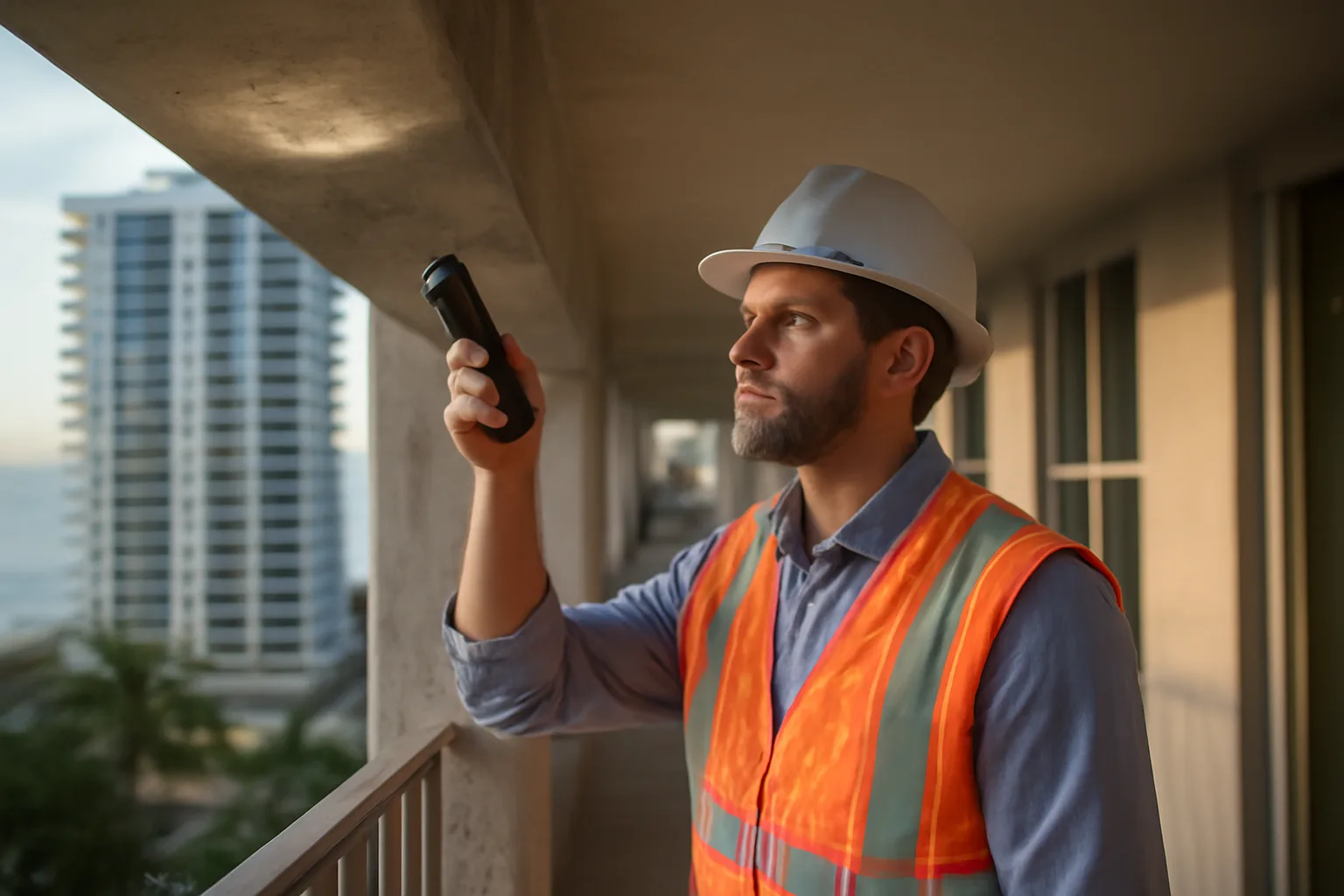
There is no state license called "reserve study specialist" or "reserve study company." Florida law instead routes the work through existing licensed professions, and which one you need depends on what's being studied. For the structural integrity reserve study required under section 718.112(2)(g), Florida Statutes, the visual inspection portion must be performed by a licensed engineer or architect. The statute requires that "the visual inspection portion of the structural integrity reserve study may be performed in conjunction with the inspection performed under s. 553.899," tying the SIRS to the same milestone inspection framework and requiring the same class of licensed professional [1]. That means an architect licensed under Chapter 481 or an engineer licensed under Chapter 471, Florida Statutes. For the non-structural components of a reserve study, roofing, paving, painting, irrigation, and similar items, the person compiling the study doesn't need to be an engineer. Many firms doing this work are staffed by Reserve Specialists (RS) credentialed through the Community Associations Institute or by professionals with a construction, engineering, or facilities background. Florida doesn't separately license this role, so due diligence on the firm's actual experience matters more than checking a license number. You can verify an individual engineer's or architect's license status through the Florida Department of Business and Professional Regulation's license search tool [3]. Always confirm the specific individual signing the SIRS report, more than the company name on the invoice, holds an active Florida license in good standing.
How much does a reserve study cost in Florida?
| Non-structural reserve study, small HOA | Under 50 units | $1,500 - $4,000 | |
|---|---|---|---|
| Non-structural reserve study, mid-size condo | 50-150 units | $3,000 - $8,000 | |
| Structural integrity reserve study (SIRS), engineer-led | 50-150 units | $8,000 - $20,000+ | |
| SIRS, large or complex high-rise | 150+ units, multiple structures | $15,000 - $40,000+ | These figures are directional, not guaranteed quotes. No state agency publishes a mandated fee schedule for reserve studies, so pricing is set by the market, and it varies by region, building complexity, and how much of the SIRS visual inspection overlaps with a milestone inspection the building already commissioned. Coastal buildings with more structural components exposed to salt air, and buildings with parking garages, elevators, and multiple wings, tend toward the higher end. One real cost lever: if your building needs both a milestone structural inspection under section 553.899 and a SIRS, hiring the same engineering firm to do both in a coordinated visit often costs less than commissioning them separately, since a meaningful share of the site inspection work overlaps. Ask any firm you're vetting whether they quote combined engagements. |
Costs vary a lot by building size, number of components studied, and whether it's a full SIRS with an engineer's visual inspection or a lighter non-structural update. As a rough range based on industry reporting and firm-published pricing, expect: | Study type | Typical building size | Approximate cost |
What components does a Florida SIRS have to cover?
The statute lists specific components that a structural integrity reserve study must address, at minimum: roof, load-bearing walls or other primary structural members, floor, foundation, fireproofing and fire protection systems, plumbing, electrical systems, waterproofing and exterior painting, windows, and any other item that has a deferred maintenance expense or replacement cost exceeding $10,000 and that affects the safety of the building's habitability [1]. That $10,000 threshold matters because it sweeps in items boards might not think of as "structural," like a shared HVAC chiller plant or an aging seawall, if the replacement cost crosses that dollar line and habitability or safety is implicated. For these listed structural components, the association cannot waive or reduce reserve funding the way it once could for other line items. Florida Statutes section 718.112(2)(f) now requires full funding of SIRS components in the annual budget starting with the effective budget year after the SIRS is completed, with limited exceptions [1]. Boards used to voting to waive or partially fund reserves need to understand this changed dramatically after 2022's legislative overhaul; see our explainer on florida condo reserve fund relief for what limited flexibility, if any, remains available.
How much should an HOA or condo have in reserves?
There's no single dollar figure or percentage that Florida law mandates as a reserve balance target, and be skeptical of anyone who quotes you one. What the law increasingly requires, at least for condos covered by the SIRS mandate, is full funding based on your building's own reserve study, not an arbitrary percentage rule. The old industry rule of thumb, keeping reserves "funded to at least 70% of fully funded" as calculated by a National Reserve Study Standard percent-funded metric, is a planning benchmark used by reserve specialists nationally, not a Florida statutory requirement. Some associations target 100% funding (every component's future replacement cost is fully saved for on schedule); others accept 50-70% as a working minimum with special assessment authority as a backstop. For condos with SIRS-covered components, though, the statute increasingly forces full funding regardless of what percentage the board might otherwise choose, so the old flexibility to underfund is largely gone for those specific line items [1]. A practical way to think about it: your reserve study itself tells you the right number, unique to your building's age, components, and local replacement costs. A 1985 beachfront tower and a 2015 inland mid-rise will have completely different reserve targets even if both have 100 units. Anyone selling you a generic "$X per unit" reserve target without having inspected your building is guessing.
What is an HOA assessment and how does it relate to reserves?
An HOA or condo assessment is the fee owners pay the association, typically monthly or quarterly, to cover operating expenses and reserve contributions. "Regular assessments" fund day-to-day costs like landscaping, insurance, and management, plus scheduled reserve deposits. A "special assessment" is a separate, often one-time charge levied when the association needs money the regular budget and reserves don't cover, commonly for a large repair, a post-hurricane deductible, or a shortfall discovered through a new SIRS. Boards ending up in special assessment territory after a SIRS is exactly the scenario the 2022 and 2023 legislative reforms were meant to reduce. If reserves had been fully funded all along based on a real reserve study, the theory goes, buildings wouldn't need to hit owners with $20,000 or $50,000 special assessments to cover a concrete restoration project nobody budgeted for. Whether that plays out in practice depends heavily on how honestly a board's reserve study was scoped years earlier. For the mechanics of levying a special assessment properly under Florida law, notice requirements, board vote thresholds, and owner communication, see our hoa special assessment guide.
Are HOA and condo special assessments tax deductible?
Generally, no, not for an owner's primary residence, and this is one of the most common misconceptions boards hear from frustrated owners after a big assessment hits. The IRS treats special assessments the same way it treats regular HOA dues for a personal residence: they're a personal living expense, not deductible on a federal return. IRS Publication 527 addresses how rental property owners handle these costs, confirming the flip side of this rule: HOA fees and special assessments become deductible only when the property is a rental or business-use property, where they're treated as an ordinary and necessary expense of producing rental income [4]. There is a narrow exception worth flagging to owners: if a special assessment pays for a capital improvement (not routine repair or maintenance) to a rental unit, the cost typically must be capitalized and depreciated rather than deducted all at once, under standard IRS capital expenditure rules described in Publication 527 [4]. For a primary residence, that capital-improvement basis adjustment can matter later when the owner sells, potentially reducing capital gains tax, even though there's no current-year deduction. Board members should not give owners tax advice directly; refer them to a CPA, since individual circumstances (rental use, home office deductions, casualty loss claims after a storm) change the answer.
How do you vet a reserve study company before hiring one?
Start by confirming the individual signing your SIRS is a currently licensed Florida engineer or architect, searchable through DBPR's license verification system [3]. A firm's website can say anything; the state license lookup can't. Ask these questions before signing a contract: - Who specifically will conduct the site visit, and what's their license number and discipline (PE, architect, RS)?
- Have they completed SIRS reports for buildings of similar age, height, and construction type (concrete high-rise versus wood-frame low-rise are very different jobs)?
- Do they carry professional liability (errors and omissions) insurance, and can they provide a certificate?
- What's the turnaround time from site visit to final signed report, and does that timeline fit your statutory deadline?
- Will they coordinate the visual inspection with your milestone inspection engineer to avoid paying for overlapping site visits?
- What format does the deliverable come in, and does it include the funding schedule broken out by component, more than a lump-sum recommendation? Get at least two, ideally three, quotes. Prices for the same building can vary by thousands of dollars depending on firm overhead and how many components they're pricing in. Don't automatically pick the cheapest bid; ask what's excluded from the low bid that's included in the higher ones. A shockingly cheap SIRS proposal sometimes means a shallow site visit or fewer components actually inspected in person versus estimated from photos and building age tables.
What happens if a board misses its SIRS or reserve funding deadline?
Missing the deadline doesn't erase the obligation; it just adds legal and financial risk on top of it. Florida's condo statute sets specific milestone inspection and SIRS deadlines by building age and location, and associations that blow past them are exposed to potential claims from owners, difficulty obtaining insurance or financing, and in some cases DBPR enforcement action against the association. There's also a practical, non-legal consequence boards underestimate: mortgage lenders and title insurers increasingly ask for SIRS status and milestone inspection status before closing on unit sales in older condo buildings. A building without a current, compliant SIRS can see unit sales stall or fall through because Fannie Mae has tightened condo project eligibility review specifically around deferred maintenance and reserve funding status, as reflected in its Selling Guide requirements for condo project reviews [5]. If your board is behind, the fix is not to panic-hire the first firm that answers the phone. It's to document the timeline honestly (when was the building's original deadline, what's been done so far, what's outstanding), get a realistic proposal and schedule from a licensed firm, and communicate that plan to owners in writing. Boards that show a documented, dated plan tend to fare far better with both owners and, if it comes to it, regulators or courts, than boards that went silent. This is the exact organizational gap a $199 Building-Specific Board Compliance Kit is built to close: it doesn't perform your SIRS, that has to be a licensed engineer or architect, but it helps the board track deadlines, organize the paperwork, and keep owners informed on a documented timeline. You can start one at /board-kit-builder.
How does a milestone inspection differ from a SIRS?
A milestone inspection under section 553.899, Florida Statutes, is a structural safety inspection required for condo and cooperative buildings three stories or more, generally at 30 years old (25 years if within three miles of the coast), and every 10 years after [6]. It answers one core question: is the building structurally safe right now, and does it show signs of substantial structural deterioration? A SIRS, by contrast, is a forward-looking funding document. It doesn't just ask whether the building is safe today; it projects when each major component will need replacement and how much money the association needs to be setting aside now to pay for it later, per section 718.112(2)(g), Florida Statutes [1]. Buildings typically need both, and the visual inspection components can overlap enough that a well-coordinated engineering firm can perform them together in a single site visit, saving the association money and owner disruption. But they're legally separate deliverables with separate statutory citations, separate deadlines in some cases, and separate content requirements. Don't let anyone tell you a milestone inspection report satisfies your SIRS obligation, or vice versa; they don't substitute for each other. More detail on the inspection side specifically is on our milestone inspections hub, and on reserve funding mechanics at reserve study for condo association.
Frequently asked questions
What is a reserve study?
A reserve study is a professional inspection and financial report that identifies an association's major shared components (roofs, structure, plumbing, paving, and similar), estimates their remaining useful life and replacement cost, and creates a funding schedule showing how much the association should save each year. Florida condos 3+ stories need a specific version, the structural integrity reserve study, under section 718.112, Florida Statutes.
What is a reserve study for an HOA?
For an HOA, a reserve study is a voluntary (usually) planning document covering shared components like roofs, roads, pools, and clubhouses. Unlike condos under Chapter 718, Florida's HOA statute (Chapter 720) doesn't mandate a structural integrity reserve study, though HOAs must disclose reserve funding adequacy in their budgets and many commission studies anyway to avoid special assessments.
What is an HOA assessment?
An HOA assessment is the recurring fee owners pay to fund the association's operating budget and reserves, typically billed monthly or quarterly. A separate category, the special assessment, is a one-time or short-term extra charge levied when regular assessments and reserves can't cover an unexpected or large expense, such as a storm repair or a reserve shortfall found by a new SIRS.
What are HOA assessments used for?
Regular assessments cover ongoing operating costs (insurance, landscaping, management, utilities for common areas) plus scheduled reserve contributions for future big-ticket replacements. Special assessments cover unbudgeted or underfunded expenses that arise suddenly, like a roof failure, elevator replacement, or a funding gap revealed by a structural integrity reserve study the board didn't previously have.
How much should an HOA have in reserves?
There's no fixed statutory dollar amount; the right figure comes from your building's own reserve study, since it depends on component age, replacement costs, and building type. Industry benchmarks like the National Reserve Study Standard's percent-funded metric (commonly 70% as a working target) are planning tools, not Florida law. For condo SIRS-covered components, full funding is increasingly required by statute regardless of a chosen percentage.
How much does a reserve study cost in Florida?
Non-structural reserve studies for small HOAs often run $1,500 to $4,000. A full structural integrity reserve study (SIRS) with an engineer's visual inspection typically costs $8,000 to $20,000+ for mid-size condos, and can exceed $40,000 for large, complex high-rises. Pricing is set by the market; no Florida agency publishes a mandated fee schedule.
Are HOA special assessments tax deductible?
Generally no, for a primary residence, special assessments and regular HOA dues are non-deductible personal expenses under IRS rules. They can become deductible if the property is a rental, treated as an ordinary business expense under IRS Publication 527, or in narrow cases added to cost basis if they fund a capital improvement. Always direct owners to a CPA for their specific situation.
Who is legally allowed to perform a SIRS in Florida?
The visual inspection portion of a structural integrity reserve study must be performed by a Florida-licensed engineer (Chapter 471) or architect (Chapter 481), often the same professional handling the building's milestone inspection under section 553.899. Non-structural components of a broader reserve study can be compiled by reserve specialists without an engineering license, though no separate state license governs that role.
What's the difference between a reserve study and a milestone inspection?
A milestone inspection under section 553.899, Florida Statutes, checks whether a building is currently structurally safe. A structural integrity reserve study (SIRS) is forward-looking: it projects when components will need replacement and how much to save now. Buildings 3+ stories generally need both, and the site visits often overlap when coordinated with one engineering firm.
Which buildings in Florida must have a SIRS?
Condominium and cooperative buildings three stories or more in height generally must complete a structural integrity reserve study under section 718.112(2)(g), Florida Statutes. Single-family and townhome HOAs are not covered by this specific mandate, though mixed developments with a qualifying condo building inside them may still trigger the requirement for that structure. Confirm your building's classification with association counsel.
Can an association waive reserve funding for SIRS components?
No, not anymore, for the specific structural components a SIRS identifies. Section 718.112(2)(f), Florida Statutes, now requires full funding of SIRS-covered reserve items in the budget following completion of the study, eliminating the prior ability to vote to waive or underfund those particular line items. Non-SIRS reserve items may still have more flexibility; confirm current rules with counsel.
How do I check if a reserve study firm's engineer is licensed in Florida?
Use the Florida Department of Business and Professional Regulation's online license verification tool to search the specific individual's name or license number, more than the company name. Confirm the license is active, covers the correct discipline (professional engineer or architect), and has no disciplinary history before signing a contract for SIRS work.
Sources
- Online Sunshine (Florida Legislature), Florida Statutes section 718.112, Condominiums; management: SIRS component list, licensed engineer/architect requirement, and full-funding mandate for structural reserve items
- Florida Senate, Bill Text SB 4-D / condo safety reforms: Legislative basis for the post-Surfside structural integrity reserve study and milestone inspection mandates
- IRS, Publication 527, Residential Rental Property: HOA fees and special assessments are deductible as rental expenses on rental property but not on a personal residence
- Online Sunshine (Florida Legislature), Florida Statutes section 553.899, Structural inspections: Milestone inspection required at 30 years (25 years within 3 miles of coast) for buildings 3+ stories, repeating every 10 years
- Fannie Mae, Selling Guide B4-2.1-01, General Information on Project Standards: Fannie Mae's condo project eligibility review considers deferred maintenance and reserve funding status
- Florida DBPR, Chapter 471, Engineering: Engineers performing SIRS visual inspections must be licensed under Chapter 471, Florida Statutes
- Florida DBPR, Chapter 481, Architecture: Architects performing SIRS visual inspections must be licensed under Chapter 481, Florida Statutes
- Online Sunshine (Florida Legislature), Florida Statutes Chapter 720, Homeowners' Associations: Florida's HOA statute does not mandate a structural integrity reserve study the way Chapter 718 does for condos