Last updated 2026-07-25
TL;DR
A reserve fund study is a professional inspection of a condo or HOA's common-property components (roof, structure, plumbing, paving, etc.) that projects remaining useful life and future repair costs. Florida law (Fla. Stat. 718.112) now requires SIRS-covered buildings 3+ stories to have that structural review done by a licensed engineer or architect. Studies typically run $3,000 to $20,000+ depending on building size.
What is a reserve study?
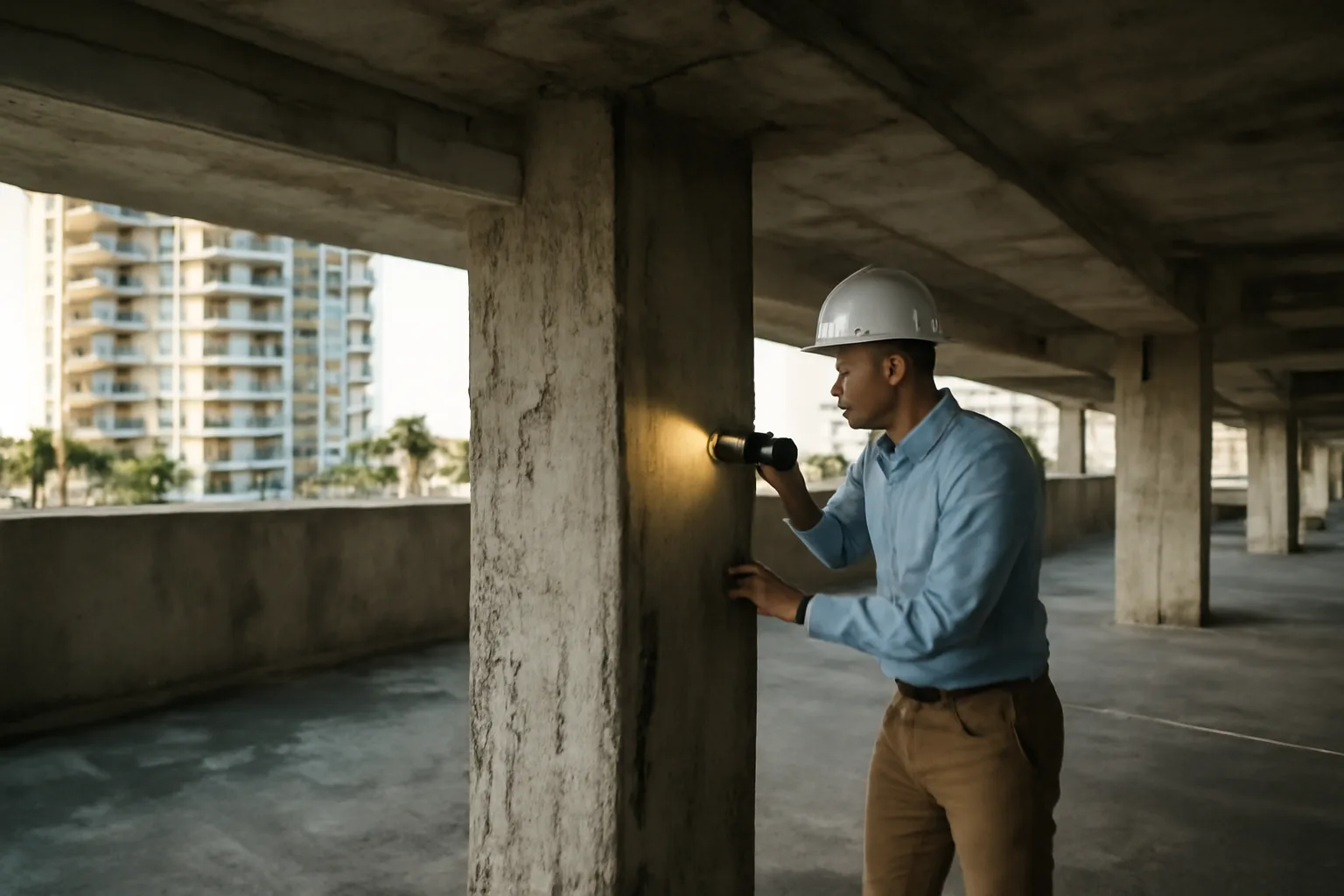
A reserve study is a written report that inventories every major shared component of a property, roughly estimates how many years each one has left, and projects what it will cost to repair or replace it. Think roof membranes, elevator machinery, pool decks, asphalt paving, plumbing risers, and (for Florida condos since 2022) structural elements like load-bearing walls, floors, and the primary structural system. A good study does three things: it inventories the components, it estimates remaining useful life for each one, and it models the funding needed year by year so the association isn't caught flat-footed. Some studies are "full" (with an on-site visual inspection of every component) and some are "update" studies (a lighter refresh of an existing report, often done every few years between full studies). Neither type substitutes for the engineering work required under a milestone inspection; those are separate, statute-driven inspections for buildings 3 stories or higher, done at 30 years (25 near the coast) and every 10 years after. See our milestone inspection guide for how the two interact. In Florida, the reserve study concept got a major statutory upgrade after the Champlain Towers South collapse in Surfside in June 2021. The legislature passed SB 4-D in 2022 and refined it with SB 154 in 2023, creating what's now called the Structural Integrity Reserve Study, or SIRS. That's a narrower, structural-focused version of a traditional reserve study, and it's now mandatory for most condo and cooperative buildings three stories or taller. [1] [2]
What is a reserve study for an HOA?
For a homeowners association (as opposed to a condominium), a reserve study works the same way conceptually, but the legal requirements are different. HOAs governed by Florida Statutes Chapter 720 are not currently subject to the SIRS mandate; that requirement applies specifically to condominiums and cooperatives under Chapter 718 and Chapter 719. [1] That doesn't mean HOA boards should skip reserve planning. Most HOA governing documents (the declaration or bylaws) require some form of reserve funding, and even where they don't, a board that ignores major capital repairs is setting up the community for a painful special assessment later. An HOA reserve study looks at roads, retention ponds, clubhouse roofs, pool equipment, gates, and irrigation systems, and builds a savings plan around them. The practical difference: condo boards in 3+ story buildings now have a hard statutory deadline and specific licensing requirements for who can perform the SIRS. HOA boards have more flexibility on timing and who does the study, though many still hire the same reserve specialists or engineers condos use. If your HOA has aging infrastructure, and especially if it's near the coast, treating this like a condo would (documented inspection, funded schedule) is the responsible move even without a statute forcing it. Read more in our HOA reserve study explainer.
What is an HOA assessment, and what is a special assessment?
An HOA assessment (or condo assessment) is a fee the association charges owners to cover shared expenses. There are two basic types. Regular assessments are the recurring dues, usually billed monthly or quarterly, that fund day-to-day operations and reserve contributions. Special assessments are one-time charges levied when the regular budget and reserves aren't enough to cover a specific expense: a new roof, storm damage, a required structural repair, or a reserve funding shortfall discovered after a SIRS. Florida condo associations get their assessment authority from Chapter 718, specifically the requirement that the association operate according to a budget adopted under Fla. Stat. 718.112(2)(f), which also governs how reserve line items are treated. [1] HOAs get similar authority under Chapter 720, generally tied to the declaration and the board's budget process under 720.303. Boards should confirm the specific assessment mechanics (notice period, vote requirements, owner approval thresholds) with the association's own governing documents and counsel, since those vary by community and by amendment history. After Surfside, special assessments tied to SIRS-driven shortfalls have become common and often large, sometimes tens of thousands of dollars per unit in older coastal buildings. That's exactly the scenario a well-funded reserve account is supposed to prevent. See our HOA special assessment guide for how notice and voting typically work, and condo special assessment insurance for how some owners are covering the hit.
How much should an HOA (or condo) have in reserves?
There's no single dollar figure that's "enough," because it depends entirely on the size, age, and construction of the building and the cost of the components in its reserve schedule. The honest answer is: enough to fully fund the projected replacement cost of every SIRS component (and every other reserve item the association tracks) on the schedule the study lays out, without needing a special assessment for foreseeable, non-emergency repairs. What Florida law now requires is more specific than a vague target. For condo and cooperative associations subject to SIRS, the statute mandates that reserves for SIRS-covered components (roof, load-bearing walls, floor, foundation, fireproofing/fire protection, plumbing, electrical, waterproofing, exterior painting, and windows/exterior doors) be fully funded based on the study's findings, starting with the budget adopted after the SIRS is completed. Fla. Stat. 718.112(2)(f)2 removes the option to waive or reduce these specific reserves; older provisions that let owners vote to waive reserves entirely no longer apply to SIRS components. [1] One widely cited industry rule of thumb, from reserve-study professionals, is that a reserve fund should generally be funded to at least 70% of its "fully funded" target to be considered financially healthy; below 30% is often flagged as a warning sign of deferred maintenance risk. That benchmark comes from reserve-study practice standards, not statute, so treat it as a planning guide rather than a legal threshold. [3] For most buildings, the real number only becomes clear once a licensed professional completes the study; a 40-year-old, 10-story oceanfront building with a failing parking garage has a completely different reserve need than a 3-story inland building built in 2010.
How much does a reserve study cost?
| HOA reserve study (no SIRS requirement) | Full component inventory, non-structural focus | $3,000 to $8,000 | |
|---|---|---|---|
| Condo reserve study (traditional, pre-2022 style) | All common components including structural, less rigorous | $3,000 to $10,000 | |
| Florida SIRS (mandatory, 3+ stories) | Licensed engineer/architect inspection of 9 statutory components | $8,000 to $20,000+ | |
| Update/refresh study (between full studies) | Desk review, adjusted projections, no full site visit | $1,500 to $4,000 | These ranges are directional, drawn from industry cost surveys and reserve-specialist quotes, not a government fee schedule; get written proposals for your specific building before budgeting. |
Reserve study costs vary widely based on building size, number of components, and whether it's a full study or an update. Industry estimates commonly put full reserve studies for condo and HOA communities in the range of roughly $3,000 to $10,000 for smaller or mid-size properties, with larger, more complex high-rises running $15,000 to $20,000 or more once a licensed engineer or architect has to inspect structural elements for a SIRS. [3] For Florida's mandatory SIRS specifically, cost depends heavily on square footage, number of buildings, and accessibility (garage inspections, roof access, unit-by-unit plumbing checks all add time). Boards report a wide range in practice; getting at least two or three bids from Florida-licensed engineers or architects experienced in SIRS work is standard advice from DBPR-adjacent industry guidance and reserve specialists alike. [2] [3] | Study type | Typical scope | Rough cost range |
Who is legally required to perform a SIRS in Florida?
Florida law requires the Structural Integrity Reserve Study to be performed by a licensed engineer or architect. Fla. Stat. 718.112(2)(g) states the visual inspection portion of the SIRS must be performed by "a licensed engineer or architect authorized to practice in this state." [1] This mirrors the licensing requirement for milestone inspections under Fla. Stat. 553.899. DBPR, the Florida Department of Business and Professional Regulation, oversees condo association compliance and licensing verification for the professionals involved. Boards can verify an engineer's or architect's license status through DBPR's license search tools before signing a contract. A board, property manager, or compliance-organizing service cannot perform the inspection itself, and no software or checklist replaces the licensed professional's site visit and signed report. What a board can and should do is manage the process around that inspection: soliciting bids, scheduling access to every unit and common area, tracking submission deadlines, and making sure the study results actually get folded into next year's budget. That administrative load is real, and it's where a lot of volunteer boards get tripped up, not on understanding the engineering but on the paperwork and timeline management around it.
When is the SIRS deadline, and which buildings are covered?
The statutory deadline for most existing condominium and cooperative associations to complete their initial SIRS was December 31, 2024, for buildings reaching their milestone inspection threshold, with the requirement applying to buildings three stories or more in height. [1] [2] Associations that missed that date are not automatically excused; boards should confirm current status and any local enforcement posture with association counsel, since DBPR and local building officials have been handling backlog and compliance differently across counties. After the initial SIRS, the law requires the study to be updated at least every 10 years. [1] The SIRS must cover, at minimum: roof, load-bearing walls and other primary structural members, floor, foundation, fireproofing and fire protection systems, plumbing, electrical systems, waterproofing and exterior painting, and windows and exterior doors. [1] Buildings under three stories, single-family homes, and townhomes are generally exempt from SIRS, though local building department rules and an association's own declaration can still require inspections or reserve planning. Confirm your building's specific height classification and exemption status with your association's counsel and local building department; "three stories" can get interpreted differently depending on how a building's levels are counted (parking, mezzanines, etc.).
How does a reserve study connect to the milestone inspection?
The milestone inspection and the SIRS are two separate, related requirements, and boards frequently confuse them because they run on similar timelines. The milestone inspection, under Fla. Stat. 553.899, is a structural safety inspection of the building performed at 30 years after the certificate of occupancy (25 years if the building is within three miles of the coastline), and every 10 years after that. [4] The SIRS, by contrast, is specifically about reserve funding adequacy for structural components, tied to Fla. Stat. 718.112. In practice, many associations schedule both inspections close together or hire the same engineering firm to handle both, since a milestone inspection's Phase 1 report often informs what the SIRS needs to evaluate. But they serve different legal purposes: the milestone inspection certifies the building is structurally sound (or flags repairs needed), while the SIRS sets the reserve funding schedule so those repairs (and future ones) actually get paid for without a scramble. Boards juggling both deadlines, plus regular reserve studies for non-structural components, often lose track of which report is due when and to whom. That's the exact problem a reserve study for condo association tracking process is meant to solve; keeping the milestone report, the SIRS, and the annual budget cycle on one calendar instead of three separate ones.
Are HOA and condo special assessments tax deductible?
Generally, no. Special assessments paid to a condo or HOA are typically treated as a capital contribution to the association or a nondeductible personal expense, not a deductible tax item, for an individual owner using the property as a personal residence. The IRS does not offer a specific deduction for HOA or condo special assessments in its guidance on rental and personal-use property expenses. [5] There are narrow exceptions worth knowing about. If the unit is a rental property, a portion of regular HOA dues and, in some cases, special assessments tied to repairs (as opposed to improvements) may be deductible as a rental expense, subject to IRS rules distinguishing repairs from capital improvements under Publication 527. [5] If a special assessment funds a capital improvement rather than a repair, it generally isn't deductible immediately even for a rental; it typically gets added to the property's cost basis and depreciated instead. Owners facing a large SIRS-driven special assessment should talk to a CPA or tax professional about their specific situation rather than assuming any of it is deductible; the repair-versus-improvement distinction is fact-specific and gets litigated often enough that generic guidance isn't reliable for a five-figure assessment.
What happens if a board doesn't complete the required reserve study?
Consequences run from financial to legal, and neither is small. Practically, an association that skips its SIRS loses the statutory ability to waive or underfund reserves for the covered structural components, meaning the board may already be exposed to funding obligations it hasn't planned for. Fla. Stat. 718.112(2)(f)2 ties reserve waiver limits directly to SIRS completion. [1] Associations that fail to complete a required SIRS or milestone inspection can also face enforcement action from local building officials, and in some cases DBPR involvement, plus exposure to owner lawsuits if a preventable structural problem later causes damage or injury. Beyond that, lenders have gotten more aggressive: Fannie Mae and Freddie Mac now require lender questionnaires asking about SIRS and milestone inspection status before approving mortgages in condo buildings, which means a building behind on these requirements can see unit sales and refinances stall. For a volunteer board juggling a day job and a stack of engineering reports, the real risk is usually not malice, it's disorganization: missed bid deadlines, an inspection scheduled but never confirmed, a report that arrives and sits in someone's inbox instead of getting onto the next budget meeting agenda. That's the gap a $199 one-time Building-Specific Board Compliance Kit is built to close: it organizes deadlines, tracks which licensed professional is doing what and when, and keeps the SIRS findings visible through the budget cycle. It doesn't replace the engineer, and it doesn't render any compliance verdict on your specific building; it just keeps the paperwork moving.
How should a board budget after getting the reserve study results?
Once the study lands, the board's job is to translate its findings into next year's budget line items, and to do that in a way owners can actually see and understand. Fla. Stat. 718.112(2)(f) requires the proposed annual budget to include reserve account line items for each SIRS component, funded based on the study's estimated remaining useful life and replacement cost, unless a majority of voting interests affirmatively votes to provide less reserve funding than fully funding (and even that partial-waiver option is now restricted for SIRS items specifically). [1] A reasonable process looks like this: get the study results at least 60 to 90 days before the budget meeting, so the treasurer and board have time to model different funding-ramp scenarios (full funding immediately versus phased over 2 to 3 years) and to compare that against the risk of a special assessment. Communicate the numbers to owners early and plainly; a surprise reserve increase buried in a budget mailer is exactly what triggers angry annual meetings. Boards should also loop in the association's CPA or a firm doing the annual financial statement (required under Fla. Stat. 718.111(13)) to make sure reserve funding shows up correctly in the books, and loop in counsel if the board is considering any funding waiver vote, since the rules on what can and can't be waived changed materially in 2023 and continue to be interpreted differently by different DBPR guidance and court decisions. Confirm your specific vote requirements and waiver eligibility with your association's own counsel before scheduling that meeting.
Frequently asked questions
What is a reserve study?
A reserve study is a professional assessment of a building's shared components (roof, plumbing, structure, paving, elevators, etc.) that estimates each item's remaining useful life and projects the future cost to repair or replace it, so the association can budget reserve contributions accordingly. In Florida condos, the structural portion is now legally required as a SIRS under Fla. Stat. 718.112.
What is a reserve study for an HOA?
For an HOA, a reserve study evaluates shared community assets like roads, clubhouses, pools, and drainage systems, and builds a multi-year funding plan around them. Unlike condos, most HOAs (governed by Chapter 720) aren't subject to Florida's mandatory SIRS, but boards still benefit from doing one to avoid unplanned special assessments.
What is an HOA assessment?
An HOA assessment is a fee owners pay to fund the association's shared expenses. Regular assessments cover ongoing operations and reserves; special assessments are one-time charges for a specific, unbudgeted need like storm repair or a reserve shortfall found during a reserve study or SIRS.
How much should an HOA have in reserves?
There's no fixed dollar figure; it depends on the community's specific components and their replacement costs, as identified in a reserve study. A common industry benchmark treats reserves funded to 70% or more of the fully-funded target as healthy, while below 30% is often flagged as risky, though this is an industry guideline, not a legal standard.
How much does a reserve study cost for a condo?
Full reserve studies commonly run $3,000 to $10,000 for smaller or mid-size properties, and Florida's mandatory SIRS for larger high-rises can run $8,000 to $20,000 or more, since it requires a licensed engineer or architect. Get multiple bids; costs vary by building size, component count, and access complexity.
Are HOA and condo special assessments tax deductible?
Generally no, for a personal residence. The IRS treats special assessments as a capital contribution or nondeductible personal expense in most cases. Rental property owners may have narrow options to deduct assessment-funded repairs, per IRS Publication 527, but capital improvements typically get added to cost basis instead. Talk to a CPA about your specific situation.
Who can legally perform a Florida SIRS?
Only a licensed engineer or architect authorized to practice in Florida can perform the visual inspection required for a Structural Integrity Reserve Study, per Fla. Stat. 718.112(2)(g). Boards can verify license status through DBPR's license search before signing a contract.
When was the SIRS deadline in Florida?
The initial SIRS deadline for most existing condo and cooperative associations three stories or taller was December 31, 2024. After that, associations must update the SIRS at least every 10 years. Confirm your building's specific status with your association's counsel, since enforcement and backlog handling vary by county.
Does a reserve study replace the milestone inspection?
No. The milestone inspection (Fla. Stat. 553.899) is a structural safety check done at 30 years post-CO (25 years if within 3 miles of the coast) and every 10 years after. The SIRS (Fla. Stat. 718.112) sets reserve funding for structural components. They're related but legally distinct requirements, often scheduled together.
Can an association still vote to waive reserve funding?
For SIRS-covered structural components, Florida law now restricts full waivers; owners can no longer vote to waive these reserves entirely, though a majority may still vote for less-than-full funding in some circumstances. This area has been amended since 2022 and interpreted differently in guidance, so confirm current rules with association counsel.
What components must a Florida SIRS cover?
At minimum: roof, load-bearing walls and primary structural members, floor, foundation, fireproofing and fire protection systems, plumbing, electrical systems, waterproofing and exterior painting, and windows and exterior doors, per Fla. Stat. 718.112(2)(g).
What happens if my condo association skips its required SIRS?
The association loses certain options to waive or reduce reserve funding for SIRS components, may face local building department or DBPR enforcement, and can run into mortgage-approval problems since Fannie Mae and Freddie Mac lender questionnaires now ask about SIRS and milestone status. Owners may also have legal exposure if a preventable issue causes damage later.
Sources
- Florida Senate, Florida Statutes Chapter 718.112: SIRS requirements, reserve waiver restrictions, and required structural components for condo associations
- Florida DBPR, Division of Florida Condominiums, Timeshares, and Mobile Homes: DBPR oversight of condo association compliance including SIRS and milestone inspection requirements
- Community Associations Institute, reserve funding guidance: Industry benchmark treating 70%+ funded reserves as healthy and under 30% as a warning sign
- Florida Senate, Florida Statutes 553.899: Milestone inspection timing: 30 years post-CO, or 25 years within 3 miles of coastline, and every 10 years after
- IRS, Publication 527, Residential Rental Property: Tax treatment of HOA/condo assessments and the repair-versus-improvement distinction for rental property deductions