Last updated 2026-08-14
TL;DR
A condo reserve fund study is a professional inspection and cost forecast for a building's major components (roof, structure, plumbing, paving, and more), used to set how much a Florida association must reserve. Florida law under Fla. Stat. 718.112 now requires a structural integrity reserve study (SIRS) for most condos 3 stories and up, and bars boards from waiving full funding for those specific components.
what is a reserve study?
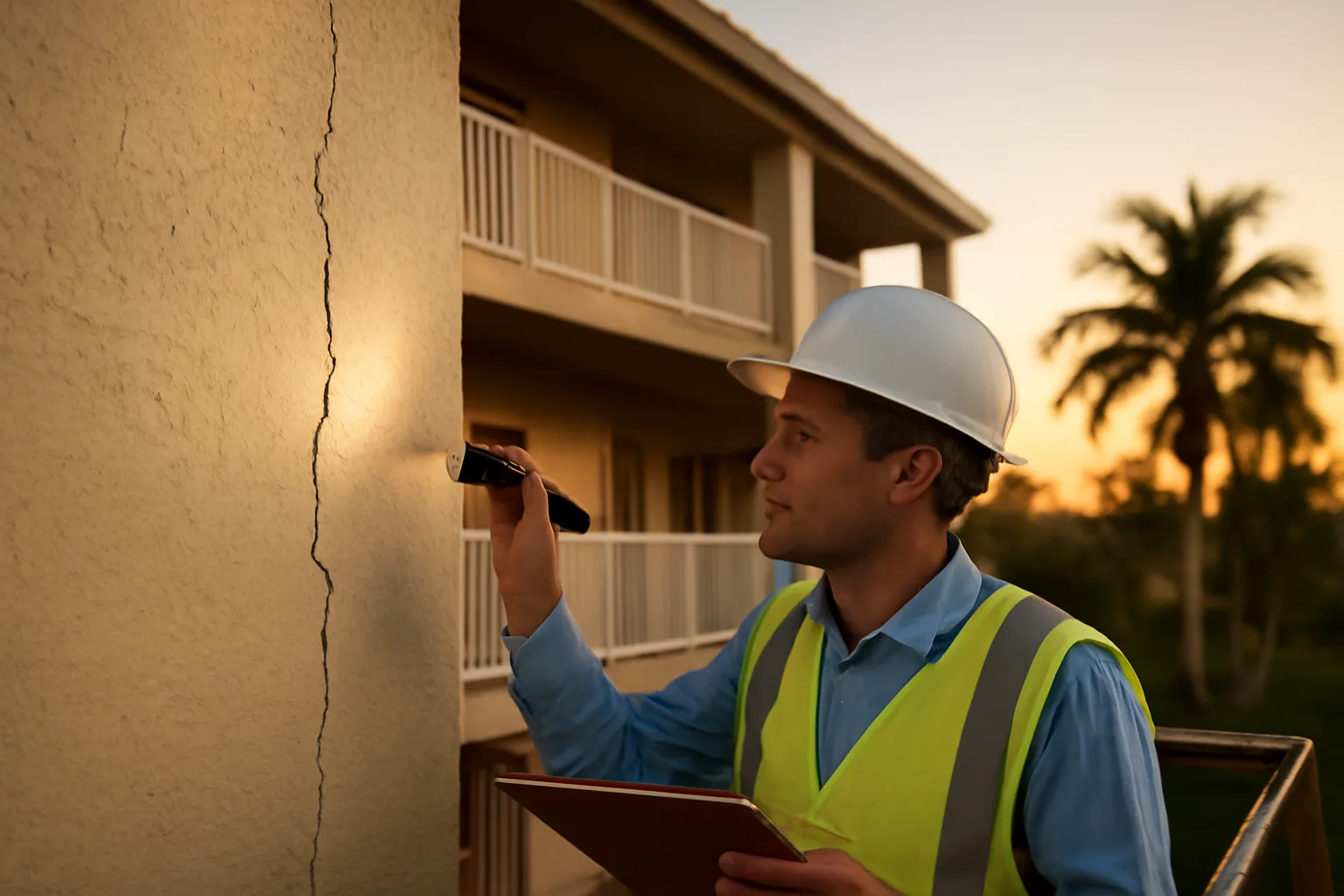
A reserve study is a professional evaluation of a building's major shared components, how much life each one has left, and what it will cost to repair or replace them on schedule. Think of it as a maintenance and savings plan rolled into one document. A qualified provider walks the property, checks things like the roof membrane, load-bearing elements, exterior paint, pavement, plumbing risers, and elevators, and estimates remaining useful life and replacement cost for each. The study then translates those numbers into an annual reserve contribution: how much money the association needs to set aside each year so the cash is there when the roof actually needs replacing, instead of getting hit with a surprise bill or a special assessment. Most studies get updated every few years because material costs, contractor pricing, and component conditions change. In Florida, this isn't just good practice anymore. For condominiums three stories or taller, a specific version called a structural integrity reserve study (SIRS) is required by statute, with its own list of components and its own funding rules. That's a narrower, statutorily defined document, and it's different from a general reserve study some associations have done voluntarily for decades.
what is a reserve study for hoa?
For homeowner associations (single-family and townhome communities, not condos), a reserve study works the same way conceptually but the legal requirements are lighter. Florida's HOA statute, chapter 720, doesn't mandate a SIRS the way chapter 718 does for condos. Instead, HOAs generally decide by vote whether to fully fund reserves, partially fund them, or waive them, subject to whatever the community's declaration and bylaws require [1]. That said, a reserve study is still the tool an HOA board uses to know what "fully funded" even means. Without one, a board is guessing at roof age, fence life, clubhouse HVAC condition, and paving cycles, and guessing is how boards end up voting on a $2,000 special assessment nobody budgeted for. If your community has condo-style shared buildings, like a townhome HOA with common roofs or a clubhouse structure over three stories, check with association counsel on whether any part of chapter 718's structural requirements could apply. Structure matters more than the label on your association.
what is a reserve study for an hoa vs. a condo SIRS in Florida?
The core difference is legal teeth. An HOA reserve study is advisory unless the governing documents say otherwise; owners can vote to underfund or skip reserves entirely for non-structural items. A Florida condo SIRS is not optional for buildings three stories and up, and as of the 2022-2024 statutory changes, owners can no longer vote to waive or reduce reserve funding for the specific structural components the SIRS covers [2]. Under Fla. Stat. 718.112(2)(g), those SIRS-covered components currently include: roof, load-bearing walls or other primary structural members, floor, foundation, fireproofing and fire protection systems, plumbing, electrical systems, waterproofing and exterior painting, and windows and exterior doors [2]. The law specifically states associations "may not vote to provide no reserves or less reserves than required" for these items once the SIRS identifies the need [2]. Here's the practical read: for a condo board, the reserve study isn't just a planning tool anymore, it's a compliance document tied to milestone inspection deadlines and DBPR oversight. For background on how this fits with the structural inspection side of the law, see our guide on milestone inspections and the deeper breakdown of the hoa reserve study requirements.
what is an hoa assessment?
An HOA assessment is a fee the association charges owners to cover shared costs. Most people know the regular kind: monthly or quarterly dues that fund landscaping, insurance, management, and reserve contributions. Those are usually called regular or annual assessments, and they're set in the budget the board approves each year. A special assessment is different. It's a one-time (or occasionally installment) charge levied outside the regular budget, usually because something unexpected came up, a reserve fund fell short, insurance premiums spiked, or a structural repair can't wait. Special assessments are legal in Florida under both chapter 718 (condos) and chapter 720 (HOAs), but the board typically needs to follow specific notice and, sometimes, membership-vote procedures spelled out in the declaration and bylaws [3]. Boards that keep reserve studies current and funded tend to need fewer special assessments, or at least smaller ones, because the big-ticket costs are already anticipated in the budget rather than discovered the hard way.
what is hoa assessment, exactly, and how is it calculated?
The dollar amount of any assessment, regular or special, is calculated by dividing the total cost by each owner's share, usually based on the percentage interest assigned in the declaration (often tied to unit square footage or an equal per-unit split, depending on the documents). The board doesn't get to pick amounts arbitrarily; the math has to follow the formula in the governing documents. For a regular assessment, the board builds a budget covering operating costs plus reserve contributions, then divides that total across units per the declaration's formula. For a special assessment, the board calculates the shortfall or emergency cost, then applies the same or a documents-specified allocation method. A quick worked example: if a condo needs $500,000 for an emergency roof replacement and there are 50 units with equal shares, that's a $10,000 per-unit special assessment, likely payable in installments if the board allows it. Multiply that kind of number by a building that skipped reserve funding for a decade, and you see why the 2022-2024 statutory reforms happened after the Champlain Towers South collapse in Surfside prompted a legislative review of reserve and inspection rules statewide.
how much should an hoa have in reserves?
There's no single dollar figure that applies to every HOA, because it depends entirely on what components the association owns and their age and condition. That's exactly the gap a reserve study fills: it tells you, component by component, what "fully funded" looks like for your specific property. As a rule of thumb used across the reserve-study industry, full funding means the reserve account balance, at any point in time, roughly matches the accumulated depreciation of each component (how much of its useful life has been used up, multiplied by its replacement cost). Associations that consistently underfund often show what the industry calls a low "percent funded" ratio, sometimes below 30%, which correlates with a higher chance of a special assessment down the road, according to research summarized by the Foundation for Community Association Research [4]. For Florida condos specifically, chapter 718 doesn't set a flat percentage target; instead it requires the SIRS study to calculate the specific reserve amount needed per component, and bars underfunding those SIRS categories through membership votes [2]. HOAs under chapter 720 have more flexibility but still owe fiduciary care to owners in setting a realistic number, more than the cheapest one that avoids a special assessment this particular year.
how much should hoa have in reserve (a practical starting point)
If your board is starting from zero, here's a workable approach: get a reserve study done first, then use its numbers rather than a generic percentage. A qualified reserve specialist inspects every major component, assigns useful life and replacement cost, and calculates the annual contribution needed to reach full funding on a defined schedule, often 20 to 30 years depending on the components. Some boards use a simpler placeholder while waiting on a full study: budgeting 10-15% of the annual operating budget purely toward reserves, roughly in line with industry guidance historical to the 1990s reserve studies market, though this figure has never been codified into Florida statute for HOAs and shouldn't replace an actual study once you can afford one [4]. For Florida condo buildings covered by the SIRS mandate, the calculation is not optional or approximate at all; it comes from the licensed engineer's or architect's inspection report, and the board's job shifts from estimating to budgeting to that number. Our florida condo reserve fund relief piece covers recent legislative adjustments to phase-in timelines if your board is trying to plan a multi-year ramp instead of a single-year shock.
how much does a reserve study cost?
| Basic HOA reserve study | $1,500-$5,000 | HOAs under ch. 720, voluntary or by-document requirement | |
|---|---|---|---|
| Full condo reserve study (non-SIRS) | $3,000-$8,000 | Condos under 3 stories, or older studies pre-SIRS mandate | |
| Structural Integrity Reserve Study (SIRS) | $5,000-$15,000+ | Condos 3 stories and up, per Fla. Stat. 718.112(2)(g) [2] | |
| Update/refresh study (every 3-5 years) | $1,000-$4,000 | Any association renewing an existing study | These figures reflect general industry ranges reported by reserve-study providers and community-association trade groups; costs in your specific market (including anywhere in the greater Kingston service area of Florida) will depend on local engineering rates, building complexity, and whether a licensed engineer or architect performs the inspection as chapter 718 requires for SIRS work [2]. Get at least two or three quotes from providers licensed to do this work in Florida; DBPR's Division of Florida Condominiums, Timeshares, and Mobile Homes maintains licensing oversight information for community association professionals [5]. |
Costs vary widely by building size, number of components, and whether it's a full on-site inspection or a desktop update. For a typical Florida condominium, expect a range of roughly $3,000 to $15,000+ for a full SIRS-compliant study, with larger high-rises, more complex structural systems, or coastal properties needing more extensive structural and waterproofing analysis landing at the higher end. Smaller HOA-style reserve studies (no SIRS requirement, fewer components) commonly run $1,500 to $5,000, though very small associations with limited common elements can sometimes get a basic study for less. Here's a rough comparison to help boards budget: | Study type | Typical range | Who needs it |
are hoa special assessments tax deductible?
Generally, no, for an individual owner's personal residence, an HOA special assessment isn't a straightforward income-tax deduction. The IRS treats most HOA assessments, regular or special, as a personal, nondeductible living expense in the same category as association dues, similar to how homeowners can't deduct routine home maintenance costs [6]. There are narrow exceptions. If the special assessment funds a capital improvement to your unit and you later sell the property, you may be able to add that cost to your home's basis, which reduces taxable gain on sale, per general IRS guidance on determining a home's adjusted basis [6]. If the property is a rental or used for business, a portion of assessments may be deductible as a business expense, subject to normal rules for capital versus repair expenses. This is genuinely a case-by-case tax question, not a board-level policy question. Boards should not give owners tax advice; direct owners to a CPA or tax attorney for their specific situation, and confirm with your association's counsel and county property appraiser if the assessment involves any special taxing district overlap.
how does Florida's milestone inspection law connect to the reserve study?
The milestone inspection and the SIRS are two separate but connected requirements under chapter 718. The milestone inspection is a structural safety check required for condo and cooperative buildings three stories or higher, generally due within a set window after the building reaches 30 years old (or 25 years old for buildings within three miles of the coastline), and then periodically after that, per Fla. Stat. 553.899 . The SIRS, by contrast, is the financial planning document: it takes findings that often overlap with the milestone inspection's structural review and turns them into a funding schedule. A board that gets both a milestone inspection and a SIRS done in the same engagement window (often using the same engineering firm) can save time and sometimes cost, since much of the site inspection data overlaps. Boards juggling both deadlines at once, plus annual budget season, is exactly the kind of scheduling problem that causes missed statutory deadlines. That's the specific gap our $199 one-time Building-Specific Board Compliance Kit is built to close: it doesn't replace the licensed engineer or the reserve specialist chapter 718 requires, but it organizes your building's specific deadlines, tracks required document filings, and keeps your board's communication with owners on schedule. Check it out at /board-kit-builder.
what happens if a Florida condo board skips or delays its SIRS?
Skipping a required SIRS puts the association out of compliance with Fla. Stat. 718.112, and it removes the board's ability to legally underfund the SIRS-covered components through a membership vote. Practically, that means the board is exposed if a major system fails and owners (or a receiver, in the worst case) later argue the board failed its statutory duty. The law requires associations to complete their initial SIRS and provide it to unit owners, with specific deadlines tied to the building's milestone inspection cycle; the exact statutory deadline language has been amended more than once since 2022, so boards should confirm the current deadline for their specific building with counsel rather than relying on an older news article's date [2]. Delayed studies also tend to compound: the longer a board waits, the more likely a special assessment becomes the only funding option left, since annual budget increases can only close a funding gap so fast. Our reserve study and reserve study for condo association guides walk through the specific document and timeline requirements in more depth.
how should a Kingston-area board budget for a reserve study and follow-up funding?
Start by confirming your building's actual milestone inspection deadline and SIRS status, both of which vary by construction date and coastal proximity, not by general area. "Kingston" isn't a formally defined Florida municipality in DBPR or state records, so if your association uses that name informally (a subdivision, condo complex name, or a community also known by another city name), the first step is confirming your building's official address and county with your property appraiser's office, since that determines which county building department and which coastal-proximity rule (25-year vs. 30-year milestone trigger) applies to you . Once you know your deadline, get reserve study quotes early, ideally 12-18 months before any SIRS deadline, so you have time to competitively bid and avoid rush pricing. Budget separately for the study itself (a few thousand to $15,000+) and for the funding gap the study will likely reveal; boards that budget only for the study and not for the follow-up funding conversation tend to get blindsided at the next annual meeting. Finally, loop in a CPA or association attorney before finalizing the reserve budget line items, especially around special assessment tax questions from owners, since board members legally can't give tax advice even informally.
what should be in the report once the reserve study is done?
A complete Florida SIRS report should include, at minimum: a list of each required structural component, its estimated remaining useful life, an estimated replacement cost, and the recommended annual reserve amount needed to fund it, per the component categories in Fla. Stat. 718.112(2)(g) [2]. A general (non-SIRS) reserve study typically covers the same categories plus additional non-structural common elements like paint, paving, pools, and amenity equipment. Ask your provider whether the study was done by someone qualified under Florida's licensing framework; the statute requires SIRS inspections to be performed by a licensed engineer or architect [2]. Boards should keep the final report on file indefinitely and share it with owners as required, since it's often requested during unit sales, refinances, and insurance renewals. Once you have the report in hand, the real board work starts: translating those numbers into the annual budget, communicating the plan to owners before assessment season, and tracking the next update cycle so this doesn't become a one-and-done exercise that quietly goes stale.
Frequently asked questions
What is a reserve study in simple terms?
A reserve study is a professional inspection and financial forecast that tells an association how much money it needs to save each year to repair or replace major shared building components (roofs, plumbing, structure, and similar) when they wear out, instead of relying on emergency special assessments.
What is a reserve study for an HOA?
For a homeowner association, a reserve study identifies shared components like roofs, fences, clubhouses, and pavement, estimates their remaining life and replacement cost, and recommends an annual reserve contribution. Unlike Florida condos, HOAs under chapter 720 aren't required by state law to fully fund these reserves unless the governing documents say so.
What is an HOA assessment?
An HOA assessment is a fee owners pay to the association, either a regular recurring dues charge that funds the annual budget and reserves, or a special assessment, a one-time or installment charge levied for an unexpected or large expense outside the regular budget.
How much should an HOA have in reserves?
There's no single fixed dollar amount; it depends on the specific components the association owns, their age, and replacement cost. A reserve study calculates the actual number for your property. As a rough industry benchmark, associations with a reserve balance below roughly 30% of full funding face a higher risk of needing a special assessment.
How much does a reserve study cost in Florida?
Full condo reserve studies, including the state-mandated SIRS, generally run $3,000 to $15,000 or more depending on building size and complexity. Basic HOA reserve studies for communities without a SIRS requirement typically cost $1,500 to $5,000. Get multiple quotes since pricing varies by region and engineer availability.
Are HOA special assessments tax deductible?
Generally no, for a personal residence. The IRS treats most HOA and condo assessments as nondeductible personal expenses, similar to routine maintenance. A capital-improvement assessment may add to your home's cost basis, reducing gain when you sell. Rental or business-use properties may have different rules; talk to a CPA.
Is a SIRS the same as a reserve study?
A SIRS (structural integrity reserve study) is a specific, legally defined type of reserve study required for Florida condos three stories and taller under Fla. Stat. 718.112(2)(g). It covers a fixed list of structural components and carries funding rules that a general voluntary reserve study doesn't.
Which components must a Florida SIRS cover?
Under Fla. Stat. 718.112(2)(g), a SIRS must address the roof, load-bearing walls and other primary structural members, floors, foundation, fireproofing and fire protection systems, plumbing, electrical systems, waterproofing and exterior painting, and windows and exterior doors, at minimum.
Can a condo association vote to waive reserve funding in Florida?
Not for the specific SIRS-covered structural components. Fla. Stat. 718.112 states associations may not vote to provide no reserves, or less reserves than the SIRS calculates, for those items. Boards can still waive or reduce reserves for non-SIRS components if the declaration and a member vote allow it.
How often does a reserve study need to be updated?
Most providers and industry guidance recommend updating a reserve study every 3 to 5 years, or sooner after a major repair, storm damage, or significant cost change. For Florida's SIRS, confirm the exact update cycle for your building with your engineer and association counsel, since deadlines are tied to your milestone inspection schedule.
Who is qualified to perform a Florida SIRS inspection?
Florida law requires a SIRS inspection to be performed by a licensed engineer or architect. A general (non-SIRS) reserve study can sometimes be done by a certified reserve specialist, but for the statutory SIRS, confirm your provider holds the required Florida license before signing a contract.
What's the difference between a regular assessment and a special assessment?
A regular assessment is the recurring dues amount set in the annual budget, covering operating costs and reserve contributions. A special assessment is a separate, often one-time charge levied to cover an unexpected cost, a reserve shortfall, or an urgent repair that the regular budget can't absorb.
Does the 25-year or 30-year milestone deadline depend on my location?
Yes. Under Fla. Stat. 553.899, buildings within three miles of the coastline generally face the milestone inspection requirement at 25 years, while other buildings face it at 30 years. Confirm your building's exact distance classification and deadline with your county building department and association counsel.
Sources
- Florida Legislature, Fla. Stat. ch. 720: HOA reserve funding is generally governed by the declaration and member vote, not a statutory mandate like condos
- Florida Legislature, Fla. Stat. 718.112: SIRS required components list and the ban on voting to underfund those specific components
- Florida Legislature, Fla. Stat. ch. 718: Special assessments and reserve funding are governed by chapter 718 for condominiums
- Florida DBPR, Division of Florida Condominiums, Timeshares, and Mobile Homes: DBPR oversees licensing and compliance for community association professionals in Florida
- IRS Publication 523, Selling Your Home: Home improvement assessments may add to a home's cost basis; routine assessments are generally nondeductible personal expenses
- Florida Legislature, Fla. Stat. 553.899: Milestone inspection deadlines are set at 30 years generally, or 25 years for buildings within three miles of the coastline