Last updated 2026-08-14
TL;DR
Nevada requires community associations to get a reserve study, prepared or updated by a qualified person, at least once every 5 years under NRS 116.31152. The study must estimate remaining useful life and replacement cost for major components, and boards must review reserve funding annually. Cost typically runs $1,000 to $6,000+ depending on building size.
What is a reserve study?
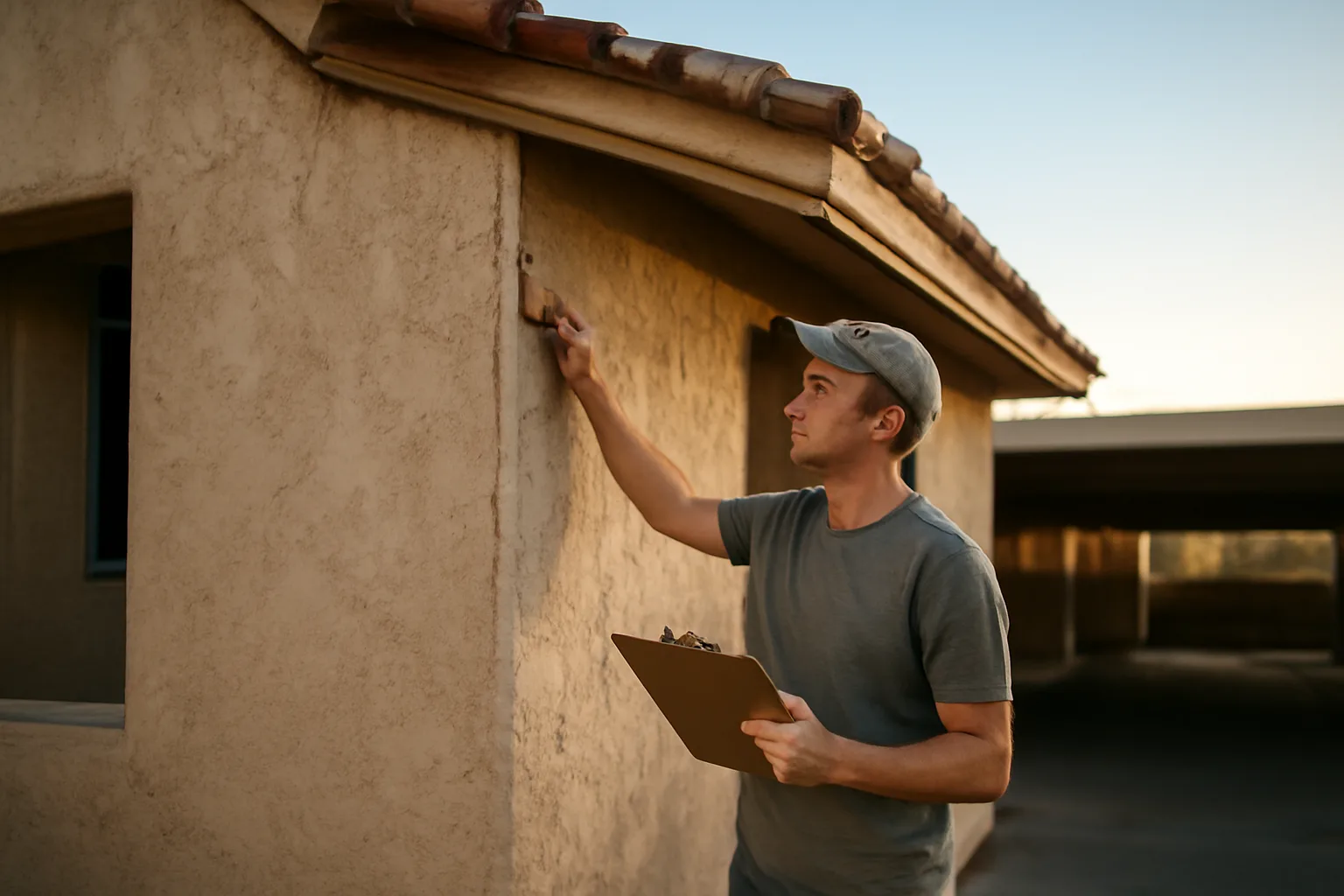
A reserve study is a physical inspection and financial analysis of a community's shared components (roofs, paving, pools, elevators, siding, roads) that estimates how much life each item has left and what it will cost to repair or replace. It's usually done by an engineer, reserve specialist, or firm with credentials like the Community Associations Institute's Reserve Specialist (RS) designation, though Nevada law does not require a specific license title, just a "qualified person." The output is two things: a physical analysis (what components exist, their age, condition, remaining useful life) and a financial plan (how much the association should be setting aside each year, and in what fund balance, to pay for those future repairs without a shock special assessment). Good studies get updated every few years because material costs, labor costs, and component condition change. In Nevada, this isn't optional guidance. It's baked into statute for common-interest communities, and the study has to be redone or updated on a set clock, more than "whenever the board feels like it."
What does Nevada law actually require (NRS 116.31152)?
Nevada Revised Statutes 116.31152 requires the executive board of a unit-owners' association to conduct a study of the reserves required to repair, replace, and restore the major components of the common elements, and to review that study annually, with a full update at least once every 5 years [1]. The statute text: the board "shall cause to be conducted a study of the reserves required to repair, replace and restore the major components of the common elements" and must review the study annually to determine if it needs to be updated, and "shall cause the study to be updated at least once every 5 years" [1]. The person conducting the study must be qualified by training and experience to conduct reserve studies, per the statute and Nevada Real Estate Division (NRED) guidance [1] [2]. The study itself has to include, at minimum: an inspection of the accessible major components, and estimates of remaining useful life and replacement cost for each. Boards then have to keep the reserve fund funding schedule aligned with that data, more than guess at a number. NRED, the state agency that regulates common-interest communities, publishes guidance and enforces disclosure requirements tied to reserve studies for resales and public offering statements [2]. Unlike Florida, Nevada does not currently distinguish reserve study requirements by building height or age the way Florida's SIRS (Structural Integrity Reserve Study) law does for condos 3 stories and up [3]. Nevada's reserve study law applies broadly to common-interest community associations under NRS Chapter 116, covering condos, planned communities, and cooperative housing regardless of story count.
What is a reserve study for an HOA, specifically?
For a homeowners association (as opposed to a high-rise condo), a reserve study for an HOA in Nevada covers the same major shared components: roads if the HOA owns them, clubhouse, pool, playground equipment, gates, retaining walls, irrigation systems, and roofing or siding if the association maintains exteriors. The scope depends entirely on what the association's governing documents make it responsible for maintaining. An HOA that only owns a small entrance monument and retention pond has a much shorter component list, and a much cheaper study, than a master-planned community with private roads and a rec center. Nevada's NRS 116.31152 doesn't carve out HOAs versus condos; both are "units' owners' associations" under Chapter 116 and both get the same reserve study clock: initial study, annual review, full update at minimum every 5 years [1]. What changes is just what's on the component list, and therefore the cost and complexity of the study.
How much should an HOA have in reserves?
There's no single dollar figure or percentage mandated by Nevada statute, and honestly, nobody in the industry agrees on one universal number either. The reserve study itself is supposed to answer this for each specific association based on its actual components, ages, and replacement costs, not a rule of thumb. That said, the widely cited industry benchmark comes from Community Associations Institute (CAI) guidance and reserve-specialist practice: associations funded below 30% of their "fully funded" reserve target (the ideal balance given component depreciation) are considered at meaningfully higher risk of special assessments or deferred maintenance [4]. Above 70% funded is generally considered strong. These aren't Nevada legal thresholds, they're industry risk bands used by reserve analysts nationally, including in Nevada practice. What Nevada law does require: the board has to review the reserve study annually and adjust the funding plan (how much goes into reserves each year, per unit or per lot) so the fund doesn't fall dangerously behind the study's own recommendations [1]. If a board ignores the study's recommended contribution for years running, that's the gap that leads to a special assessment when the roof or the road finally needs replacing on the study's predicted timeline.
How much does a reserve study cost in Nevada?
Costs vary widely by association size and complexity, and Nevada doesn't publish a state fee schedule since the study is a private professional service, not a government filing. Based on typical reserve-specialist industry pricing nationally (Nevada firms fall in the same range), a basic reserve study for a small HOA with limited common elements runs roughly $1,000 to $2,500. A mid-size condo association with elevators, a roof, and a parking structure often runs $3,000 to $6,000. Large or high-rise associations with complex mechanical systems, multiple buildings, or coastal-adjacent wear (less relevant in Nevada than Florida, but still a factor for stucco and roofing) can run $6,000 to $15,000 or more for a full "Level I" study with a site visit. Update studies (the every-5-year refresh, or more frequent "Level II" updates without a full site visit) typically cost less than the initial full study, often 40-60% of the original price, since much of the component inventory already exists and just needs re-inspection and updated cost estimates. Boards should budget this as an operating line item, not treat it as a surprise expense. It's cheaper than the special assessment fight that follows a neglected reserve fund.
What is an HOA assessment, and how is it different from a special assessment?
An HOA assessment is the regular fee owners pay, monthly or quarterly, that funds both operating expenses (landscaping, insurance, management fees) and reserve contributions (the savings account for future big-ticket repairs). This is sometimes just called "HOA dues," but "assessment" is the more precise legal term used in governing documents and in NRS 116. A special assessment is a separate, one-time (or limited-duration) charge levied on top of regular assessments, usually to cover a shortfall: an unexpected repair, an underfunded reserve that can't cover a needed replacement, or a legal judgment. Nevada law under NRS 116.3115 through 116.31168 governs how associations levy and collect assessments generally, including notice and voting requirements that can apply to large special assessments depending on the association's declaration [1]. The connection to reserve studies is direct: an association that keeps its reserve funding aligned with its reserve study's recommendations rarely needs large special assessments, because the regular assessment already includes enough reserve contribution to cover predictable replacements. Special assessments tend to hit hardest in associations that underfunded reserves for years and then get surprised by a roof or pipe failure precisely when the reserve study said it would happen.
Are HOA special assessments tax deductible?
Generally, no, not for a personal residence. The IRS treats HOA assessments, regular or special, as a personal expense similar to a homeowner's own maintenance costs, and personal residence maintenance is not deductible on federal returns [5]. This is true whether the assessment funds a new roof, a pool repair, or a legal settlement. There are narrow exceptions. If the unit is a rental property or used for business, a portion of HOA assessments (including special assessments) may be deductible as a rental expense or business expense, subject to normal rules on capital improvements versus repairs under IRS guidance on rental property expenses [6]. Capital improvements (like a full roof replacement) for rental units typically have to be depreciated over time rather than deducted immediately, while repair-type special assessments may be deductible in the year paid. Owners should talk to a CPA about their specific situation rather than assume deductibility either way; this is genuinely fact-specific and the rules differ for primary residence, second home, and rental classifications.
How does Nevada compare to Florida's reserve study and SIRS rules?
| Update frequency | At least every 5 years [1] | SIRS every 10 years; visual milestone inspection at 25/30 years [3] [8] | |
|---|---|---|---|
| Building height trigger | None, applies to all common-interest communities | 3+ stories for SIRS and milestone inspection [3] [8] | |
| Can reserves be waived? | Board policy dependent; check governing docs and counsel | No, structural reserve items cannot be waived or reduced by vote as of the 2022-2023 reform [7] | |
| Who performs the study | "Qualified person" by training/experience [1] | Licensed engineer or architect for SIRS [3] | |
| Annual review required | Yes [1] | Reserve schedule reviewed as part of annual budget process [7] | Florida's structural reserve mandate came directly out of the 2021 Champlain Towers South collapse in Surfside, which killed 98 people and triggered a wave of state legislative reform nationally [9]. Nevada has not passed comparable structural-specific reserve legislation as of this writing. If you're comparing state approaches, our florida condo reserve fund relief piece covers how Florida associations have tried to phase in the new structural reserve requirements, and the differences are stark. |
Florida's system, especially post-Surfside, is considerably more prescriptive than Nevada's for condos. Florida requires a Structural Integrity Reserve Study (SIRS) for condo buildings 3 stories or more, tied to milestone inspection timing, with specific structural components that must be fully funded (no more waiving structural reserves), under Florida Statutes Chapter 718.112 and 718.103 [3] [7]. Nevada has no equivalent structural-reserve carve-out or building-height trigger. Here's a side-by-side on the core mechanics: | Feature | Nevada (NRS 116.31152) | Florida (Ch. 718, post-2022 reform) |
Who enforces reserve study compliance in Nevada?
The Nevada Real Estate Division (NRED), part of the Department of Business and Industry, has regulatory authority over common-interest communities under NRS Chapter 116, including reserve study and disclosure compliance [2]. NRED investigates owner complaints, can pursue disciplinary action against community managers, and requires reserve study summaries to be included in resale packages and public offering statements for new developments. Unlike Florida's DBPR (Department of Business and Professional Regulation), which has a dedicated condominium ombudsman office and specific statutory penalties tied to milestone inspection and SIRS non-compliance , Nevada's enforcement structure is less building-specific and more focused on disclosure and licensing of community managers. Boards in Nevada that fail to conduct or update reserve studies on the 5-year clock don't face a specific statutory fine schedule the way Florida associations risk penalties for missed milestone inspection deadlines. But failure to maintain adequate reserves can expose board members to breach of fiduciary duty claims from owners, particularly if a special assessment results from documented years of ignoring the reserve study's funding recommendations.
What should a Nevada board actually do with the reserve study once it's done?
Getting the study is step one. The harder, ongoing part is using it. NRS 116.31152 requires the board to review the study annually, which means putting it on the board meeting agenda every year, not filing it away after the initial site visit [1]. Practically, that means: comparing current reserve fund balance against the study's recommended balance for that year, deciding whether the annual assessment needs to increase to stay on the study's funding curve, and documenting that review in board minutes (this matters if an owner later challenges an assessment increase or a special assessment). Boards juggling a reserve study alongside insurance renewals, annual meeting notices, and a management company handoff often lose track of exactly which document needs updating when. That's the gap a board-specific compliance kit is built to close: it organizes your building's specific deadlines (reserve study update year, annual review date, insurance renewal) into one schedule so nothing quietly lapses. It doesn't replace the licensed reserve specialist who does the actual study, and it isn't legal advice, but it keeps the paperwork and calendar straight.
What happens if a Nevada association skips or delays its reserve study?
Nevada statute doesn't specify a direct monetary penalty for a missed reserve study update the way some states now do for missed structural inspections, but the practical risk shows up downstream. A board that lets the 5-year update lapse is operating on stale cost estimates and remaining-life numbers, which usually means underfunding reserves without realizing it, until a major component fails. Owners can also raise it in litigation or complaint filings to NRED as evidence the board breached its statutory duty under NRS 116.31152, especially if a special assessment follows shortly after a documented lapse [1] [2]. Lenders and title companies reviewing resale packages may also flag a missing or stale reserve study, which can complicate unit sales in the association. The safest practice, and what most Nevada community managers recommend, is treating the 5-year update as a hard deadline on the calendar, with the annual review genuinely happening every single year in between, more than rubber-stamped.
Where to go for more detail on reserve studies generally
Where to go for more detail
For readers comparing reserve study mechanics across states, or wanting the plain-English basics of what a reserve study covers and why it matters for HOA budgeting, our reserve study explainer and HOA reserve study guide cover the fundamentals in more depth, including how reserve specialists calculate remaining useful life. If your association is facing a funding gap now, our pieces on HOA special assessments and condo special assessment insurance walk through how boards typically structure and communicate a special assessment once the reserve study reveals a shortfall, and what insurance products exist to soften the blow for owners who can't pay a lump sum. And if you're specifically weighing whether to fully fund reserves or take a phased approach, reserve study for condo association covers the funding-plan side in more detail. Nevada law and requirements can change with each legislative session; confirm current requirements with your association's counsel and, where relevant, your county before relying on any specific figure here.
Frequently asked questions
What is a reserve study?
A reserve study is a professional inspection and financial analysis of a community association's shared components (roofs, paving, pools, elevators) that estimates remaining useful life and future replacement costs. It produces a funding plan so the association can save enough in reserves to cover predictable big repairs without a surprise special assessment. Nevada requires one under NRS 116.31152, updated at least every 5 years.
What is a reserve study for an HOA?
It's the same core analysis as a condo reserve study, applied to whatever common elements the HOA owns and maintains, roads, clubhouse, pool, landscaping infrastructure, gates. The scope depends on the HOA's governing documents. Nevada's NRS 116.31152 applies the same reserve study and 5-year update requirement to HOAs as it does to condo associations.
What is an HOA assessment?
An HOA assessment is the regular fee owners pay (monthly or quarterly) that funds operating costs and reserve contributions. It's distinct from a special assessment, which is a one-time extra charge, usually to cover an unexpected repair or a reserve shortfall the regular assessment didn't anticipate.
How much should an HOA have in reserves?
There's no fixed dollar figure in Nevada statute; the reserve study itself determines the target based on the association's specific components and their ages. Industry benchmarks from reserve specialists generally treat funding below 30% of the fully-funded target as high-risk for special assessments, and above 70% as strong, but these are industry norms, not legal minimums.
How much does a reserve study cost?
Typical costs run $1,000 to $2,500 for a small HOA with limited common elements, $3,000 to $6,000 for a mid-size condo association, and $6,000 to $15,000-plus for large or complex properties. Update studies every 5 years usually cost less than the original full study, often 40-60% of the initial price.
Are HOA special assessments tax deductible?
Generally no, for a primary residence, since the IRS treats them as personal maintenance expenses. If the unit is a rental or business property, a portion may be deductible as a rental or business expense, though capital-improvement-type assessments typically must be depreciated rather than deducted immediately. Confirm with a CPA for your specific situation.
Does Nevada require reserve studies for all HOAs, or just condos?
NRS 116.31152 applies broadly to unit-owners' associations under Nevada Chapter 116, which covers condos, planned communities, and cooperatives, more than high-rise condos. Unlike Florida, Nevada does not add extra requirements based on building height or story count.
How often does Nevada require reserve studies to be updated?
At least once every 5 years, per NRS 116.31152, with the board required to review the study annually in the interim to decide whether an earlier update is warranted.
Who can perform a reserve study in Nevada?
Nevada statute requires the study be conducted by a person qualified by training and experience to perform reserve studies; it doesn't mandate a single specific license title. Many Nevada associations use Reserve Specialists (RS) credentialed through the Community Associations Institute or licensed engineering firms.
Is Nevada's reserve study law as strict as Florida's post-Surfside reforms?
No. Florida's 2022-2023 reforms created a separate Structural Integrity Reserve Study (SIRS) requirement for condos 3 stories or taller, tied to milestone inspections, with structural reserve items that can no longer be waived by owner vote. Nevada has no comparable structural-specific carve-out or building-height trigger as of this writing.
What happens if a Nevada board never updates its reserve study?
There's no specific statutory fine in NRS 116 for a missed update, but the board risks operating on stale cost data, underfunding reserves without realizing it, and potential breach-of-fiduciary-duty exposure if owners later trace a special assessment back to a documented lapse. Resale packages may also be flagged by title companies or lenders.
Can a Nevada HOA board waive reserve funding requirements?
This depends on the association's specific governing documents and any owner-vote provisions they contain; Nevada statute itself doesn't set a blanket prohibition the way Florida's 2022 reform now does for structural components. Boards should confirm any proposed waiver or reduction with association counsel before acting.
Sources
- Nevada Legislature, NRS 116.31152 (Reserves for major repair or replacement of common elements): Nevada requires a reserve study conducted by a qualified person, annual review, and full update at least every 5 years
- Nevada Real Estate Division, Common-Interest Communities: NRED regulates common-interest communities under NRS Chapter 116, including reserve study and disclosure compliance
- Florida Senate, Florida Statutes s. 718.112: Florida requires Structural Integrity Reserve Studies and milestone inspections for condo buildings 3 stories or more
- Community Associations Institute, Reserve Funding Best Practices: Industry guidance treats reserve funding below roughly 30% of fully-funded target as higher risk, above 70% as strong
- Internal Revenue Service, Publication 530 (Tax Information for Homeowners): HOA assessments for a personal residence are generally not deductible as they are treated as personal expenses
- Internal Revenue Service, Publication 527 (Residential Rental Property): HOA assessments on rental property may be deductible as a rental expense, with capital improvements subject to depreciation rules
- Florida Senate, Florida Statutes s. 718.103: Florida statute defines terms and reserve funding obligations for condominium associations under Chapter 718
- Florida DBPR, Milestone Inspections information: Florida requires milestone inspections at 25 or 30 years depending on coastal proximity, tied to building height
- Florida DBPR, Division of Condominiums, Timeshares, and Mobile Homes: DBPR maintains enforcement authority and a condominium ombudsman function distinct from Nevada's NRED structure