Last updated 2026-08-14
TL;DR
Florida statute 553.899 requires buildings 3+ stories to get a structural milestone inspection by 30 years old (25 years if within 3 miles of a coastline in Miami-Dade or Broward County), then again every 10 years. A licensed architect or engineer must perform it in two phases, and local building officials enforce the deadline, not the state.
What does Florida statute 553.899 actually require?
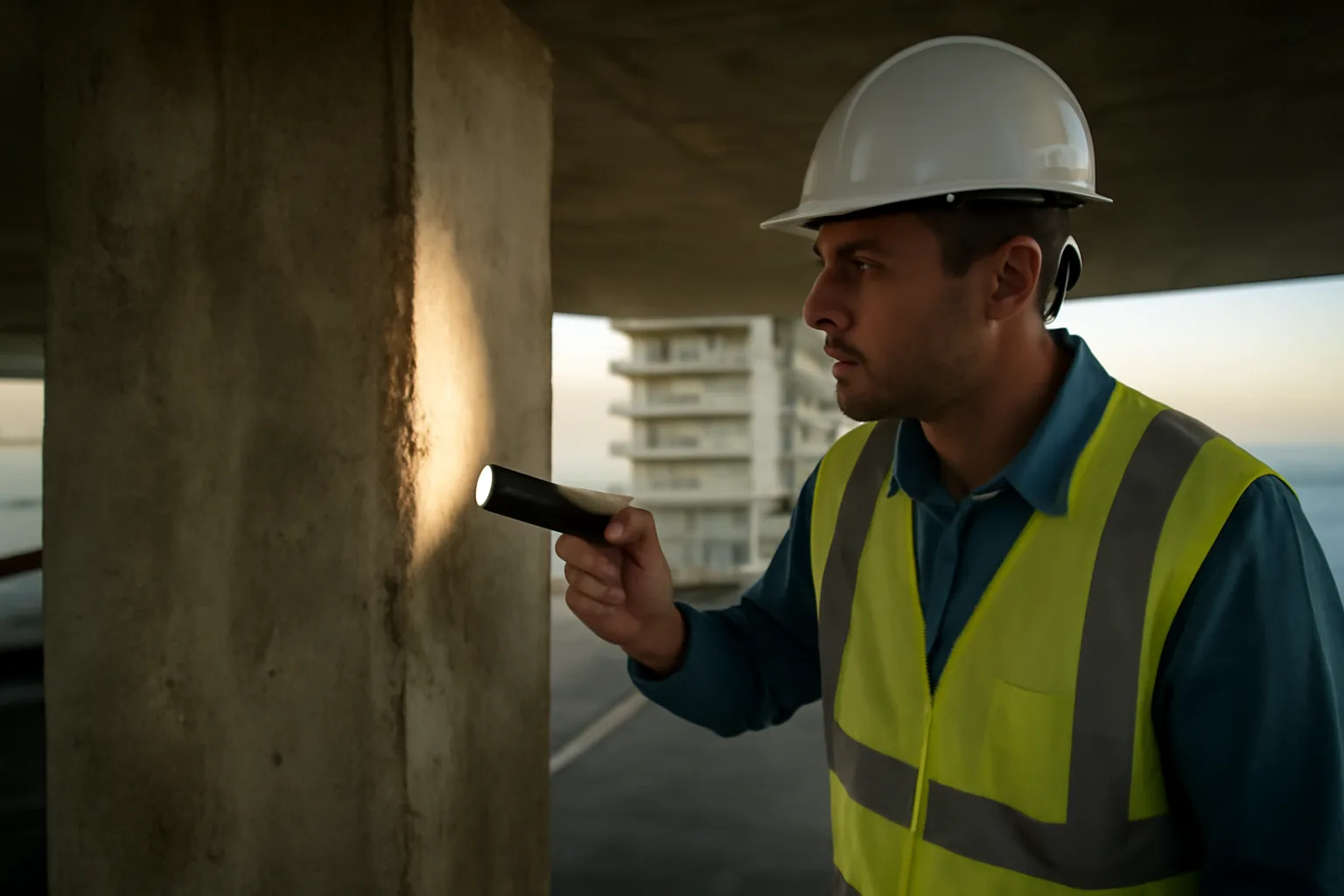
Florida statute 553.899 is the state law that created the milestone structural inspection program after the Champlain Towers South collapse in Surfside in June 2021. It applies to any building that is 3 stories or more in height, regardless of whether it's a condo, co-op, or other type of association, with some carve-outs for single-family, two-family, and three-family dwellings [1]. The statute requires a "milestone inspection," which is a structural inspection performed by a licensed architect or engineer to determine the general structural condition of a building as it affects the safety of the building. That's the statute's own phrase, and it matters because the inspection is narrower than a full property condition assessment. It's about structural integrity, not paint, plumbing, or landscaping [1]. The inspection happens in two phases. Phase one is a visual examination of habitable and non-habitable areas, including the roof. If the inspector finds no signs of substantial structural distress, the process can stop there. If they do find distress, phase two kicks in, which can include destructive or non-destructive testing at whatever locations the inspector considers necessary to confirm whether the structural issue is a safety concern [1]. Read the reserve study guide alongside this one, because milestone findings frequently drive reserve funding decisions the following budget cycle.
When is a milestone inspection due? (the 30-year and 25-year rule)
| Standard, any county | By Dec. 31 of the year building turns 30 | Every 10 years |
|---|---|---|
| Within 3 miles of coastline, Miami-Dade or Broward County | By Dec. 31 of the year building turns 25 | Every 10 years |
| Building already past threshold age as of 7/1/2022 | Phased schedule set by local building official | Every 10 years after first inspection |
The general rule: a building must complete its first milestone inspection by December 31 of the year it turns 30 years old, based on the date the certificate of occupancy was issued, and then every 10 years after that [1]. The accelerated rule: if the building is located within 3 miles of a coastline and sits in Miami-Dade County or Broward County, the first inspection is due at 25 years, not 30 [1]. This is a narrower geographic trigger than most boards assume. It's not "anywhere in South Florida." It's specifically those two counties and specifically within that 3-mile coastal band. A building in Palm Beach County or a building in Miami-Dade but 5 miles inland still runs on the standard 30-year clock, unless the local building official adopts stricter timing, which the statute allows [1]. For buildings that were already older than the milestone threshold when the law took effect (July 1, 2022), the statute set a phased schedule based on age, so the oldest buildings didn't all hit the same filing deadline at once. Boards in older buildings should confirm with their county building department exactly which year their first inspection was due, since local officials, not the state, run this program and can set additional local deadlines [1][2]. | Trigger | First inspection due | Repeat cycle |
Which buildings are covered, and which are exempt?
The law covers buildings that are 3 stories or more in height and that have at least one condominium, cooperative, or other multifamily residential unit inside. Single-family, two-family, and three-family dwellings are excluded, as the statute defines them [1]. Boards sometimes assume a low-rise 3-story condo building is too small to count. It isn't. Height, not unit count, is the trigger. A 3-story, 12-unit condo building is squarely inside the law if it meets the age and location thresholds. Mixed-use buildings, like a condo tower with retail on the ground floor, are covered too. The statute doesn't exempt buildings because part of the structure is commercial. County building departments have been the ones interpreting edge cases (attached parking garages, buildings connected by a breezeway, phased developments with different certificate-of-occupancy dates), so if your building has an unusual layout, the local building official's opinion is the one that counts, not a general reading of the statute. Confirm with your association's counsel and your county building department for anything building-specific.
How is a milestone inspection different from a SIRS?
A milestone inspection and a Structural Integrity Reserve Study (SIRS) are two different requirements under two different parts of Florida law, and boards regularly confuse them. The milestone inspection under 553.899 is a one-time-per-cycle structural safety check, done by an architect or engineer, that produces a phase one report (and phase two if needed) confirming whether the building's structure is sound. It repeats every 10 years [1]. The SIRS, required under Florida Statutes 718.112, is a reserve funding study that covers specific building components (roof, structure, fireproofing, plumbing, electrical, waterproofing, and others named in the statute) and determines how much money the association needs in reserves for each one. It must be performed at least every 10 years, and condo associations with buildings 3 stories or higher had to complete their first SIRS by December 31, 2024 [3]. The two can inform each other. A milestone inspection that flags cracking in a structural member should feed directly into the SIRS reserve calculation for that component. But one doesn't substitute for the other. Boards that only budget for one of the two are going to get an unpleasant surprise at the other deadline. See our hoa-reserve-study breakdown for how the SIRS math actually works.
What is a reserve study, and why does it matter here?
A reserve study is a professional assessment that identifies a building's major shared components (roof, elevators, structure, paving, plumbing), estimates their remaining useful life, and calculates how much money the association should be setting aside each year so it has cash on hand when each component needs replacement instead of relying on a special assessment. A reserve study for an HOA works the same way structurally, but Florida's statutory reserve rules (as opposed to voluntary best practice) apply specifically to condominium and cooperative associations under Chapter 718 and 719, not to most homeowners associations under Chapter 720. HOAs can still choose to commission a reserve study, and many do, because underfunded reserves are the single most common cause of large surprise special assessments. For condo associations in buildings 3 stories or taller, the SIRS component of the reserve study is now mandatory, not optional, and reserves for the SIRS-covered components can no longer be waived or reduced by a membership vote the way general reserves once could be [3]. This is one of the biggest structural changes in Florida condo law in a decade, and it's a direct legislative response to Surfside.
How much does a reserve study cost?
Costs vary a lot depending on building size, number of components, and whether it's a full SIRS-compliant study or a basic reserve fund review. Realistic ranges reported by Florida engineering and reserve-study firms and referenced in trade coverage of the post-Surfside reforms run from roughly $3,000 to $10,000+ for a smaller condo building, and considerably more, sometimes well into five figures, for large high-rises with extensive mechanical, structural, and waterproofing systems to evaluate. There's no single statewide fee schedule, and DBPR doesn't set or cap reserve study pricing. The honest answer is to get quotes from at least two or three licensed engineering or reserve-study firms, because the spread between low and high bids on the same building can be significant, and cheaper isn't always worse; some firms simply price milestone-adjacent work more efficiently if they're already doing your building's structural inspection at the same time. Boards that bundle the SIRS and milestone inspection scope with the same engineering firm sometimes get a better combined price than hiring two separate firms for overlapping site visits. That's a scheduling and procurement decision your board can make; it isn't a statutory requirement.
What is an HOA assessment, and how is it different from a special assessment?
An HOA assessment (or condo assessment) is the regular fee owners pay, usually monthly or quarterly, that funds operating expenses and reserve contributions. A special assessment is a separate, usually one-time charge the board levies outside the regular budget, typically to cover an unbudgeted or underfunded expense, like a milestone inspection repair, a roof replacement that reserves didn't fully cover, or storm damage. Milestone inspections and SIRS studies are exactly the kind of finding that triggers special assessments. If a phase one milestone inspection turns up structural distress requiring repair, and the association's reserves weren't funded for that scope, the board's remaining option is usually a special assessment, a loan, or both. This is precisely the scenario Florida lawmakers were trying to prevent by making SIRS reserves non-waivable for condos [3]. See hoa-special-assessment for how boards typically structure and notice these charges, and condo-special-assessment-insurance if your building is weighing a loan or insurance option instead of a lump-sum charge to owners.
How much should an HOA or condo have in reserves?
There's no flat statewide dollar figure or percentage, like "10% of the budget," that Florida law mandates for HOAs. The right number depends entirely on your building's specific components, their remaining life, and their replacement cost, which is exactly what a reserve study calculates. For condo associations, though, Florida law is no longer just a suggestion. Under the SIRS requirements added to Chapter 718, associations must fund reserves for the SIRS-covered components (structure, roof, load-bearing walls, fireproofing and fire protection, plumbing, electrical, waterproofing, and windows/exterior doors, among the listed items) based on the reserve study's calculated need, and the membership can no longer vote to waive or reduce those specific reserves the way general reserve funding could once be waived [3]. General, non-SIRS reserves (things like painting, paving, or clubhouse furniture) can still sometimes be adjusted by member vote depending on your documents and current law, but confirm the current rules with your association's counsel, since the legislature has amended these provisions more than once since 2022, including relief measures passed under SB 1103 in 2024 [4].
What happens if a building misses its milestone inspection deadline?
Enforcement runs through the local building official, not a state agency, and the specific consequences vary by county and municipality. Generally, if an association doesn't submit the required milestone inspection report by the deadline, the local building department can require it, and failure to comply can affect the building's certificate of occupancy status or trigger local code enforcement action [1][2]. DBPR, Florida's Division of Condominiums, Timeshares, and Mobile Homes, oversees condo association compliance more broadly (financial reporting, elections, records) but the day-to-day milestone inspection deadline enforcement sits with county and city building departments [2]. If your board isn't sure whether your filing was received or accepted, call your county building department directly and ask for written confirmation. Don't assume silence means compliance. Boards that are behind on the deadline should treat this as urgent, not routine. Delays compound: finding a licensed engineer with availability, scheduling site access for every unit if needed, and then acting on phase two findings if distress is found, all take real calendar time. A board that starts the process six months before its deadline is in a much better negotiating position with vendors than one that starts six weeks before.
Who actually performs the inspection, and who pays for it?
Only a Florida-licensed architect or engineer can perform a milestone inspection under 553.899 [1]. The board can't do this in-house, and a general contractor's opinion, however experienced, doesn't satisfy the statute. The association pays for it, typically out of operating funds or reserves, and the cost gets passed through to owners via regular assessments, a special assessment, or a mix. Boards should get the inspection cost, and any anticipated phase two testing cost, into next year's budget conversation early. Waiting for the phase one report to come back before budgeting is a common and expensive mistake, because if phase two testing or repair work is needed, that decision and its cost hits the board with very little lead time. Organizing this correctly, meaning tracking which inspection is due when, which reports are filed where, and which reserve line items tie back to which structural findings, is genuinely tedious paperwork, and it's exactly the kind of administrative load a board volunteer underestimates until the deadline is three months out. That's the specific gap the $199 one-time Building-Specific Board Compliance Kit is built to close: it organizes your building's inspection and SIRS deadlines, tracks documents, and helps the board communicate the timeline to owners. It doesn't perform the inspection or the reserve study itself; those still have to come from the licensed engineer or reserve specialist the statute requires.
Are HOA or condo special assessments tax deductible?
Generally, no, not for the individual owner claiming it as a personal itemized deduction, if the assessment covers capital improvements, structural repair, or reserve replenishment for the building. The IRS treats these as additions to your cost basis in the property rather than a deductible expense, similar to how a home improvement isn't deductible but does raise your basis for capital gains purposes later, consistent with IRS Publication 523's treatment of capital improvements to a home [5]. There are narrower exceptions. If you rent out the unit as a rental property, a special assessment tied to repairs (as opposed to capital improvement) may be deductible as a rental expense in the year paid, or depreciated if it's a capital improvement to the rental, under the general repair-versus-capitalization rules in IRS Publication 527 for residential rental property [6]. This is genuinely fact-specific and depends on IRS rules distinguishing repairs from improvements, so owners should talk to a CPA or tax preparer about their specific assessment and their specific use of the unit rather than relying on a general answer. The IRS doesn't have a rule that says "Florida milestone-related assessments are always X"; the deductibility question depends on the nature of the underlying work and how the unit is used, not on the fact that Florida statute 553.899 is what triggered the charge.
What should a board do right now to prepare for a milestone inspection or SIRS deadline?
First, confirm your building's exact certificate of occupancy date and calculate your real deadline, don't estimate. Call your county building department and ask them directly which year your milestone inspection and SIRS are due; don't rely on a neighbor building's timeline even if it looks similar in age. Second, start engineer and reserve-specialist procurement early, ideally 9 to 12 months before your deadline, not 3. Licensed structural engineers doing milestone work in South Florida have real backlogs, and a board that waits until the deadline year to start requesting quotes is negotiating from a position of weakness. Third, budget for the possibility of a phase two inspection and for SIRS-driven reserve increases before you have the final number, using a conservative estimate, so owners aren't blindsided by a special assessment vote with zero notice. Boards can review florida-condo-reserve-fund-relief for how the legislature has adjusted timing and funding rules since 2022, since this area of law keeps moving. And read reserve-study-for-condo-association for the mechanics of how a SIRS-driven reserve number actually gets built line by line. Fourth, document everything and communicate proactively to owners. A board that sends a clear timeline notice explaining what's due, when, and what it might cost gets far less pushback at the special assessment vote than a board that goes silent until the bill arrives.
Frequently asked questions
What is a reserve study?
A reserve study is a professional evaluation of a building's major shared components (roof, structure, elevators, paving, plumbing) that estimates each one's remaining life and replacement cost, then calculates how much the association should save annually so it isn't forced into a special assessment when something fails.
What is a reserve study for an HOA?
It's the same evaluation process applied to a homeowners association's shared assets, like clubhouses, roads, pools, and fencing. Unlike condos under Chapter 718, most HOAs under Chapter 720 aren't statutorily required to fund reserves this way, but doing one voluntarily prevents large surprise special assessments later.
What is an HOA assessment?
An HOA assessment is the regular fee, usually monthly or quarterly, owners pay to fund the association's operating budget and reserve contributions. It's set in the annual budget and is separate from a one-time special assessment levied for an unbudgeted or underfunded expense.
How much should an HOA have in reserves?
There's no flat statewide percentage. The correct amount depends on a reserve study's component-by-component calculation of remaining life and replacement cost. Florida condo associations 3+ stories now have non-waivable SIRS reserve requirements under Chapter 718; most HOAs under Chapter 720 don't have an equivalent statewide mandate.
How much does a reserve study cost?
Costs commonly run from roughly $3,000 to $10,000 or more for smaller buildings, and considerably higher for large high-rises with extensive systems. There's no state-set fee, so get quotes from at least two or three licensed firms before committing.
Are HOA special assessments tax deductible?
Generally not for owner-occupants; the IRS typically treats them as adding to your cost basis rather than a deductible expense. Rental property owners may be able to deduct or depreciate a portion depending on whether the underlying work is a repair or capital improvement. Talk to a CPA about your specific situation.
What is the difference between a milestone inspection and a SIRS?
A milestone inspection under Florida statute 553.899 is a structural safety check by a licensed architect or engineer, repeated every 10 years. A SIRS under Chapter 718 is a reserve funding study covering specific components, required at least every 10 years, with the first one due December 31, 2024 for qualifying condos.
When is a milestone inspection due in Florida?
By December 31 of the year the building turns 30 years old, based on its certificate of occupancy date, and every 10 years after. Buildings within 3 miles of a coastline in Miami-Dade or Broward County must complete their first inspection at 25 years instead of 30.
Which buildings are required to get a milestone inspection?
Any building 3 stories or taller with at least one residential unit, including condos, co-ops, and mixed-use buildings. Single-family, two-family, and three-family dwellings are excluded under Florida statute 553.899.
Who can perform a Florida milestone inspection?
Only a Florida-licensed architect or engineer can perform a milestone inspection under statute 553.899. A general contractor's assessment, however qualified, doesn't satisfy the legal requirement.
What happens if a building doesn't do its milestone inspection on time?
Local building officials, not a state agency, enforce the deadline, and consequences vary by county. Non-compliance can affect the building's certificate of occupancy status or trigger local code enforcement. Boards behind schedule should contact their county building department immediately rather than wait.
Does a milestone inspection replace a SIRS, or do I need both?
You need both. They're separate statutory requirements: the milestone inspection (553.899) checks structural safety, while the SIRS (Chapter 718) calculates reserve funding for specific building components. Findings from one often affect the other, but neither substitutes for the other legally.
Sources
- Florida Legislature, Florida Statutes Section 553.899: Milestone inspection definition, 30-year/25-year coastal Miami-Dade/Broward trigger, 10-year repeat cycle, two-phase inspection process, licensed architect/engineer requirement
- DBPR, Division of Condominiums, Timeshares, and Mobile Homes: DBPR's role overseeing condo association compliance versus local building official enforcement of milestone deadlines
- Florida Legislature, Florida Statutes Section 718.112: SIRS requirement for condo buildings 3 stories or higher, December 31, 2024 deadline, non-waivable reserve funding for SIRS-covered components
- Florida Senate, SB 1103 (2024), Chapter 2024-244, Laws of Florida: 2024 legislative amendments adjusting SIRS timing and condo reserve funding relief provisions since the original 2022 law
- IRS Publication 523, Selling Your Home: Capital improvements to a home increase cost basis rather than being currently deductible
- IRS Publication 527, Residential Rental Property: Rules distinguishing deductible repair expenses from capitalized improvements for rental property owners